

Long Beach to Philadelphia Car Shipping Route
Long Beach to Philadelphia spans approximately 2,740 miles by road. Carriers depart Long Beach using I-710 north to connect to I-10 east or loop south on I-405 to SR-91 and SR-22 before picking up I-15 or I-10 toward the Arizona border. The route crosses the Sonoran Desert, New Mexico highlands, Texas panhandle or central Texas depending on the carrier's chosen path, then transitions to I-40 or I-20 east before picking up I-81 or I-76 into Pennsylvania. Driving this yourself would take five to seven days of hard driving and accumulate significant mileage on your vehicle. A breakdown of why shipping beats driving is covered at https://california.auto-transport-shipping.com/articles/benefits-of-auto-transport-service-vs-driving-yourself.html.
Philadelphia's inbound demand is anchored by Joint Base McGuire-Dix-Lakehurst in Burlington County, New Jersey — one of the largest military installations on the East Coast — which generates consistent PCS-related shipping volume. The University of Pennsylvania, Drexel University, Temple University, and Jefferson University collectively enroll tens of thousands of students, many of whom relocate from California. Major employers including Jefferson Health, Comcast, Independence Blue Cross, and Aramark drive corporate relocation demand. Winter on this corridor introduces mountain-pass risk through the Appalachians and potential ice on I-76 and I-78. Avoiding common planning errors when booking long-haul transport is outlined at https://california.auto-transport-shipping.com/articles/auto-transport-mistakes-to-avoid.html.
Long Beach to Philadelphia Car Shipping Rates
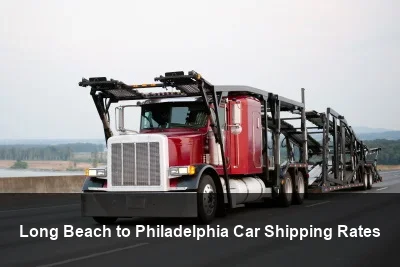
Rates on the Long Beach to Philadelphia corridor are influenced by the 2,740-mile distance, which places it firmly in the premium long-haul tier. Diesel costs across the Southwest and Appalachian segments are a direct price driver — see https://california.auto-transport-shipping.com/articles/how-gas-prices-impact-california-auto-transport-fees.html for how fuel affects your quote. Spring and early summer see eastbound demand spikes as students and military personnel relocate. Winter quotes may carry a modest surcharge reflecting weather risk through the Tennessee and Pennsylvania mountain segments.
What affects the cost of Long Beach to Philadelphia car shipping:
- Vehicle type and size — larger vehicles take more carrier space; aftermarket additions like lift kits, oversized mirrors, or roof accessories can add fees
- Open vs. enclosed transport — open is lower cost with stronger carrier availability; enclosed protects against weather, debris, and road conditions
- Standard vs. expedited pickup — expedited prioritizes your vehicle for the next available dispatch, typically at a $100–$300 premium
- Time of year — peak demand seasons drive rates higher; off-peak windows offer the most competitive pricing
- Fuel costs — diesel prices affect carrier rates; longer routes are more sensitive to fuel price swings
- Vehicle condition — non-running vehicles require special loading equipment and cost more to ship
| Vehicle Type | Open Car Shipping (Est.) | Enclosed Car Shipping (Est.) |
|---|---|---|
| Sedan | $1,100 – $1,600 | $1,900 – $2,700 |
| SUV / Crossover | $1,300 – $1,900 | $2,200 – $3,100 |
| Pickup Truck | $1,300 – $1,950 | $2,200 – $3,150 |
| Minivan | $1,300 – $1,900 | $2,200 – $3,100 |
| Luxury / Classic Car | $1,550 – $2,200 | $2,600 – $3,600 |
| Non-Running Vehicle | Add $200–400 | Add $200–400 |
* Estimated ranges based on recent Long Beach to Philadelphia shipments. Actual rate depends on vehicle, locations, booking date, and current fuel costs. Use the form on this page to compare real quotes from licensed carriers.
Open or Enclosed: What Makes Sense on This Corridor
Open transport is appropriate for standard vehicles on this route. The Long Beach to Philadelphia lane is well-traveled, and open carriers run it consistently. Enclosed transport makes sense if you're shipping a luxury, exotic, or classic vehicle — the route crosses dusty desert stretches through Arizona and New Mexico, and road debris exposure is real over 2,740 miles. If your vehicle is worth $60,000 or more, the enclosed premium is modest relative to the risk. For a daily driver or newer production car in good condition, open is the practical and cost-effective choice on this corridor.
How Long Does Long Beach to Philadelphia Car Shipping Take?
Expect 7 to 10 transit days door-to-door from Long Beach to Philadelphia under normal conditions. Carrier frequency out of Long Beach is high due to port activity, so dispatch is typically fast once your vehicle is accepted. The driving distance for a single carrier is too great for a solo run without handoffs or rest stops, so most carriers complete this route in stages. If your timeline is tight, expedited options can compress this to 5 to 7 days — details on expedited shipping are at https://california.auto-transport-shipping.com/articles/california-expedited-car-shipping-fast-cost.html.
| Service Type | Typical Transit | Pickup Window | Best For |
|---|---|---|---|
| Open — Standard | 7–10 days | 2–5 business days | Best value; most common choice on this route |
| Open — Expedited | 5–7 days | 1–2 business days | Firm arrival date; faster dispatch window |
| Enclosed — Standard | 7–10 days | 4–8 business days | Luxury, classic, or modified vehicles |
| Enclosed — Expedited | 5–7 days | 2–4 business days | High-value vehicles on a firm delivery deadline |
** Winter weather is the primary delay risk on this corridor. Ice and snow on I-76 through the Pennsylvania Appalachians, and periodic closures on I-40 through the Texas Panhandle or I-81 through Virginia, can add one to three days between December and March. Build buffer time into winter bookings.
Long Beach to Philadelphia — Route & Logistics
Carriers depart Long Beach via I-710 north or I-405 south, connecting to I-10 east as the primary trunk route across Southern California, Arizona, and New Mexico. From there, most carriers continue on I-10 through Texas or transition to I-40 east at Albuquerque. The final approach into Philadelphia typically uses I-76 east through the Pennsylvania Turnpike system. Total carrier driving distance is approximately 2,740 miles.
Key Corridor Waypoints
- Pomona, CA Carriers clearing Long Beach navigate I-710 north or SR-91 east to reach the I-10 on-ramp near Pomona, roughly 30 miles inland. This interchange is a common early staging point where carriers confirm loads, check tie-downs after urban stop-and-go, and transition from surface street access to open freeway running east toward the Arizona border.
- Tucson, AZ Tucson sits approximately 420 miles from Long Beach and serves as a practical first-day rest and fuel stop on I-10. Carriers often stage here overnight. The I-10 corridor through southern Arizona runs at elevation changes between 2,400 and 4,600 feet, and carriers monitor load clearance through underpasses near Davis-Monthan Air Force Base perimeter roads.
- Albuquerque, NM At roughly 790 miles from Long Beach, Albuquerque is a major decision point. Carriers on I-40 east pass through at 5,300 feet elevation. This is where routes diverge — I-40 continues northeast toward Oklahoma and I-81, while I-10 south branches toward El Paso. Most Long Beach to Philadelphia loads stay on I-40 through Albuquerque for the northern corridor toward Tennessee.
- Oklahoma City, OK Oklahoma City marks the approximate midpoint of the corridor at roughly 1,400 miles from Long Beach. I-40 runs directly through the metro. Carriers typically complete fuel, log compliance checks, and assess weather ahead through the Arkansas and Tennessee segments. Winter runs flag I-40 through the Tennessee Plateau for potential ice accumulation east of here.
- Knoxville, TN Knoxville is the gateway to the Appalachian crossing, where I-40 climbs through the Smokies before carriers typically transition to I-81 north or I-40 east toward I-76. Elevation reaches approximately 2,200 feet through the mountain segment. Winter carriers check TDOT and PennDOT road condition alerts here before committing to the final Appalachian push into Pennsylvania.
- King of Prussia, PA The I-76 Pennsylvania Turnpike empties into the King of Prussia interchange, the last major staging area before Philadelphia metro delivery. Carriers delivering to Center City, South Philadelphia, or Northeast Philadelphia typically confirm address access here, contact recipients, and time final-mile delivery to avoid rush hour on I-76 or the Schuylkill Expressway near downtown.
Pickup & Delivery Access
- Pickup Access in Long Beach Long Beach carrier access is strong along the I-710 and I-405 corridors and in industrial zones near the port. Neighborhoods like Signal Hill and the areas adjacent to Long Beach Airport work well for open carrier pickup. Downtown Long Beach has one-way streets and limited truck turning radius — if your address is in the dense downtown core, a nearby parking lot or side street meet point is often necessary.
- Delivery Access in Philadelphia Philadelphia delivery access varies sharply by neighborhood. South Philadelphia, Northeast Philadelphia, and areas near I-95 and I-76 are generally accessible to open carriers. Center City and Old City have narrow colonial-era streets, no-truck zones, and permit restrictions. If your delivery address is in a restricted zone, the carrier will coordinate a meet point in a nearby accessible area such as a shopping center or wide surface lot.
- Nearby Pickup Locations Carriers picking up in Long Beach regularly extend service to Lakewood, Compton, and Carson. Call 1‑800‑590‑6492 to confirm door-to-door availability at your address.
Open vs. Enclosed Car Shipping: Long Beach to Philadelphia
Both options use licensed, insured carriers and deliver door to door. For a full breakdown, read the pros and cons of open vs. enclosed car shipping.
Open Car Shipping
Most Popular- Lower cost — the practical choice for most vehicles
- More carriers available on this corridor
- Faster dispatch from booking to pickup
- Works well for sedans, SUVs, trucks, and minivans
- Vehicle rides on an open multi-car carrier
- Cargo insurance required on all licensed carriers
Estimated cost: $1,100 – $1,950
Enclosed Car Shipping
Premium Protection- Full protection from weather, debris, and road grime
- Best for luxury, exotic, and classic vehicles
- Recommended for low-clearance and custom-built cars
- Wheel-net or soft-tie systems prevent contact damage
- Higher cargo coverage — commonly $500,000 per load
- White-glove handling by experienced operators
Estimated cost: $1,900 – $3,150
Not sure which is right for your vehicle? Call 1-800-590-6492 and we'll point you in the right direction. Also worth reading: the top 10 questions to ask any car shipping company before you commit.
How to Prepare Your Car for Shipping to Philadelphia
A little prep before pickup protects you if there's ever a dispute about your vehicle's condition. This checklist is from our full guide on preparing your car for transport:
- Remove all personal belongings from the interior and trunk
- Leave only a quarter tank of fuel — enough to load and unload
- Take date-stamped photos of the full exterior and interior
- Remove or disable toll transponders (FasTrak, E-ZPass, etc.)
- Retract or remove roof racks, spoilers, antennas, and bike mounts
- Make sure the battery is charged and tires are properly inflated
- Tell the carrier about any existing leaks or mechanical issues
- Deactivate the car alarm before the carrier arrives
- Write down the mileage on the Bill of Lading at pickup
- Fold in side mirrors if the vehicle is wider than standard
Personal items: Most carriers won't cover belongings left in the car. Read the full rules on shipping personal items in your vehicle. Also review our Bill of Lading guide so you know exactly what to check at pickup and delivery.
When to Ship Your Car from Long Beach to Philadelphia
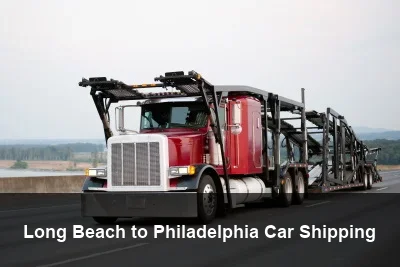
This corridor has a pronounced eastbound demand spike from March through August driven by military PCS season, university relocations, and general spring moving activity. Prices are most competitive in fall and early winter when eastbound volume softens. Winter shipping introduces Appalachian weather risk and potential delays — carriers navigating I-76 and I-81 in January and February face real ice exposure. A full breakdown of winter transport risks is at https://california.auto-transport-shipping.com/articles/auto-transport-challenges-during-the-winter.html.
Spring Peak Season (March – May)
March through May is the busiest period on this corridor. Military PCS orders from Joint Base McGuire-Dix-Lakehurst activate in spring, university students finishing the academic year ship vehicles east, and general relocation demand surges. Carrier capacity tightens and rates climb. Book 2 to 3 weeks ahead of your target pickup date. Waiting until you're ready to move immediately will cost more and limit your carrier options.
Summer Moving Window (June – August)
Summer sustains high eastbound volume from Long Beach. Corporate relocations, family moves timed to the school calendar, and continued military activity keep this lane competitive. Heat across the Arizona and New Mexico desert segments is a consideration for vehicles with known cooling system vulnerabilities — disclose any mechanical issues to your carrier before booking. Open transport remains appropriate for standard vehicles despite desert heat exposure.
Fall Value Window (September – November)
Eastbound demand cools in September and October, and this is typically the best pricing window on this corridor. Carriers are still running the lane regularly but have more available capacity. If your schedule is flexible and you're not tied to a hard delivery date, booking in October or early November can save you $100 to $200 compared to peak spring rates. Weather through the Appalachians is still generally manageable through November.
Winter Weather Risk (December – February)
December through February introduces the most significant transit risk on this corridor. The Pennsylvania Turnpike (I-76) and I-81 through Virginia and Pennsylvania see ice and snow events that can halt carrier movement for 24 to 48 hours. Quotes may include a small weather premium. Build extra buffer into your delivery window and stay in communication with your carrier through this segment. See https://california.auto-transport-shipping.com/articles/auto-transport-challenges-during-the-winter.html for preparation details.
Student Relocation Demand (August – September)
Philadelphia's university cluster — Penn, Drexel, Temple, Jefferson, and others — creates a concentrated student relocation wave in late August and early September. Students shipping vehicles from Southern California to Philadelphia compete for the same carrier space as summer movers. If you're relocating for a fall semester, target booking in late July to secure reasonable rates and confirmed pickup timing before the August rush compresses availability.
Military PCS Season (February – July)
Joint Base McGuire-Dix-Lakehurst in Burlington County, New Jersey drives a concentrated PCS shipping cycle from February through July. Service members relocating from Southern California installations — including Los Angeles Air Force Base and Naval Weapons Station Seal Beach near Long Beach — frequently use this exact corridor. If you're shipping on military orders, confirm your carrier has experience with PCQ paperwork and government-rate invoicing before booking.
How to Choose a Long Beach to Philadelphia Car Shipping Company
Getting multiple quotes is step one — knowing what to look for in those quotes matters just as much. Our guide on how to select a car shipping company covers the full process. Here are the six things that matter most:
FMCSA Registration
Every carrier or broker must hold a valid MC number. Verify any company at FMCSA SAFER before you book.
Proof of Insurance
Ask for a current certificate of insurance. Open carriers typically carry $100,000–$250,000 per load; enclosed commonly $500,000 or more. Learn what auto transport insurance covers.
All-In Pricing
Your quote should be a final number with no fees added after booking. Know the difference between brokers and carriers and confirm what the quote covers before you agree.
Bill of Lading
A complete Bill of Lading is filled out at pickup and delivery. Our Bill of Lading guide explains what to check. Never sign an incomplete one.
Real Reviews
Check Google and the BBB. Look at how they handled complaints and damage claims — that tells you more than a five-star average from happy customers.
Route Experience
A carrier who runs Long Beach to Philadelphia regularly knows that I-710 through the port area backs up between 7 and 9 AM, and that staging in Signal Hill or near the 91/710 interchange avoids losing an hour before the run even starts. They know the Albuquerque I-40 inspection station on the eastbound side and time arrivals to avoid mid-afternoon commercial vehicle queue buildup. They've navigated the King of Prussia interchange dozens of times and know which exits feed cleanly into Northeast Philadelphia versus which dump you into Center City traffic. They know that South Philly residential blocks frequently require a phone call to the customer for a corner meet because the carrier simply cannot swing a full trailer through a narrow row-house block without risking mirrors or load clearance.
Long Beach to Philadelphia Car Shipping — FAQ
How much does it cost to ship a car from Long Beach to Philadelphia?
Rates on the Long Beach to Philadelphia corridor typically range from $1,050 to $1,550 for open transport on a standard sedan or SUV, depending on the season, current diesel prices, and how quickly you need the vehicle picked up. Spring and summer eastbound demand pushes rates toward the higher end of that range. Enclosed transport runs $1,600 to $2,300 for the same vehicle class. Pickup flexibility of three to five days on either end usually secures a better rate than demanding a fixed single-day pickup. Get a current quote using the form on this page for an accurate number tied to today's carrier availability.
How long does Long Beach to Philadelphia car shipping take?
Standard transit time on this corridor is 7 to 10 days door-to-door. Long Beach has strong carrier frequency due to port activity, so dispatch is typically within one to three business days of booking. The driving portion itself takes experienced carriers five to seven days depending on staging, rest compliance, and any weather delays through the Appalachians. If your timeline is compressed, expedited options can target 5 to 7 days — more information on expedited shipping is available at https://california.auto-transport-shipping.com/articles/california-expedited-car-shipping-fast-cost.html. Winter bookings should build in an extra buffer day or two.
Is my car insured during transport from Long Beach to Philadelphia?
Every licensed carrier operating on this corridor is required by FMCSA regulations to carry cargo insurance. Your vehicle is covered under that policy for the duration of transit. Before your carrier picks up the vehicle, both you and the driver complete a Bill of Lading documenting the vehicle's existing condition with written notes and photos. At delivery, you inspect against that same document. Any discrepancy noted at delivery is the basis for a damage claim. A full explanation of how transport insurance works is at https://california.auto-transport-shipping.com/articles/understanding-auto-transport-insurance.html, and the claims process is detailed at https://california.auto-transport-shipping.com/articles/how-to-file-a-claim-for-vehicle-damage-during-transport.html.
Should I choose open or enclosed transport for this route?
Open transport is the right call for most vehicles on this corridor. The Long Beach to Philadelphia lane is mature and well-serviced, and open carriers handle production vehicles without issue. That said, the route does cross 400-plus miles of desert in Arizona and New Mexico, where road debris and dust exposure are real over a 2,740-mile run. If your vehicle is a classic, exotic, or high-value luxury car, the enclosed premium is worth it. For a daily driver or standard production vehicle, open is practical and cost-effective. A detailed comparison of both options is at https://california.auto-transport-shipping.com/articles/open-vs-enclosed-auto-transport-pros-and-cons.html.
Do I have to be present at pickup in Long Beach and delivery in Philadelphia?
You or an authorized representative must be present at both pickup and delivery to sign the Bill of Lading. This document is your legal record of the vehicle's condition at handoff — it protects you if any damage claim arises during the 2,740-mile transit. If you can't be present personally, a trusted adult can act on your behalf. They need to be able to inspect the vehicle carefully, note any pre-existing condition accurately, and sign the document. Details on what the Bill of Lading covers and why it matters are at https://california.auto-transport-shipping.com/articles/california-auto-transport-bill-of-lading-information.html.
Does winter weather on this route cause significant delays?
Yes, and it's the most common cause of transit extensions on this corridor between December and March. The primary risk points are I-40 through the Texas Panhandle, I-81 through the Shenandoah Valley in Virginia, and I-76 through the Pennsylvania Appalachians. Ice events on any of these segments can hold a carrier for 24 to 48 hours. If you're booking a winter shipment, extend your expected delivery window by two to three days beyond the standard estimate. Carriers monitor PennDOT, VDOT, and TDOT road condition alerts in real time and will communicate delays. Details on winter transport preparation are at https://california.auto-transport-shipping.com/articles/auto-transport-challenges-during-the-winter.html.
I'm shipping on military PCS orders from the Long Beach area to Joint Base McGuire-Dix-Lakehurst. Are there specific things I should know?
This corridor sees consistent military PCS volume from the Los Angeles Basin to Burlington County, New Jersey. Naval Weapons Station Seal Beach and Los Angeles Air Force Base both generate orders that route vehicles to McGuire-Dix-Lakehurst. Confirm your carrier can provide a government-compliant invoice if your orders require one. Book as soon as orders are confirmed — PCS season from February through July tightens carrier capacity on this lane significantly. Your pickup location near Long Beach is generally straightforward given the area's carrier accessibility. Communicate your required-delivery-by date clearly so it's documented in your booking.
Can carriers actually access my address in Long Beach, or will I need to meet somewhere?
Most of Long Beach is accessible to open car carriers. Industrial and residential areas near I-710, I-405, and the port perimeter present no significant access issues. The exception is the dense downtown Long Beach core, where one-way streets, tight intersections, and limited truck turning radius can prevent a full carrier from reaching a specific address directly. If you're in or near downtown, your dispatcher will identify a nearby meet point — typically a shopping center parking lot or wide side street within a few blocks. Lakewood, Carson, and Compton nearby are all accessible without these constraints.
Ready to Ship Your Car from Long Beach to Philadelphia?
One form gets you up to 10 free quotes from licensed, insured carriers. Compare costs and transit times and book the best deal for your schedule.