
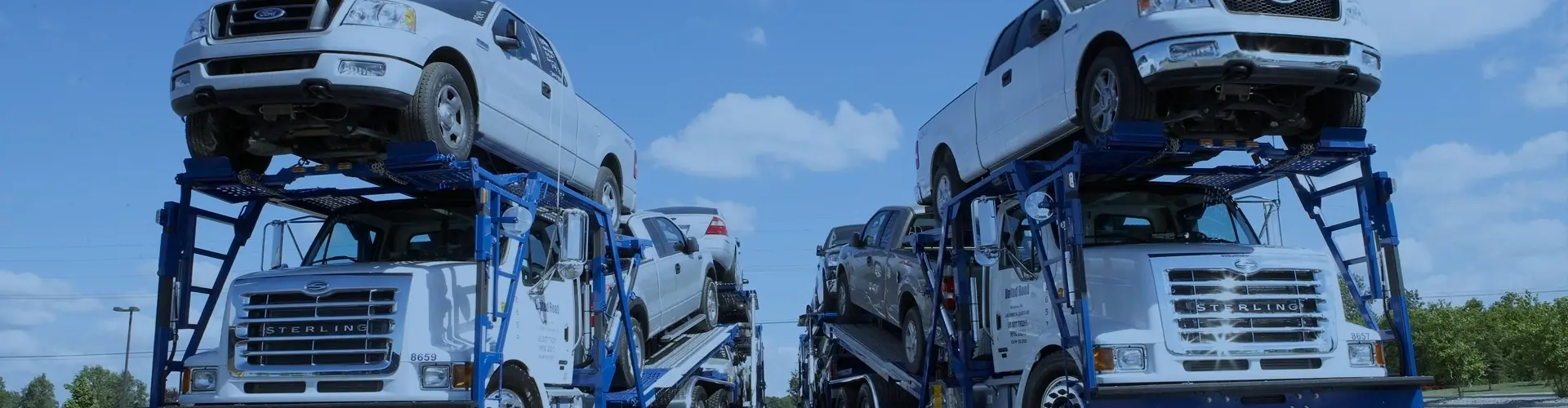
Long Beach to Houston Car Shipping Route
The Long Beach to Houston route covers approximately 1,553 miles by road. Carriers departing Long Beach typically access I-710 North to I-10 East — the primary artery for this run. From there, the route crosses the Mojave Desert through the San Bernardino corridor, climbs briefly near the Arizona border, then drops into Phoenix before continuing through Tucson, Las Cruces, and El Paso before the long Texas run through San Antonio to Houston. Carrier access from the port area is straightforward: I-710 connects directly to I-10 within minutes of the port gates. If you're weighing whether shipping makes sense versus driving yourself, this comparison resource lays out the full picture: https://california.auto-transport-shipping.com/articles/benefits-of-auto-transport-service-vs-driving-yourself.html
Houston demand is anchored by a combination of energy sector employers — ExxonMobil, Chevron Phillips, Shell, and Halliburton all maintain large Gulf Coast operations — plus Texas Medical Center, the world's largest medical complex, which draws steady physician and researcher relocations from California. The University of Houston and Rice University generate student vehicle shipments each fall and spring. Fort Sam Houston in San Antonio and Ellington Field Joint Reserve Base near Houston itself drive consistent military PCS shipments. Weather-wise, the I-10 corridor through West Texas can see ice in January and February, and Gulf Coast humidity is a non-issue for closed carriers. Before booking, review common errors that cost shippers money: https://california.auto-transport-shipping.com/articles/auto-transport-mistakes-to-avoid.html
Long Beach to Houston Car Shipping Rates
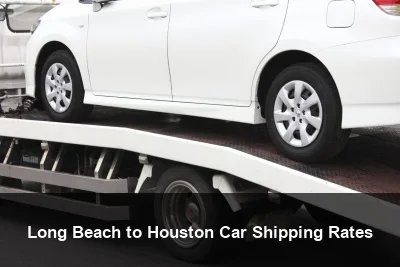
At 1,553 miles, the Long Beach–Houston run sits in the upper-mid distance tier where per-mile rates begin to compress slightly compared to shorter hauls. Expect base rates for a standard sedan on open transport to range from $950 to $1,350 depending on season and fuel costs. Summer and early fall see modest spikes tied to student moves and Texas oil-patch relocations. Diesel pricing on the I-10 corridor directly affects your quote — see how fuel costs factor into transport pricing: https://california.auto-transport-shipping.com/articles/how-gas-prices-impact-california-auto-transport-fees.html
What affects the cost of Long Beach to Houston car shipping:
- Vehicle type and size — larger vehicles take more carrier space; aftermarket additions like lift kits, oversized mirrors, or roof accessories can add fees
- Open vs. enclosed transport — open is lower cost with stronger carrier availability; enclosed protects against weather, debris, and road conditions
- Standard vs. expedited pickup — expedited prioritizes your vehicle for the next available dispatch, typically at a $100–$300 premium
- Time of year — peak demand seasons drive rates higher; off-peak windows offer the most competitive pricing
- Fuel costs — diesel prices affect carrier rates; longer routes are more sensitive to fuel price swings
- Vehicle condition — non-running vehicles require special loading equipment and cost more to ship
| Vehicle Type | Open Car Shipping (Est.) | Enclosed Car Shipping (Est.) |
|---|---|---|
| Sedan | $950 – $1,350 | $1,700 – $2,300 |
| SUV / Crossover | $1,100 – $1,600 | $1,950 – $2,700 |
| Pickup Truck | $1,100 – $1,650 | $1,950 – $2,750 |
| Minivan | $1,100 – $1,600 | $1,950 – $2,700 |
| Luxury / Classic Car | $1,300 – $1,900 | $2,200 – $3,000 |
| Non-Running Vehicle | Add $200–350 | Add $200–350 |
* Estimated ranges based on recent Long Beach to Houston shipments. Actual rate depends on vehicle, locations, booking date, and current fuel costs. Use the form on this page to compare real quotes from licensed carriers.
Open vs. Enclosed: What This Route Actually Requires
Open transport is the practical choice for the vast majority of vehicles on this run. The I-10 corridor is well-maintained through most seasons, and road debris risk is no higher here than on comparable interstate hauls. Enclosed transport makes sense if you're shipping a classic, exotic, or high-value vehicle — particularly given the open desert stretch through West Texas where temperature swings are significant. If your vehicle is worth more than $75,000 or is unrestored and irreplaceable, the $300–$500 enclosed premium is worth it. For everything else, open is fine.
How Long Does Long Beach to Houston Car Shipping Take?
Standard transit time for the Long Beach to Houston corridor is 4 to 7 days from carrier pickup. The driving distance for a single operator is approximately 22 to 24 hours of road time, but auto transport carriers run regulated hours-of-service schedules, carry multiple vehicles, and make additional pickups and deliveries en route. Long Beach's high carrier frequency means your vehicle typically moves within 1 to 3 business days of booking. If your timeline is compressed, expedited dispatch options can reduce that window: https://california.auto-transport-shipping.com/articles/california-expedited-car-shipping-fast-cost.html
| Service Type | Typical Transit | Pickup Window | Best For |
|---|---|---|---|
| Open — Standard | 4–6 days | 2–5 business days | Best value; most common choice on this route |
| Open — Expedited | 2–4 days | 1–2 business days | Firm arrival date; faster dispatch window |
| Enclosed — Standard | 4–6 days | 3–7 business days | Luxury, classic, or modified vehicles |
| Enclosed — Expedited | 2–4 days | 1–3 business days | High-value vehicles on a firm delivery deadline |
** The primary delay risk on this corridor is winter weather through the West Texas and El Paso stretch — I-10 near Ozona and Fort Stockton can experience ice closures in January and February. Gulf Coast tropical weather in August and September can also cause minor rerouting delays near Houston. Either condition can add one to two days.
Long Beach to Houston — Route & Logistics
Carriers departing Long Beach access I-710 North from the port industrial zone, merge onto I-10 East at the East Los Angeles interchange, and maintain that interstate through Phoenix, Tucson, El Paso, and San Antonio before arriving in Houston. The full interstate distance is approximately 1,553 miles with no major route deviations under normal conditions. I-10 is a dedicated long-haul carrier corridor with truck-accessible fuel, rest areas, and weigh stations throughout.
Key Corridor Waypoints
- Long Beach / I-710 to I-10 Interchange, CA Carriers stage near the port complex or in nearby Carson and Compton before accessing I-710 North. The I-710/I-10 interchange in East Los Angeles is the primary on-ramp to the transcontinental run. Traffic through this interchange is heaviest before 7 a.m. and between 3 and 7 p.m. Most carriers time their departure to avoid those windows. Elevation here is near sea level.
- Blythe, CA / Arizona State Line Blythe at the California-Arizona border is a common first fuel and inspection stop, sitting at roughly 270 feet elevation. The Colorado River crossing at I-10 marks the end of California jurisdiction. Carriers often conduct a quick load check here after the initial desert stretch. Summer temperatures regularly exceed 115°F in this area, which affects tire pressure and vehicle fluids on open carriers.
- Phoenix, AZ Phoenix is a significant logistics node on this corridor. Some carriers running the Long Beach–Houston lane pick up or drop off additional vehicles here, which can add two to four hours to transit. I-10 passes directly through the metro. At 1,086 feet elevation, Phoenix presents no grade challenges. This is typically where carriers overnight on the first full day of transit.
- El Paso, TX / Las Cruces, NM Junction El Paso sits at 3,740 feet elevation and is the entry point into Texas. Carriers pass through the Border Patrol checkpoint on I-10 west of El Paso — expect a brief stop. This is the halfway point of the corridor by distance. Winter ice risk begins here; January and February can see I-10 closures east of El Paso near Ozona if a blue norther pushes through.
- San Antonio, TX San Antonio is a major auto transport hub in its own right, serving Fort Sam Houston, Lackland Air Force Base, and Randolph Air Force Base. Carriers on the Houston run pass through on I-10 East. Some carriers working military PCS contracts stage in San Antonio and resume the final leg to Houston the next morning. Distance from San Antonio to Houston is approximately 197 miles — roughly three hours of drive time.
- Houston, TX — Metro Delivery Zone Houston's sprawl means delivery coordinates matter. Carriers serving The Woodlands, Katy, and Sugar Land can usually execute direct driveway delivery. Inner Loop deliveries near downtown, Midtown, or the Texas Medical Center may require a staging meet point due to narrow streets and loading zone restrictions. Ellington Field area near Clear Lake is carrier-accessible without issue.
Pickup & Delivery Access
- Pickup Access in Long Beach Long Beach carriers access the pickup zone most efficiently from the port industrial corridor along Pier S Avenue and Henry Ford Avenue, with residential pickups in Belmont Shore, Naples, and Signal Hill posing no access issues. Downtown Long Beach has one-way street configurations on Ocean Boulevard, Pine Avenue, and First Street — if your vehicle is parked in that zone, a nearby parking lot or side-street meet point is the practical solution. Nearby Lakewood, Compton, and Carson are all fully carrier-accessible.
- Delivery Access in Houston Houston's outer suburbs — Katy, Sugar Land, Pearland, The Woodlands, Friendswood — all support direct driveway delivery for standard car carriers. The Inner Loop, EaDo, and Midtown have narrower blocks and street parking conflicts that may require meeting the carrier at a nearby commercial lot or gas station. Heights neighborhood streets near I-10 are navigable for most single-car haulers but can be tight for 10-car enclosed rigs. Confirm your delivery address with the carrier at dispatch.
- Nearby Pickup Locations Carriers picking up in Long Beach regularly extend service to Lakewood, Compton, and Carson. Call 1‑800‑590‑6492 to confirm door-to-door availability at your address.
Open vs. Enclosed Car Shipping: Long Beach to Houston
Both options use licensed, insured carriers and deliver door to door. For a full breakdown, read the pros and cons of open vs. enclosed car shipping.
Open Car Shipping
Most Popular- Lower cost — the practical choice for most vehicles
- More carriers available on this corridor
- Faster dispatch from booking to pickup
- Works well for sedans, SUVs, trucks, and minivans
- Vehicle rides on an open multi-car carrier
- Cargo insurance required on all licensed carriers
Estimated cost: $950 – $1,650
Enclosed Car Shipping
Premium Protection- Full protection from weather, debris, and road grime
- Best for luxury, exotic, and classic vehicles
- Recommended for low-clearance and custom-built cars
- Wheel-net or soft-tie systems prevent contact damage
- Higher cargo coverage — commonly $500,000 per load
- White-glove handling by experienced operators
Estimated cost: $1,700 – $2,750
Not sure which is right for your vehicle? Call 1-800-590-6492 and we'll point you in the right direction. Also worth reading: the top 10 questions to ask any car shipping company before you commit.
How to Prepare Your Car for Shipping to Houston
A little prep before pickup protects you if there's ever a dispute about your vehicle's condition. This checklist is from our full guide on preparing your car for transport:
- Remove all personal belongings from the interior and trunk
- Leave only a quarter tank of fuel — enough to load and unload
- Take date-stamped photos of the full exterior and interior
- Remove or disable toll transponders (FasTrak, E-ZPass, etc.)
- Retract or remove roof racks, spoilers, antennas, and bike mounts
- Make sure the battery is charged and tires are properly inflated
- Tell the carrier about any existing leaks or mechanical issues
- Deactivate the car alarm before the carrier arrives
- Write down the mileage on the Bill of Lading at pickup
- Fold in side mirrors if the vehicle is wider than standard
Personal items: Most carriers won't cover belongings left in the car. Read the full rules on shipping personal items in your vehicle. Also review our Bill of Lading guide so you know exactly what to check at pickup and delivery.
When to Ship Your Car from Long Beach to Houston
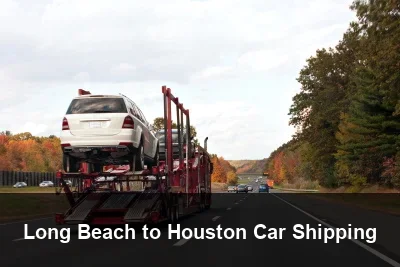
The Long Beach–Houston lane runs consistently year-round, but pricing and availability shift with three identifiable cycles. Summer peaks in June through August when student and relocation volume rises. A secondary spike hits January through February when snowbirds returning from the Southwest and early spring Texas relocations compress capacity. Winter weather on the West Texas segment of I-10 is a real transit variable — this resource covers cold-weather shipping specifics: https://california.auto-transport-shipping.com/articles/auto-transport-challenges-during-the-winter.html
Summer Peak (June–August)
This is the busiest period on the Long Beach–Houston corridor. University of Houston and Rice University student moves, oil-and-gas industry relocation packages, and general PCS season for military personnel at Ellington Field all converge. Carrier availability is high but so is demand, which compresses booking windows. Book 10 to 14 days ahead if you need a specific pickup window. Rates run $100 to $200 above spring baseline.
Fall Transition (September–November)
September is hurricane season on the Gulf Coast, and carriers may hold deliveries in the Houston metro if a storm threatens. That said, this is historically a well-priced window for westbound moves — Long Beach-bound carriers are easy to find, which occasionally means eastbound rates dip slightly. Book in October for the best combination of availability and pricing before holiday demand tightens the market.
Winter Caution (December–February)
January and February bring the highest risk of I-10 weather delays between El Paso and Ozona, TX. Blue norther events can close roads for 12 to 36 hours. Add one to two days of buffer to your delivery expectation if booking in this window. Military PCS moves tied to year-end orders keep demand steady despite the conditions. Review winter transport risks before booking: https://california.auto-transport-shipping.com/articles/auto-transport-challenges-during-the-winter.html
Spring Relo Season (March–May)
Spring is the most balanced period on this route — weather is stable, the West Texas ice risk has passed, and Gulf Coast hurricane season hasn't begun. Corporate relocation packages from California to Houston energy employers tend to execute in Q1 and Q2, keeping carrier loads steady. Rates are typically at their lowest in March before summer demand builds. If your move date is flexible, this is the optimal window.
Military PCS Cycle (May–September)
Fort Sam Houston in San Antonio and Ellington Field Joint Reserve Base near Houston both receive significant PCS orders effective June and July. Military families shipping vehicles from the Los Angeles basin — including Long Beach Naval Station-area personnel and those at nearby bases — represent a meaningful share of eastbound loads during this window. If you have a PCS move, confirm your carrier accepts military BOL documentation at booking.
How to Choose a Long Beach to Houston Car Shipping Company
Getting multiple quotes is step one — knowing what to look for in those quotes matters just as much. Our guide on how to select a car shipping company covers the full process. Here are the six things that matter most:
FMCSA Registration
Every carrier or broker must hold a valid MC number. Verify any company at FMCSA SAFER before you book.
Proof of Insurance
Ask for a current certificate of insurance. Open carriers typically carry $100,000–$250,000 per load; enclosed commonly $500,000 or more. Learn what auto transport insurance covers.
All-In Pricing
Your quote should be a final number with no fees added after booking. Know the difference between brokers and carriers and confirm what the quote covers before you agree.
Bill of Lading
A complete Bill of Lading is filled out at pickup and delivery. Our Bill of Lading guide explains what to check. Never sign an incomplete one.
Real Reviews
Check Google and the BBB. Look at how they handled complaints and damage claims — that tells you more than a five-star average from happy customers.
Route Experience
A carrier who regularly runs the Long Beach–Houston lane knows that the I-710/I-10 interchange in East Los Angeles is impassable during weekday afternoon peak hours and that departing before 6 a.m. or after 8 p.m. saves two hours of dead time. They know the Border Patrol checkpoint west of El Paso on I-10 requires a full stop and documentation check, and they've already got their paperwork staged. They know that Blythe fuel is consistently cheaper than Quartzsite. They know the I-10 rest area at Fort Stockton is the last reliable overnight pull-through before the Houston metro. They know which Houston surface streets near the Medical Center can accept a 75-foot rig and which ones will get them stuck. That operational knowledge is why corridor-experienced carriers have better on-time records than generic long-haul operators picking up this route for the first time.
Long Beach to Houston Car Shipping — FAQ
How much does it cost to ship a car from Long Beach to Houston?
For a standard sedan on open transport, expect to pay between $950 and $1,350 on this corridor depending on season and current diesel prices. SUVs and trucks run $100 to $200 higher due to added weight and space on the carrier. Enclosed transport adds $300 to $500 to those figures. The lowest rates typically appear in March and early April; the highest in June through August when student and PCS moves peak. Your exact quote depends on your vehicle's dimensions, your requested pickup window, and available carrier capacity at the time of booking. Fuel costs have a direct effect on this pricing — this article explains how: https://california.auto-transport-shipping.com/articles/how-gas-prices-impact-california-auto-transport-fees.html
How long does Long Beach to Houston car shipping take?
Standard transit time on this route is 4 to 7 days from carrier pickup. The driving distance is approximately 1,553 miles, which represents roughly 22 to 24 hours of pure drive time — but carriers operate under federal hours-of-service regulations, carry multiple vehicles, and make additional stops en route. From Long Beach specifically, the high volume of carriers cycling through the port area means your vehicle typically gets dispatched within 1 to 3 business days of booking. Winter weather on the El Paso–Ozona segment of I-10 is the primary delay variable and can add one to two days in January or February. If you have a hard deadline, expedited options are available: https://california.auto-transport-shipping.com/articles/california-expedited-car-shipping-fast-cost.html
Is my car insured during transport from Long Beach to Houston?
Yes. Every licensed auto transport carrier operating in the United States is required by the FMCSA to carry cargo liability insurance, which covers your vehicle while it's on the carrier's trailer. The coverage amount varies by carrier — most run $100,000 to $250,000 in cargo liability, which is sufficient for standard vehicles. Before your vehicle is loaded in Long Beach, both you and the carrier sign a Bill of Lading documenting the vehicle's pre-transport condition. At delivery in Houston, you compare that document to the vehicle's current condition before signing off. If there's a discrepancy, you have a documented claim basis. For a full breakdown of how transport insurance works, see: https://california.auto-transport-shipping.com/articles/understanding-auto-transport-insurance.html — and if you ever need to file a claim: https://california.auto-transport-shipping.com/articles/how-to-file-a-claim-for-vehicle-damage-during-transport.html
Should I choose open or enclosed transport for the Long Beach to Houston route?
Open transport is the right choice for most vehicles on this corridor. I-10 is a well-maintained interstate through the full 1,553-mile run, and there are no high-mountain passes or gravel sections that create unusual road debris exposure. The one legitimate consideration is the desert stretch through the Mojave and West Texas, where temperature swings between day and night are extreme — but open carriers handle those conditions routinely. Enclosed transport is worth the added cost if your vehicle is a classic, a high-value exotic, or an unrestored collector car where any exterior exposure matters. For a detailed comparison of both options: https://california.auto-transport-shipping.com/articles/open-vs-enclosed-auto-transport-pros-and-cons.html
Do I have to be present at pickup in Long Beach and delivery in Houston?
You don't have to be physically present yourself, but someone with authority to release the vehicle at pickup and accept it at delivery must be there. That person signs the Bill of Lading at both ends — it's the document that records your vehicle's pre-transport condition and serves as the basis for any damage claim. If you can't be present, a trusted contact — a friend, family member, or employer representative — can handle it with your authorization. Do not sign a blank or incomplete Bill of Lading at either location. For more on what the Bill of Lading covers and why it matters: https://california.auto-transport-shipping.com/articles/california-auto-transport-bill-of-lading-information.html
Does winter weather on I-10 through West Texas affect my shipment?
It can, and it's the most route-specific delay risk on this corridor. The stretch of I-10 between El Paso and San Antonio — particularly near Ozona and Fort Stockton — sits at elevations between 2,000 and 4,500 feet and is vulnerable to blue norther events that bring ice and occasional road closures in January and February. When that happens, carriers hold position until roads are cleared, which can add one to two days to your transit. If you're booking a January or February shipment, build that buffer into your expectations and don't schedule vehicle pickup within 24 hours of a critical delivery deadline at the Houston end.
Are there special considerations for military PCS shipments on this route?
Yes. If you're PCS-ing from a Southern California base — including personnel stationed near Long Beach, San Diego, or Camp Pendleton — to Fort Sam Houston in San Antonio or Ellington Field Joint Reserve Base near Houston, confirm at booking that your carrier accepts military Bill of Lading documentation and works with your branch's transportation office. PCS orders move in concentrated windows from May through September, which tightens carrier availability on the Long Beach–Houston lane. Booking 2 to 3 weeks ahead during PCS season is strongly recommended. Most reputable carriers on this corridor are familiar with military paperwork requirements, but verify before you confirm.
Can I ship my car from nearby Lakewood, Compton, or Carson instead of Long Beach proper?
Yes — carriers serving the Long Beach origin zone routinely cover Lakewood, Compton, and Carson as part of the same pickup radius. These cities are all within a few miles of the I-710/I-10 corridor, which is the primary carrier access route heading east toward Houston. Pickup from any of these locations typically involves no additional fee and no change in dispatch timeline. When you fill out your quote, enter your actual address — if it's in one of these adjacent cities, the dispatcher will confirm carrier availability in that specific area and set your pickup point accordingly.
Ready to Ship Your Car from Long Beach to Houston?
One form gets you up to 10 free quotes from licensed, insured carriers. Compare costs and transit times and book the best deal for your schedule.