

Lancaster to Boston Car Shipping Route
Lancaster to Boston is approximately 2,979 miles by road. Carriers access the route from Lancaster via SR-14 south toward the interchange with I-210, then pick up I-40 or I-10 heading east depending on the specific carrier's dispatch network. The primary long-haul corridor is I-40 through Barstow, Flagstaff, Albuquerque, Oklahoma City, and St. Louis, connecting to I-70 and I-90 for the final push into Boston. That crossing spans desert, mountain, and northern plains terrain — conditions that change significantly by season. Shipping your vehicle avoids roughly 3,000 miles of highway wear, fuel costs exceeding $400, and two to three days of driving. For a detailed comparison, see https://california.auto-transport-shipping.com/articles/benefits-of-auto-transport-service-vs-driving-yourself.html.
Boston's inbound demand is driven by several distinct populations. Hanscom Air Force Base in Bedford generates military PCS moves throughout the year. Harvard University, MIT, Boston University, Tufts, and Northeastern collectively relocate thousands of students and faculty annually, with the heaviest surge hitting August and September. Major employers including Raytheon Technologies, Biogen, and the major teaching hospitals draw professional relocations year-round. On the route itself, winter weather between Missouri and Massachusetts — particularly through Ohio, Pennsylvania, and upstate New York — can add transit days and occasionally pushes carriers to reroute through I-80 further north. Before you book, review common mistakes shippers make at https://california.auto-transport-shipping.com/articles/auto-transport-mistakes-to-avoid.html to avoid unnecessary delays or cost overruns.
Lancaster to Boston Car Shipping Rates
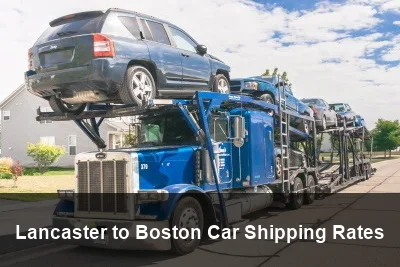
At nearly 3,000 miles, this corridor sits in the upper distance tier, which means base rates are higher than mid-country routes but carrier availability is also more consistent. Expect open transport rates broadly in the $1,100–$1,600 range depending on season, vehicle size, and current fuel costs. Diesel prices directly affect what carriers charge on long hauls — this route burns significant fuel. Track that dynamic at https://california.auto-transport-shipping.com/articles/how-gas-prices-impact-california-auto-transport-fees.html. Late August through September sees a demand spike driven by university move-ins, which compresses availability and pushes rates up across Boston-bound lanes.
What affects the cost of Lancaster to Boston car shipping:
- Vehicle type and size — larger vehicles take more carrier space; aftermarket additions like lift kits, oversized mirrors, or roof accessories can add fees
- Open vs. enclosed transport — open is lower cost with stronger carrier availability; enclosed protects against weather, debris, and road conditions
- Standard vs. expedited pickup — expedited prioritizes your vehicle for the next available dispatch, typically at a $100–$300 premium
- Time of year — peak demand seasons drive rates higher; off-peak windows offer the most competitive pricing
- Fuel costs — diesel prices affect carrier rates; longer routes are more sensitive to fuel price swings
- Vehicle condition — non-running vehicles require special loading equipment and cost more to ship
| Vehicle Type | Open Car Shipping (Est.) | Enclosed Car Shipping (Est.) |
|---|---|---|
| Sedan | $1,100 – $1,600 | $1,900 – $2,700 |
| SUV / Crossover | $1,300 – $1,900 | $2,200 – $3,100 |
| Pickup Truck | $1,300 – $1,950 | $2,200 – $3,150 |
| Minivan | $1,300 – $1,900 | $2,200 – $3,100 |
| Luxury / Classic Car | $1,550 – $2,200 | $2,600 – $3,600 |
| Non-Running Vehicle | Add $200–400 | Add $200–400 |
* Estimated ranges based on recent Lancaster to Boston shipments. Actual rate depends on vehicle, locations, booking date, and current fuel costs. Use the form on this page to compare real quotes from licensed carriers.
Open or Enclosed: What This Specific Route Requires
For most standard vehicles — sedans, SUVs, pickup trucks — open transport is the practical choice on this corridor. The I-40 stretch through the Southwest is dry and exposed but manageable. The concern shifts east of Missouri, particularly October through April, when road salt, sleet, and highway grime are real factors through Ohio, Pennsylvania, and Massachusetts. If you're shipping a luxury vehicle, classic car, or anything with a finished paint job you care about, enclosed is worth the premium on this route specifically because of the salt-belt exposure in the final 800 miles.
How Long Does Lancaster to Boston Car Shipping Take?
Lancaster to Boston typically runs 7 to 10 transit days under normal conditions. The driving distance alone would take four to five days at highway pace; carriers build in loading logistics, mandatory rest periods, and multi-stop routes. Lancaster's SR-14 access keeps dispatch times efficient — carriers working the LA basin stop through the Antelope Valley regularly. If your schedule is tight, expedited options can shorten this, though they carry a premium. For details on expedited service, see https://california.auto-transport-shipping.com/articles/california-expedited-car-shipping-fast-cost.html. Book at least two weeks ahead during August and September to avoid wait times on Boston-bound loads.
| Service Type | Typical Transit | Pickup Window | Best For |
|---|---|---|---|
| Open — Standard | 7–10 days | 2–5 business days | Best value; most common choice on this route |
| Open — Expedited | 5–7 days | 1–2 business days | Firm arrival date; faster dispatch window |
| Enclosed — Standard | 7–10 days | 4–8 business days | Luxury, classic, or modified vehicles |
| Enclosed — Expedited | 5–7 days | 2–4 business days | High-value vehicles on a firm delivery deadline |
** Winter weather between Missouri and Massachusetts — ice on I-70 through Indiana, snow across Pennsylvania on I-80 or I-76, and the final approach into Boston — can add two to three days to an otherwise clean run. December through February carries the highest weather-delay risk on this corridor.
Lancaster to Boston — Route & Logistics
Carriers depart Lancaster using SR-14 south, connecting to I-210 east or I-5 south before picking up I-10 or I-40 east. The primary long-haul path runs I-40 through Barstow and across the Southwest, transitioning to I-44 and I-70 through Missouri and Indiana, then I-76 or I-80 east into New England, terminating on I-93 or I-90 into Boston.
Key Corridor Waypoints
- Barstow, CA First major staging point after departing the Antelope Valley. Carriers consolidate loads here and confirm routing between I-40 and I-15. Barstow sits at 2,180 feet and functions as the practical eastern gateway to the Mojave crossing. Fuel and rest stops here are standard. From Lancaster, this leg takes roughly two hours via SR-14 and I-15 south.
- Flagstaff, AZ Flagstaff sits at 6,909 feet — the highest point on I-40 between California and Albuquerque. Carriers watch this stretch carefully in winter; snow and ice are common November through March even when the desert below is clear. Weight station checks occur here. Experienced carriers time arrivals to avoid evening temperature drops that can freeze brake lines on loaded trailers.
- Albuquerque, NM Albuquerque is a common overnight stop and load-balancing point. Carriers running the southern corridor often swap legs here, and dispatch networks use it as a handoff city. I-40 continues east from the Rio Grande crossing toward Oklahoma City. Traffic through Albuquerque during morning rush can add an hour; experienced drivers account for this when planning next-leg departure times.
- St. Louis, MO The I-40 and I-44 corridor feeds into St. Louis, where carriers transition to I-70 heading northeast toward Indianapolis and Columbus. This is a critical junction for cross-country loads — traffic management here during weekday rush hours affects scheduling. Some carriers stage overnight in the metro to clear the Ohio corridor during daylight, which simplifies navigation through the I-76 and I-80 split.
- Columbus, OH Columbus sits roughly 700 miles from Boston and is a common final overnight stop for carriers on this route. From here, carriers choose between I-70 east to I-76 through Akron and I-80 northeast — route selection depends on weather conditions in Pennsylvania. Winter months frequently see I-76 carrying salt and ice through the Appalachian plateau, adding caution and time to this leg.
- Boston, MA (I-93 / I-90 Approach) Carriers enter Boston from the west on I-90 (the Massachusetts Turnpike) or from the south on I-93. Urban density, narrow side streets in neighborhoods like Beacon Hill, the South End, and Cambridge require carriers to stage in accessible lots — often near Assembly Row in Somerville or along the South Bay corridor — for residential delivery coordination. The Big Dig infrastructure limits where 75-foot haulers can maneuver.
Pickup & Delivery Access
- Pickup Access in Lancaster Lancaster's high desert grid is fully accessible to standard car haulers. Carriers running SR-14 stop through the Antelope Valley corridor regularly. Wide streets in residential areas around Lancaster Boulevard, 10th Street West, and the Avenue L corridor handle trailer access without issue. For tight driveways, meet-point options near the Antelope Valley Mall on Rancho Vista Boulevard or SR-14 commercial frontage roads work efficiently.
- Delivery Access in Boston Boston delivery requires planning. Most residential neighborhoods in Cambridge, Charlestown, South Boston, and Beacon Hill have streets too narrow for full car haulers. Carriers typically stage in accessible lots near Assembly Row in Somerville, the South Bay Center area, or along I-93 service roads. Coordinate your meet point in advance. The Seaport District and university areas near BU and Northeastern have designated loading zones but no permanent carrier staging.
- Nearby Pickup Locations Carriers picking up in Lancaster regularly extend service to Palmdale, Quartz Hill, and Rosamond. Call 1‑800‑590‑6492 to confirm door-to-door availability at your address.
Open vs. Enclosed Car Shipping: Lancaster to Boston
Both options use licensed, insured carriers and deliver door to door. For a full breakdown, read the pros and cons of open vs. enclosed car shipping.
Open Car Shipping
Most Popular- Lower cost — the practical choice for most vehicles
- More carriers available on this corridor
- Faster dispatch from booking to pickup
- Works well for sedans, SUVs, trucks, and minivans
- Vehicle rides on an open multi-car carrier
- Cargo insurance required on all licensed carriers
Estimated cost: $1,100 – $1,950
Enclosed Car Shipping
Premium Protection- Full protection from weather, debris, and road grime
- Best for luxury, exotic, and classic vehicles
- Recommended for low-clearance and custom-built cars
- Wheel-net or soft-tie systems prevent contact damage
- Higher cargo coverage — commonly $500,000 per load
- White-glove handling by experienced operators
Estimated cost: $1,900 – $3,150
Not sure which is right for your vehicle? Call 1-800-590-6492 and we'll point you in the right direction. Also worth reading: the top 10 questions to ask any car shipping company before you commit.
How to Prepare Your Car for Shipping to Boston
A little prep before pickup protects you if there's ever a dispute about your vehicle's condition. This checklist is from our full guide on preparing your car for transport:
- Remove all personal belongings from the interior and trunk
- Leave only a quarter tank of fuel — enough to load and unload
- Take date-stamped photos of the full exterior and interior
- Remove or disable toll transponders (FasTrak, E-ZPass, etc.)
- Retract or remove roof racks, spoilers, antennas, and bike mounts
- Make sure the battery is charged and tires are properly inflated
- Tell the carrier about any existing leaks or mechanical issues
- Deactivate the car alarm before the carrier arrives
- Write down the mileage on the Bill of Lading at pickup
- Fold in side mirrors if the vehicle is wider than standard
Personal items: Most carriers won't cover belongings left in the car. Read the full rules on shipping personal items in your vehicle. Also review our Bill of Lading guide so you know exactly what to check at pickup and delivery.
When to Ship Your Car from Lancaster to Boston
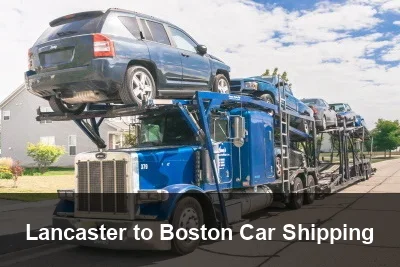
This route has two distinct demand peaks and one significant weather window. Late August through September is the sharpest spike — Boston-area universities pull thousands of student vehicles from California. Summer generally keeps the southern I-40 corridor clear and fast. Winter introduces real risk east of Missouri; road salt and ice through Ohio and Pennsylvania slow transit and can delay delivery by two to three days. For a full breakdown of winter transport considerations, see https://california.auto-transport-shipping.com/articles/auto-transport-challenges-during-the-winter.html.
Student Move-In Season (August–September)
This is the single busiest period on the Lancaster-to-Boston corridor. Students attending MIT, Harvard, Boston University, Northeastern, and Tufts ship vehicles from Southern California in significant numbers. Carrier capacity tightens in mid-August and rates climb 10–20% above baseline. Book four to six weeks ahead if your delivery needs to land before September 1. Waiting until late July to book almost guarantees either a delay or a higher rate.
Summer Corridor Window (June–July)
June and July offer good balance: the I-40 desert crossing is hot but dry, carrier availability is solid ahead of the August surge, and rates haven't yet spiked. Professional relocations from aerospace employers in Lancaster and Palmdale run steady through summer. If you have flexibility and want to avoid both winter delays and the student-season premium, mid-June to mid-July is the most predictable booking window on this route.
Winter Weather Risk (December–February)
East of St. Louis, this route enters the salt belt hard. I-70 through Indiana, I-76 through Pennsylvania, and the final approach into Boston all carry snow, ice, and heavy road salt from December through February. Enclosed transport is worth the premium on winter moves for vehicles with finished paint. Open transport carriers on this corridor build buffer days into winter ETAs — plan for 10–14 days rather than 7–9 during this window.
Spring Booking Window (March–May)
Spring is the calmest season on this corridor. Academic-year relocations taper off, winter weather clears east of the Rockies by March, and carrier availability improves. Rates return to baseline or slightly below. Military PCS orders from Edwards Air Force Base and Hanscom AFB generate steady but manageable volume. If your move isn't time-sensitive, March through May is when you'll find the best combination of pricing, availability, and transit reliability.
Military PCS Cycles (Year-Round, peaks June–July)
Edwards Air Force Base in Lancaster and Hanscom Air Force Base in Bedford, MA are both active installations with regular PCS transfers. The military moving season peaks June through July when orders coincide with school-year transitions. These moves generate consistent West Coast-to-New England volume, which supports carrier lane activity on this corridor even outside student season. If you're a service member, confirm your orders before booking — most brokers can accommodate PCS-specific flexibility windows.
How to Choose a Lancaster to Boston Car Shipping Company
Getting multiple quotes is step one — knowing what to look for in those quotes matters just as much. Our guide on how to select a car shipping company covers the full process. Here are the six things that matter most:
FMCSA Registration
Every carrier or broker must hold a valid MC number. Verify any company at FMCSA SAFER before you book.
Proof of Insurance
Ask for a current certificate of insurance. Open carriers typically carry $100,000–$250,000 per load; enclosed commonly $500,000 or more. Learn what auto transport insurance covers.
All-In Pricing
Your quote should be a final number with no fees added after booking. Know the difference between brokers and carriers and confirm what the quote covers before you agree.
Bill of Lading
A complete Bill of Lading is filled out at pickup and delivery. Our Bill of Lading guide explains what to check. Never sign an incomplete one.
Real Reviews
Check Google and the BBB. Look at how they handled complaints and damage claims — that tells you more than a five-star average from happy customers.
Route Experience
A carrier who runs Lancaster to Boston regularly knows that the I-40 corridor through Flagstaff can shut down in winter with zero notice — the Arizona DOT closes the highway to commercial traffic during severe snow events, and an inexperienced carrier caught there loses a day minimum. Experienced drivers on this route time their Flagstaff crossing for midday when temperatures are highest. They also know that Boston delivery requires staging — no full hauler is threading through Cambridge side streets or Beacon Hill. The handoff typically happens near Somerville or along I-93 service access, not curbside in a residential neighborhood. On the California end, SR-14 access from Lancaster is clean, but the Cajon Pass on I-15 south has its own inspection and weight station dynamics that affect load planning before the desert crossing begins.
Lancaster to Boston Car Shipping — FAQ
How much does it cost to ship a car from Lancaster to Boston?
For most standard vehicles, open transport on this corridor runs roughly $1,100 to $1,600 depending on the time of year, vehicle size, and current diesel prices. Enclosed transport adds $400 to $700 to that range. The late August through September student-season spike pushes rates toward the top of the open-transport range and sometimes above it when carrier capacity tightens. Oversized vehicles — full-size trucks, lifted SUVs, large vans — pay a surcharge due to space and weight on the trailer. The most accurate quote comes from locking in your pickup date; floating dates are harder to price with confidence.
How long does Lancaster to Boston car shipping take?
The standard transit window on this route is 7 to 10 days from pickup. Lancaster's SR-14 access feeds directly into the I-40 corridor, so carriers dispatching from the Antelope Valley don't lose time working through heavy LA basin traffic. The full route covers nearly 3,000 miles across eight states. Weather east of Missouri — particularly December through February — can extend that to 10 to 14 days. The student-season rush in August and September can slow dispatch if carrier capacity is committed to other loads. If your delivery date is firm, expedited options are available but carry a significant premium.
Is my car insured during transport from Lancaster to Boston?
Yes. Every licensed carrier operating in the United States is required by federal law to carry cargo insurance. That coverage applies to your vehicle while it's on the trailer. Before your carrier loads the vehicle, a bill of lading is completed documenting the existing condition — paint, glass, body panels. At delivery, you compare the vehicle against that document. If damage occurred in transit, that's your record for filing a claim. Before you book, read through how insurance works on transported vehicles at https://california.auto-transport-shipping.com/articles/understanding-auto-transport-insurance.html, and understand the claims process at https://california.auto-transport-shipping.com/articles/how-to-file-a-claim-for-vehicle-damage-during-transport.html.
Should I choose open or enclosed transport for this route?
For standard vehicles shipped in spring, summer, or early fall, open transport is the practical and cost-effective choice. The I-40 desert crossing is dry and presents minimal exposure risk. The calculus shifts east of Missouri from October through April — road salt, sleet, and highway grime through Ohio, Pennsylvania, and Massachusetts are real factors that can affect paint and undercarriage. If you're shipping a classic car, exotic, or a vehicle with a freshly restored finish, enclosed is the right call for this specific corridor's winter conditions. For a full comparison of the two options, see https://california.auto-transport-shipping.com/articles/open-vs-enclosed-auto-transport-pros-and-cons.html.
Do I have to be present at pickup and delivery?
You don't have to be present yourself, but an authorized representative does need to be there for both the pickup and delivery. At pickup, that person signs the bill of lading confirming the vehicle's pre-transport condition. At delivery in Boston, they inspect the vehicle against the same document and sign off before the carrier releases it. If you're relocating and won't be at either end, a trusted contact — family member, colleague, or real estate agent — can serve that role. Make sure whoever receives the vehicle understands how to inspect it properly. Full bill of lading guidance is at https://california.auto-transport-shipping.com/articles/california-auto-transport-bill-of-lading-information.html.
How does winter weather affect shipping from Lancaster to Boston?
Lancaster's departure end is dry and mild through most of the year — the Antelope Valley rarely creates weather complications for outbound carriers. The risk accumulates east of Albuquerque. I-40 through northern Arizona and New Mexico carries occasional snow, and Flagstaff at nearly 7,000 feet can shut the highway to commercial vehicles during severe events. From Missouri eastward, the I-70 and I-76 corridors through Indiana, Ohio, and Pennsylvania are full salt-belt territory from December through February. Carriers build buffer days into winter ETAs, and Boston's own snowfall can complicate final delivery logistics. Plan for 10 to 14 days on winter bookings rather than the standard 7 to 10.
I'm PCS'ing from Edwards Air Force Base to Hanscom AFB — what do I need to know about shipping my vehicle?
This is one of the more common military moves on this corridor, and carriers who run it regularly understand PCS timelines. Edwards to Hanscom is a West Coast-to-New England transfer with real volume behind it, which helps with carrier availability. Book as soon as your orders are confirmed — military PCS season peaks June through July and capacity tightens across all California-to-Boston lanes. The government travel entitlement may cover one privately owned vehicle; confirm your authorization before you pay out of pocket. At pickup and delivery, the bill of lading process is the same — thorough inspection protects you in any damage dispute.
When is the worst time to book this route, and how do I avoid it?
Late August is the single most congested booking window on Lancaster-to-Boston. University move-in at MIT, Harvard, Boston University, Northeastern, and Tufts pulls enormous demand from California, and carrier capacity across all Boston-bound lanes fills quickly. Waiting until the first week of August to book a vehicle you need in Boston by September 1 puts you at real risk of delay or a significantly elevated rate. If your timing is fixed around an academic calendar, book in June or early July. If you have full flexibility, mid-March through May and mid-October through November offer the best combination of rates and availability on this corridor.
Ready to Ship Your Car from Lancaster to Boston?
One form gets you up to 10 free quotes from licensed, insured carriers. Compare costs and transit times and book the best deal for your schedule.