

Hayward to Sacramento Car Shipping Route
Hayward to Sacramento covers approximately 90 miles by road. Carriers depart Hayward via I-880 north or I-238, connecting to I-580 east, then transition to I-205 and I-5 north into Sacramento — or alternatively use I-580 to I-205 to SR-99 north depending on load and timing. The East Bay grid is well-serviced by carriers, and Hayward sits directly on the I-880 corridor, making pickup access efficient. The flat Central Valley stretch keeps transit predictable and avoids mountain-grade complications. Rather than putting miles on your vehicle for a 90-mile haul, professional transport removes the wear entirely. See why that math matters: https://california.auto-transport-shipping.com/articles/benefits-of-auto-transport-service-vs-driving-yourself.html
Sacramento demand is fueled by several concrete anchors. California's state government employs tens of thousands, generating steady relocation volume. Sacramento State University and proximity to UC Davis create predictable student shipping windows in August and May. Beale Air Force Base in Marysville, roughly 40 miles north, generates PCS-related transport demand that spills into Sacramento staging. Major employers including Sutter Health, Dignity Health, Intel's Folsom campus, and Amazon's regional distribution network all contribute to consistent inbound vehicle demand. Summer heat in the Central Valley is a real factor — temperatures routinely exceed 100°F in July and August, which affects vehicle condition during open transport. Before you book, review: https://california.auto-transport-shipping.com/articles/auto-transport-mistakes-to-avoid.html
Hayward to Sacramento Car Shipping Rates
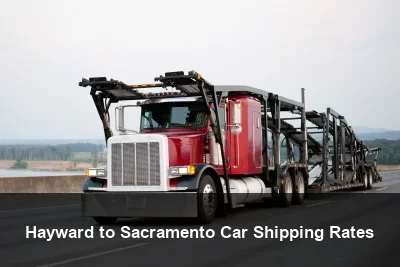
At 90 miles, this route sits in the short-haul pricing tier, which means the per-mile rate is higher than on 500-mile interstate runs. Expect base rates for a standard sedan on open transport to range from approximately $250 to $400 depending on season and carrier availability. Summer months see a moderate spike tied to student and military PCS demand. Fuel costs on this corridor are a direct pricing input — read how that works: https://california.auto-transport-shipping.com/articles/how-gas-prices-impact-california-auto-transport-fees.html
What affects the cost of Hayward to Sacramento car shipping:
- Vehicle type and size — larger vehicles take more carrier space; aftermarket additions like lift kits, oversized mirrors, or roof accessories can add fees
- Open vs. enclosed transport — open is lower cost with stronger carrier availability; enclosed protects against weather, debris, and road conditions
- Standard vs. expedited pickup — expedited prioritizes your vehicle for the next available dispatch, typically at a $100–$300 premium
- Time of year — peak demand seasons drive rates higher; off-peak windows offer the most competitive pricing
- Fuel costs — diesel prices affect carrier rates; longer routes are more sensitive to fuel price swings
- Vehicle condition — non-running vehicles require special loading equipment and cost more to ship
| Vehicle Type | Open Car Shipping (Est.) | Enclosed Car Shipping (Est.) |
|---|---|---|
| Sedan | $350 – $500 | $700 – $950 |
| SUV / Crossover | $400 – $600 | $800 – $1,100 |
| Pickup Truck | $400 – $600 | $800 – $1,100 |
| Minivan | $400 – $600 | $800 – $1,100 |
| Luxury / Classic Car | $500 – $700 | $950 – $1,300 |
| Non-Running Vehicle | Add $100–200 | Add $100–200 |
* Estimated ranges based on recent Hayward to Sacramento shipments. Actual rate depends on vehicle, locations, booking date, and current fuel costs. Use the form on this page to compare real quotes from licensed carriers.
Open Transport Works Well Here — With One Summer Exception
Open transport is the practical choice for most vehicles on this route. The corridor is flat, carriers are familiar with it, and there are no mountain passes or road debris hazards comparable to routes through the Sierras. The exception is summer: Central Valley temperatures above 100°F can affect exterior finishes, trim, and interiors on luxury or classic vehicles left on an open carrier during midday staging. If you are shipping a high-value, exotic, or freshly painted vehicle between June and September, enclosed transport is worth the premium on this specific corridor.
How Long Does Hayward to Sacramento Car Shipping Take?
Most Hayward-to-Sacramento shipments complete in one to two days from confirmed pickup. The driving distance is under two hours, so transit time is almost entirely a function of carrier scheduling and load sequencing rather than road time. Because carriers run this lane frequently — particularly those operating between the Bay Area and the Central Valley — dispatch-to-delivery windows are tighter than on rural corridors. If your timeline is compressed, expedited dispatch is available: https://california.auto-transport-shipping.com/articles/california-expedited-car-shipping-fast-cost.html
| Service Type | Typical Transit | Pickup Window | Best For |
|---|---|---|---|
| Open — Standard | 1–2 days | 1–3 business days | Best value; most common choice on this route |
| Open — Expedited | Same–1 day | Next day–1 business day | Firm arrival date; faster dispatch window |
| Enclosed — Standard | 2–3 days | 2–5 business days | Luxury, classic, or modified vehicles |
| Enclosed — Expedited | 1–2 days | 1–2 business days | High-value vehicles on a firm delivery deadline |
** Summer heat occasionally causes carriers to adjust Sacramento delivery timing to early morning to avoid midday temperatures above 105°F. Tule fog in the Central Valley from November through February can slow SR-99 and I-5 traffic significantly, adding a partial day to delivery windows on affected dates.
Hayward to Sacramento — Route & Logistics
Carriers access this route from Hayward via I-880 north to I-580 east, then connect to I-205 east and either I-5 north or SR-99 north into Sacramento. The full haul runs approximately 90 miles. The East Bay freeway grid gives carriers multiple entry options from Hayward's industrial and commercial loading zones, and the absence of mountain grades keeps scheduling predictable.
Key Corridor Waypoints
- Hayward, CA — Origin Carrier pickup originates from Hayward's East Bay grid, accessed via I-880 or I-238. Industrial zones near the Hayward BART station and Mission Boulevard corridor offer practical staging space. Carriers typically load here as part of a larger Bay Area sweep before heading east on I-580. Flat terrain and wide commercial streets make multi-vehicle transport trailer access straightforward.
- Dublin/Pleasanton Interchange, CA The I-580 and I-680 interchange near Dublin marks the transition from the East Bay toward the Central Valley. Carriers confirm load balance here before the Altamont Pass grade ahead. This interchange is a known congestion point during morning and evening commute hours — carriers running afternoon dispatches typically clear it with less delay than mid-morning loads.
- Altamont Pass, CA — Elevation 1,009 ft Altamont Pass on I-580 is the one meaningful grade on this otherwise flat corridor, reaching just over 1,000 feet. Multi-vehicle transport carriers check brake temperatures and load tension at the summit before descending into the San Joaquin Valley. Wind turbine arrays here create crosswind conditions that affect high-profile multi-car carriers — experienced drivers reduce speed accordingly through the pass.
- Tracy, CA — I-205 / I-5 Junction Tracy marks the interchange where I-205 meets I-5 north. Carriers heading to Sacramento typically take I-5 north here rather than SR-99, depending on load destination within Sacramento. This junction is a decision point for routing and is also a practical rest and fuel stop for drivers on longer multi-state runs continuing north after Sacramento delivery.
- Stockton, CA — SR-99 Corridor Access Carriers using SR-99 instead of I-5 pass through Stockton, which is a secondary staging area for Central Valley loads. Some carriers pick up or drop off here before continuing to Sacramento. SR-99 into Sacramento carries heavier agricultural truck traffic, which can affect travel time on weekday mornings during harvest seasons from August through October.
- Sacramento, CA — Destination Delivery zones in Sacramento vary by neighborhood. Midtown and Downtown Sacramento have narrow streets and permit-restricted loading zones that may require a nearby staging area. Natomas, Rancho Cordova, and Elk Grove are fully carrier-accessible with commercial street access. The Capitol Mall area requires coordination. Carriers typically confirm a delivery meet point with you 12 to 24 hours in advance.
Pickup & Delivery Access
- Pickup Access in Hayward Hayward carriers access the city efficiently from I-880 and I-238. The industrial corridor along Whipple Road and the Mission Boulevard commercial strip are common staging areas. Residential streets in central Hayward can be narrow — if your home has restricted access, a meet point at a nearby shopping center or the Hayward BART station parking area works well and adds no delay.
- Delivery Access in Sacramento Sacramento delivery access depends heavily on neighborhood. Elk Grove, Natomas, Rancho Cordova, and Roseville-adjacent areas are fully accessible for large transport trailers. Downtown Sacramento, Midtown, and the Grid neighborhood have restricted loading zones and narrow streets that require a staging meet point. Oak Park and Land Park are manageable but carriers may need a block radius of clearance. Confirm your delivery address type when booking.
- Nearby Pickup Locations Carriers picking up in Hayward regularly extend service to San Leandro, Castro Valley, and Union City. Call 1‑800‑590‑6492 to confirm door-to-door availability at your address.
Open vs. Enclosed Car Shipping: Hayward to Sacramento
Both options use licensed, insured carriers and deliver door to door. For a full breakdown, read the pros and cons of open vs. enclosed car shipping.
Open Car Shipping
Most Popular- Lower cost — the practical choice for most vehicles
- More carriers available on this corridor
- Faster dispatch from booking to pickup
- Works well for sedans, SUVs, trucks, and minivans
- Vehicle rides on an open multi-car carrier
- Cargo insurance required on all licensed carriers
Estimated cost: $350 – $600
Enclosed Car Shipping
Premium Protection- Full protection from weather, debris, and road grime
- Best for luxury, exotic, and classic vehicles
- Recommended for low-clearance and custom-built cars
- Wheel-net or soft-tie systems prevent contact damage
- Higher cargo coverage — commonly $500,000 per load
- White-glove handling by experienced operators
Estimated cost: $700 – $1,100
Not sure which is right for your vehicle? Call 1-800-590-6492 and we'll point you in the right direction. Also worth reading: the top 10 questions to ask any car shipping company before you commit.
How to Prepare Your Car for Shipping to Sacramento
A little prep before pickup protects you if there's ever a dispute about your vehicle's condition. This checklist is from our full guide on preparing your car for transport:
- Remove all personal belongings from the interior and trunk
- Leave only a quarter tank of fuel — enough to load and unload
- Take date-stamped photos of the full exterior and interior
- Remove or disable toll transponders (FasTrak, E-ZPass, etc.)
- Retract or remove roof racks, spoilers, antennas, and bike mounts
- Make sure the battery is charged and tires are properly inflated
- Tell the carrier about any existing leaks or mechanical issues
- Deactivate the car alarm before the carrier arrives
- Write down the mileage on the Bill of Lading at pickup
- Fold in side mirrors if the vehicle is wider than standard
Personal items: Most carriers won't cover belongings left in the car. Read the full rules on shipping personal items in your vehicle. Also review our Bill of Lading guide so you know exactly what to check at pickup and delivery.
When to Ship Your Car from Hayward to Sacramento
This corridor has mild seasonality compared to mountain routes, but it is not flat in demand. Summer peaks in June through August are driven by UC Davis and Sacramento State student moves and military PCS orders tied to Beale Air Force Base. Central Valley heat is a real weather consideration in those months. Winter brings tule fog, not snow, but fog-related I-5 and SR-99 delays are a real transit factor from November through February. For a full breakdown of winter transport risks: https://california.auto-transport-shipping.com/articles/auto-transport-challenges-during-the-winter.html
Summer Student Moves (June–August)
UC Davis enrollment and Sacramento State both generate high vehicle shipping volume in late May and August. Carrier availability tightens during these windows and rates nudge upward. If you are shipping for a student move, booking two to three weeks in advance is practical. Late June through July also brings peak Central Valley heat — open carriers parked during midday Sacramento staging can expose vehicle exteriors to temperatures well above 100°F.
Military PCS Season (May–September)
Beale Air Force Base in Marysville generates a significant volume of PCS-related vehicle transport that moves through the Sacramento corridor from May through September. This overlaps with student move season, creating a dual demand spike. If your shipment is PCS-related, confirm with your broker that the carrier is experienced with military bill of lading requirements. Booking as early as your orders allow gives you the most flexibility on rate and timing.
Spring (March–May)
Spring is the most balanced season on this corridor — temperatures are mild, tule fog has cleared, and student demand has not yet peaked. Carrier availability is strong and rates are near their annual low point. If your schedule allows flexibility, March through early May is the easiest window to book with short lead times and competitive pricing. Weather risk on the route is essentially zero during this period.
Winter Tule Fog (November–February)
This corridor does not face snow or ice, but Central Valley tule fog is a serious transit factor from November through February. Dense fog on I-5 and SR-99 near Stockton and Sacramento regularly reduces visibility to near zero, causing carrier slowdowns and California Highway Patrol-enforced speed reductions. Add one to two days of buffer to your expected delivery window if you are shipping during this period. Rates are generally lower to compensate.
Fall Harvest Traffic (August–October)
The Central Valley agricultural harvest runs August through October and puts significant agricultural truck volume on SR-99 between Stockton and Sacramento. Carriers using SR-99 instead of I-5 can face slower transit through this stretch. Carriers with route experience typically default to I-5 during peak harvest months. This is a detail worth confirming with your broker when the shipment is dispatched.
How to Choose a Hayward to Sacramento Car Shipping Company
Getting multiple quotes is step one — knowing what to look for in those quotes matters just as much. Our guide on how to select a car shipping company covers the full process. Here are the six things that matter most:
FMCSA Registration
Every carrier or broker must hold a valid MC number. Verify any company at FMCSA SAFER before you book.
Proof of Insurance
Ask for a current certificate of insurance. Open carriers typically carry $100,000–$250,000 per load; enclosed commonly $500,000 or more. Learn what auto transport insurance covers.
All-In Pricing
Your quote should be a final number with no fees added after booking. Know the difference between brokers and carriers and confirm what the quote covers before you agree.
Bill of Lading
A complete Bill of Lading is filled out at pickup and delivery. Our Bill of Lading guide explains what to check. Never sign an incomplete one.
Real Reviews
Check Google and the BBB. Look at how they handled complaints and damage claims — that tells you more than a five-star average from happy customers.
Route Experience
A carrier who runs Hayward to Sacramento regularly knows that Altamont Pass crosswinds require reduced speed for high-profile multi-car trailers, and that dispatching through Dublin before 7 AM or after 9 AM avoids the worst of the I-580 backup. Experienced carriers on this lane know that Sacramento delivery in Midtown requires a staging block — they call you the night before and confirm a meet location rather than attempting residential delivery on narrow streets. They also know the SR-99 harvest season slowdown and route via I-5 from Tracy in August through October without being asked. That institutional knowledge is the difference between a one-day delivery and a two-day one on a 90-mile haul.
Hayward to Sacramento Car Shipping — FAQ
How much does it cost to ship a car from Hayward to Sacramento?
For a standard sedan on open transport, expect to pay approximately $250 to $400 on this corridor. The 90-mile distance places this in the short-haul pricing tier, where per-mile rates are higher than on longer runs but total cost is lower. SUVs and trucks run $50 to $100 more due to size and weight. Enclosed transport adds roughly $150 to $250 to the base price. Rates move seasonally — summer months cost more due to student and military PCS demand. Fuel price changes also affect pricing on all California routes.
How long does Hayward to Sacramento car shipping take?
Most shipments on this route complete within one to two days of confirmed carrier pickup. The driving distance is under two hours, so transit time reflects scheduling and load sequencing rather than road hours. Carriers running the Bay Area to Central Valley lane frequently, so dispatch windows are shorter here than on rural or low-volume corridors. If you need guaranteed speed, expedited dispatch compresses that window to same-day or next-day pickup in most cases. Tule fog in winter is the primary delay factor that can push delivery to day two or three.
Is my car insured during transport from Hayward to Sacramento?
Yes. Every licensed auto transport carrier is required by federal law to carry cargo insurance that covers your vehicle while it is on the trailer. Coverage levels vary by carrier — confirm the policy limits before you book. Your personal auto insurance may provide supplemental coverage during transport depending on your policy terms, so it is worth a quick call to your insurer. For a full breakdown of how transport insurance works, read https://california.auto-transport-shipping.com/articles/understanding-auto-transport-insurance.html. If you need to file a damage claim after delivery, the process is outlined at https://california.auto-transport-shipping.com/articles/how-to-file-a-claim-for-vehicle-damage-during-transport.html.
Should I choose open or enclosed transport for this route?
Open transport is the right call for the majority of vehicles on this corridor. The route is flat, carriers are experienced, and there are no mountain hazards. The exception is summer: Central Valley temperatures above 100°F during July and August create real exposure risk for vehicles on open trailers sitting in Sacramento during midday staging. If you are shipping a luxury vehicle, a classic car, or a freshly painted vehicle between June and September, enclosed transport is worth the added cost. For a full comparison of both options, see https://california.auto-transport-shipping.com/articles/open-vs-enclosed-auto-transport-pros-and-cons.html.
Do I have to be present at pickup and delivery?
You do not have to be present personally, but someone you authorize must be available at both ends. That person needs to be able to inspect the vehicle, sign the bill of lading at pickup, and sign again at delivery confirming the vehicle arrived in the same condition. The bill of lading is the legal document that records your vehicle's pre-transport condition and protects you in any damage claim. Do not skip this step — a signature on a blank or unchecked form is difficult to dispute later. Full details on the bill of lading process are at https://california.auto-transport-shipping.com/articles/california-auto-transport-bill-of-lading-information.html.
Does Central Valley heat affect my vehicle during summer shipments?
It can. Sacramento and the surrounding Central Valley regularly reach 105°F to 110°F in July and August. Vehicles on open carriers parked overnight or during midday staging in those temperatures can experience interior heat buildup, dashboard warping on older vehicles, and in rare cases, exterior finish issues on freshly painted or wrapped surfaces. Carriers with route experience typically complete Sacramento deliveries in the early morning to minimize heat exposure. If you are shipping a vehicle with a custom wrap, fresh paint, or a sensitive interior, request morning delivery and consider enclosed transport during peak summer months.
How does tule fog affect winter shipments on this route?
Tule fog forms in the Central Valley from roughly November through February and is one of California's most dangerous driving conditions. It is ground-level radiation fog that reduces visibility to near zero on I-5 and SR-99 between Stockton and Sacramento. The California Highway Patrol enforces reduced speed limits and occasionally issues traffic breaks or closures during the densest events. Carriers navigating this corridor in winter add caution time to their schedules. If you are shipping between November and February, build a one-to-two-day buffer into your expected delivery date and treat any quoted transit time as an estimate rather than a guarantee.
Can I ship a car from Hayward to Sacramento for a PCS military move?
Yes, and this is a well-established use case on this corridor. Beale Air Force Base in Marysville, approximately 40 miles north of Sacramento, generates consistent PCS-related vehicle transport volume that moves through Sacramento staging. If your orders include a housing allowance for vehicle transport, confirm with your broker that the carrier can provide documentation compatible with military reimbursement requirements. PCS season runs May through September and overlaps with student move demand, so early booking — ideally as soon as your orders are finalized — gives you the best rate and pickup flexibility on this corridor.
Ready to Ship Your Car from Hayward to Sacramento?
One form gets you up to 10 free quotes from licensed, insured carriers. Compare costs and transit times and book the best deal for your schedule.