

Hayward to Jacksonville Car Shipping Route
Hayward to Jacksonville covers approximately 2,842 miles by road. Carriers departing Hayward access I-880 southbound or northbound depending on staging, then transition to I-238 east toward I-580 or cut south to I-5 via the Central Valley. The dominant carrier path runs I-10 east from Southern California through Phoenix, El Paso, San Antonio, and Houston before turning northeast into Jacksonville. That I-10 spine is one of the most heavily traveled auto transport corridors in the country. Driving this yourself would consume five to six days and thousands in fuel, lodging, and wear. Shipping instead protects your vehicle and your time — see why at https://california.auto-transport-shipping.com/articles/benefits-of-auto-transport-service-vs-driving-yourself.html
Jacksonville's inbound demand is driven by several concrete anchors. NAS Jacksonville on the Westside and Naval Station Mayport near the Atlantic coast generate continuous military PCS shipments. The University of North Florida and Jacksonville University produce student relocation demand each August and May. Major employers — USAA's Southeast headquarters, Fidelity National Financial, and a growing Amazon logistics footprint — fuel corporate relocation volume. Seasonally, snowbird traffic from Northern California toward Florida peaks October through December. Winter weather is generally mild along the I-10 corridor, though Gulf state rain and rare Texas ice events can slow transit in January and February. Before booking, review https://california.auto-transport-shipping.com/articles/auto-transport-mistakes-to-avoid.html to avoid common scheduling and documentation errors.
Hayward to Jacksonville Car Shipping Rates
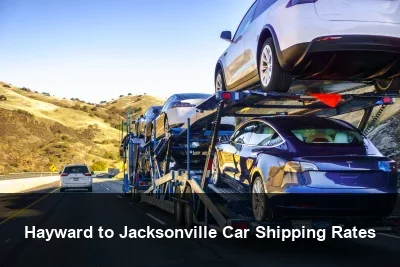
At 2,842 miles, Hayward to Jacksonville sits in the long-haul pricing tier where per-mile rates drop but total cost stays significant. Expect baseline open-carrier quotes to range $1,100–$1,500 depending on vehicle size and season, with enclosed adding 40–60% to that figure. Fuel cost is a direct input on this corridor — diesel prices in California and Texas move this number. Track how fuel affects your quote at https://california.auto-transport-shipping.com/articles/how-gas-prices-impact-california-auto-transport-fees.html. October through December snowbird demand from California to Florida tightens carrier space and pushes rates up 10–20%.
What affects the cost of Hayward to Jacksonville car shipping:
- Vehicle type and size — larger vehicles take more carrier space; aftermarket additions like lift kits, oversized mirrors, or roof accessories can add fees
- Open vs. enclosed transport — open is lower cost with stronger carrier availability; enclosed protects against weather, debris, and road conditions
- Standard vs. expedited pickup — expedited prioritizes your vehicle for the next available dispatch, typically at a $100–$300 premium
- Time of year — peak demand seasons drive rates higher; off-peak windows offer the most competitive pricing
- Fuel costs — diesel prices affect carrier rates; longer routes are more sensitive to fuel price swings
- Vehicle condition — non-running vehicles require special loading equipment and cost more to ship
| Vehicle Type | Open Car Shipping (Est.) | Enclosed Car Shipping (Est.) |
|---|---|---|
| Sedan | $1,100 – $1,600 | $1,900 – $2,700 |
| SUV / Crossover | $1,300 – $1,900 | $2,200 – $3,100 |
| Pickup Truck | $1,300 – $1,950 | $2,200 – $3,150 |
| Minivan | $1,300 – $1,900 | $2,200 – $3,100 |
| Luxury / Classic Car | $1,550 – $2,200 | $2,600 – $3,600 |
| Non-Running Vehicle | Add $200–400 | Add $200–400 |
* Estimated ranges based on recent Hayward to Jacksonville shipments. Actual rate depends on vehicle, locations, booking date, and current fuel costs. Use the form on this page to compare real quotes from licensed carriers.
Open vs. Enclosed: What This Route's Conditions Actually Require
The I-10 corridor through the Sonoran Desert and West Texas exposes vehicles to road debris, blowing sand, and occasional gravel from truck traffic — conditions that argue for enclosed transport if you're moving a classic, exotic, or low-clearance vehicle. For a standard commuter car or daily driver, open transport across this route is reasonable. The Southeast leg from Houston into Jacksonville adds humidity and occasional heavy rain but no unusual road hazard. Save enclosed for vehicles where paint and undercarriage integrity are a real concern. For everything else, open carrier is the practical and cost-effective choice on this run.
How Long Does Hayward to Jacksonville Car Shipping Take?
Standard transit for Hayward to Jacksonville runs 7–10 business days. Carriers on I-10 long-haul runs move efficiently because the route has few elevation challenges and consistent truck stop infrastructure. Hayward's position on I-880 means a carrier can load and be on I-5 or I-580 within an hour of pickup, avoiding Bay Area congestion with early morning departures. If your move date is firm and non-negotiable, expedited options can reduce transit to 5–7 days at a premium — details at https://california.auto-transport-shipping.com/articles/california-expedited-car-shipping-fast-cost.html. Book at least 10–14 days ahead for standard service.
| Service Type | Typical Transit | Pickup Window | Best For |
|---|---|---|---|
| Open — Standard | 7–10 days | 2–5 business days | Best value; most common choice on this route |
| Open — Expedited | 5–7 days | 1–2 business days | Firm arrival date; faster dispatch window |
| Enclosed — Standard | 7–10 days | 4–8 business days | Luxury, classic, or modified vehicles |
| Enclosed — Expedited | 5–7 days | 2–4 business days | High-value vehicles on a firm delivery deadline |
** January and February introduce the most realistic delay risk on this corridor. Ice events near El Paso and San Antonio can halt carriers for 24–48 hours. Gulf Coast flooding in summer occasionally backs up I-10 near Baton Rouge. Budget one to two extra days buffer on any winter or late-summer booking.
Hayward to Jacksonville — Route & Logistics
Carriers access this corridor from Hayward via I-880 to I-238, then connect east to I-580 or south toward I-5 and I-10. The primary spine is I-10 from the Los Angeles basin east through Phoenix, Tucson, El Paso, San Antonio, Houston, Baton Rouge, and Mobile before cutting north on I-95 or I-10 directly into Jacksonville. Total drive distance approximates 2,842 miles.
Key Corridor Waypoints
- Hayward, CA / I-880 on-ramp Carriers load in Hayward and access I-880 directly from the East Bay grid. Northbound ramps near A Street and southbound near Winton Avenue are standard staging points. From I-880, the carrier moves to I-238 east or continues south to the I-580/I-5 interchange, setting up the run toward Southern California and the I-10 corridor.
- Los Angeles Basin, CA / I-10 East Junction The transition onto I-10 eastbound near downtown Los Angeles or through the San Bernardino Pass marks the start of the main corridor. Carriers often stage overnight near Ontario or Pomona to avoid peak LA congestion. This junction is the effective launch point for the 2,400-mile I-10 run to Jacksonville.
- El Paso, TX / New Mexico–Texas Border El Paso sits at roughly the halfway point by hours if not miles. Carriers typically log a rest stop or overnight here. The Organ Mountains and Franklin Mountains frame the city at elevations near 3,700 feet — the highest point on the I-10 route. Winter weather risk is real here January through February; ice closures are the most common delay point on this corridor.
- San Antonio, TX / I-10 and I-35 Junction San Antonio is a major carrier interchange hub. Some loads are transferred or consolidated here. The I-10 and I-35 split means carriers heading northeast toward Dallas diverge here — Jacksonville-bound rigs stay on I-10 east toward Houston. Military traffic from Joint Base San Antonio adds consistent inbound and outbound vehicle volume to this node.
- Baton Rouge, LA / I-10 Mississippi River Crossing The Huey P. Long or I-10 bridge crossing near Baton Rouge is a known congestion point, particularly for oversize loads. Summer flooding along the I-10 corridor between Baton Rouge and Lafayette periodically closes lanes. Carriers account for this on Gulf Coast summer runs. This is the last major logistics chokepoint before the final push into Florida.
- Jacksonville, FL / I-10 and I-95 Terminus I-10 terminates at I-95 in downtown Jacksonville. Carriers deliver via I-95 north or south depending on the destination neighborhood — Southside, Mandarin, or the Beaches require I-295 loop access. NAS Jacksonville on the Westside and Naval Station Mayport near Atlantic Beach are served by separate approach routes. Residential streets in San Marco and Riverside are narrow and may require curbside staging.
Pickup & Delivery Access
- Pickup Access in Hayward Hayward's street grid supports standard 75-foot auto transport rigs in most commercial and residential areas. Industrial zones near the Hayward waterfront and the Mission Boulevard corridor offer wide staging without permit complications. Carriers serving I-880 regularly make Hayward pickups as part of southbound runs toward Los Angeles. If your address has overhead obstructions or tight turns, arrange to meet the carrier at a nearby shopping center or commercial lot.
- Delivery Access in Jacksonville Jacksonville's major arterials — Southside Boulevard, Beach Boulevard, and US-1 — handle standard carrier rigs without issue. Inland suburban neighborhoods in Mandarin, Southside, and Fleming Island have wide cul-de-sacs suitable for direct delivery. Older urban neighborhoods like Riverside and Springfield have tree canopy and narrow lanes that may require the carrier to stage on a nearby commercial block. Gate-controlled communities at Naval Station Mayport require coordinated access — plan this in advance with your carrier.
- Nearby Pickup Locations Carriers picking up in Hayward regularly extend service to San Leandro, Castro Valley, and Union City. Call 1‑800‑590‑6492 to confirm door-to-door availability at your address.
Open vs. Enclosed Car Shipping: Hayward to Jacksonville
Both options use licensed, insured carriers and deliver door to door. For a full breakdown, read the pros and cons of open vs. enclosed car shipping.
Open Car Shipping
Most Popular- Lower cost — the practical choice for most vehicles
- More carriers available on this corridor
- Faster dispatch from booking to pickup
- Works well for sedans, SUVs, trucks, and minivans
- Vehicle rides on an open multi-car carrier
- Cargo insurance required on all licensed carriers
Estimated cost: $1,100 – $1,950
Enclosed Car Shipping
Premium Protection- Full protection from weather, debris, and road grime
- Best for luxury, exotic, and classic vehicles
- Recommended for low-clearance and custom-built cars
- Wheel-net or soft-tie systems prevent contact damage
- Higher cargo coverage — commonly $500,000 per load
- White-glove handling by experienced operators
Estimated cost: $1,900 – $3,150
Not sure which is right for your vehicle? Call 1-800-590-6492 and we'll point you in the right direction. Also worth reading: the top 10 questions to ask any car shipping company before you commit.
How to Prepare Your Car for Shipping to Jacksonville
A little prep before pickup protects you if there's ever a dispute about your vehicle's condition. This checklist is from our full guide on preparing your car for transport:
- Remove all personal belongings from the interior and trunk
- Leave only a quarter tank of fuel — enough to load and unload
- Take date-stamped photos of the full exterior and interior
- Remove or disable toll transponders (FasTrak, E-ZPass, etc.)
- Retract or remove roof racks, spoilers, antennas, and bike mounts
- Make sure the battery is charged and tires are properly inflated
- Tell the carrier about any existing leaks or mechanical issues
- Deactivate the car alarm before the carrier arrives
- Write down the mileage on the Bill of Lading at pickup
- Fold in side mirrors if the vehicle is wider than standard
Personal items: Most carriers won't cover belongings left in the car. Read the full rules on shipping personal items in your vehicle. Also review our Bill of Lading guide so you know exactly what to check at pickup and delivery.
When to Ship Your Car from Hayward to Jacksonville
Seasonality moves pricing and availability on this corridor in predictable patterns. The October–December window is the busiest, driven by snowbirds leaving Northern California for Florida's winter. January sees the highest Florida inbound demand. Summer months cool down somewhat before August college move-in demand spikes. Winter weather near El Paso and San Antonio is the primary transit risk — read https://california.auto-transport-shipping.com/articles/auto-transport-challenges-during-the-winter.html before booking a January or February shipment.
Winter Snowbird Season (Oct–Dec)
This is the peak demand window for California-to-Florida shipments. Bay Area and Central California retirees moving vehicles to winter residences in Jacksonville, St. Augustine, and surrounding areas book carrier space heavily in October and November. Rates increase 10–20% from baseline and carrier availability tightens. Book four to six weeks ahead if your departure window falls here. January is still busy but slightly looser on space as the initial snowbird wave completes.
Spring Return Window (Mar–Apr)
Snowbirds returning to California in March and April create westbound carrier demand, which means eastbound space to Jacksonville can be slightly less competitive this season. Rates often dip 5–10% from winter peak. Weather along I-10 is generally favorable — El Paso ice risk drops sharply after mid-February. Spring is one of the better booking windows if your schedule allows flexibility.
Summer Heat Corridor (Jun–Aug)
I-10 through Arizona and West Texas can see surface temperatures exceeding 115°F in July. This is relevant for enclosed shipments where interior heat buildup is a concern, and for any vehicle with existing coolant or rubber seal issues. Carriers run this stretch during overnight hours when possible. Hurricane season begins June 1 — Jacksonville is on Florida's Atlantic coast and can receive indirect weather impacts from late-August storms.
Student Move-In and Move-Out (Aug and May)
University of North Florida and Jacksonville University drive concentrated inbound vehicle demand in mid-August and outbound demand in early May. If you're shipping a student's vehicle to Jacksonville for the fall semester, mid-July booking captures better rates and space than waiting until August. The reverse applies in spring — book late April departures before the end-of-semester rush compresses carrier availability in both directions.
Military PCS Cycles (Jun–Aug, Jan)
NAS Jacksonville and Naval Station Mayport both see concentrated PCS order execution in the June–August window, which is the primary military permanent change of station season. January sees a secondary PCS wave. These cycles add direct carrier demand to the Jacksonville inbound market. If your shipment coincides with peak PCS season, book early and confirm your carrier's military delivery experience, particularly for gated base access coordination.
How to Choose a Hayward to Jacksonville Car Shipping Company
Getting multiple quotes is step one — knowing what to look for in those quotes matters just as much. Our guide on how to select a car shipping company covers the full process. Here are the six things that matter most:
FMCSA Registration
Every carrier or broker must hold a valid MC number. Verify any company at FMCSA SAFER before you book.
Proof of Insurance
Ask for a current certificate of insurance. Open carriers typically carry $100,000–$250,000 per load; enclosed commonly $500,000 or more. Learn what auto transport insurance covers.
All-In Pricing
Your quote should be a final number with no fees added after booking. Know the difference between brokers and carriers and confirm what the quote covers before you agree.
Bill of Lading
A complete Bill of Lading is filled out at pickup and delivery. Our Bill of Lading guide explains what to check. Never sign an incomplete one.
Real Reviews
Check Google and the BBB. Look at how they handled complaints and damage claims — that tells you more than a five-star average from happy customers.
Route Experience
A carrier who runs the Hayward-to-Jacksonville corridor regularly knows the staging rhythm of this run in ways a one-time driver doesn't. They know to load Hayward early morning to clear the Bay Bridge and I-580 interchange before 7 a.m. They know the Flying J near Ontario, CA is the effective I-10 launch point. They know El Paso is the weather checkpoint — a January storm forecast there means staging in Tucson and waiting, not pushing through. They know the I-10 weight station at Sierra Blanca, TX runs thorough inspections and adds time. They know the Baton Rouge bridge backs up on Friday afternoons and that Jacksonville Southside deliveries run faster via Butler Boulevard than via I-95 downtown. That route knowledge is the difference between a seven-day delivery and a ten-day one.
Hayward to Jacksonville Car Shipping — FAQ
How much does it cost to ship a car from Hayward to Jacksonville?
Baseline quotes for open carrier transport on this 2,842-mile route typically run $1,100–$1,500 for a standard sedan or SUV. Full-size trucks and vans add $100–$200. Enclosed transport runs 40–60% higher, generally $1,600–$2,200 for most vehicles. These figures shift with fuel prices — diesel cost is a direct input, and California and Texas pump prices both affect this corridor. October through December snowbird demand tightens carrier space and pushes rates up 10–20%. Book early and get multiple quotes to find where current market pricing actually sits for your specific vehicle and dates.
How long does Hayward to Jacksonville car shipping take?
Standard transit on this route runs 7–10 business days after pickup. Carriers on the I-10 corridor move efficiently — it's a well-traveled lane without the elevation challenges of northern routes. Hayward's access to I-880 and I-580 means carriers can be on the I-10 spine within a few hours of loading. Add one to two business days for the broker-to-carrier assignment process before the clock starts. Expedited service can compress transit to 5–7 days at a premium. If your delivery window is firm, review options at https://california.auto-transport-shipping.com/articles/california-expedited-car-shipping-fast-cost.html.
Is my car insured during transport from Hayward to Jacksonville?
Every licensed carrier operating on this route is required by federal law to carry cargo insurance. That policy covers your vehicle while it's on the carrier's trailer. However, the carrier's policy has deductibles and exclusions that vary, and your personal auto insurance may or may not extend to transport. Before your vehicle loads, inspect it thoroughly and document all pre-existing condition on the bill of lading — this is your primary evidence if a claim is needed. For a full breakdown of how transport insurance works, read https://california.auto-transport-shipping.com/articles/understanding-auto-transport-insurance.html. If damage occurs, the process is outlined at https://california.auto-transport-shipping.com/articles/how-to-file-a-claim-for-vehicle-damage-during-transport.html.
Should I choose open or enclosed transport for this route?
The I-10 corridor through the Sonoran Desert and West Texas exposes vehicles to road debris and blowing sand — real considerations for low-clearance, exotic, or show vehicles. For a daily driver or standard commuter vehicle, open transport is a sensible choice on this run. The Southeast leg into Jacksonville adds humidity but no unusual road hazard. Enclosed makes practical sense if you're moving a classic car, a luxury vehicle with a low-clearance front splitter, or any vehicle where cosmetic condition is a financial concern. Full comparison of tradeoffs is available at https://california.auto-transport-shipping.com/articles/open-vs-enclosed-auto-transport-pros-and-cons.html.
Do I have to be present at pickup and delivery?
You or a designated representative must be present at both pickup and delivery to sign the bill of lading — the inspection document that records your vehicle's condition before and after transport. This document is legally critical. If damage is noted at delivery, it must be marked on the bill of lading at that moment; signing a clean document and filing a claim later is significantly harder to win. You can designate a trusted person to handle either end if you can't be present yourself. Do not release a vehicle to a carrier without completing the inspection process. Details on what the bill of lading covers are at https://california.auto-transport-shipping.com/articles/california-auto-transport-bill-of-lading-information.html.
Does the military PCS process affect shipping timelines to Jacksonville?
Yes, in concrete ways. NAS Jacksonville and Naval Station Mayport both execute concentrated PCS orders in the June–August window, which is the peak military moving season nationwide. Carrier demand into Jacksonville from California spikes during this period and can compress available space. If you have PCS orders to Jacksonville, book your vehicle transport as soon as orders are confirmed — ideally six to eight weeks ahead. Also confirm that your carrier has experience coordinating delivery access to gated military installations, since Mayport and NAS Jacksonville both require advance coordination for entry.
What weather risks should I know about on the Hayward to Jacksonville route?
The most significant delay risk is winter ice near El Paso, TX and San Antonio, TX in January and February. These events are relatively rare but can halt I-10 traffic for 24–48 hours when they occur. Gulf Coast flooding between Baton Rouge and Mobile is a periodic summer concern. Jacksonville itself sits on Florida's northeast coast and can receive tropical weather impacts from late August through October. Carriers typically route around known weather events rather than pushing through, which adds days to transit. If you're booking in winter, build two extra days of buffer into your schedule.
Is it worth booking early for a fall shipment to Florida from Hayward?
Yes, and the lead time matters more than most customers expect. October through December is the busiest California-to-Florida window of the year due to snowbird demand — Northern California retirees moving vehicles to Florida for winter is a volume event that compresses carrier availability on this lane. If your shipment targets October, November, or early December, booking four to six weeks ahead is not excessive. Last-minute bookings during peak snowbird season either don't get carriers or pay significantly above-market rates. Locking in a quote and deposit early protects both your rate and your window.
Ready to Ship Your Car from Hayward to Jacksonville?
One form gets you up to 10 free quotes from licensed, insured carriers. Compare costs and transit times and book the best deal for your schedule.