
Glendale to San Antonio Car Shipping Route
Glendale sits at the intersection of I-5, SR-2, and I-210, giving carriers multiple staging options within the LA metro grid. From Glendale, carriers typically access I-10 East via downtown Los Angeles, then run the full southern corridor through Arizona and New Mexico before entering Texas near El Paso. The total driving distance is approximately 1,387 miles. En route, carriers navigate the Sonoran Desert, cross the Texas state line near Sierra Blanca, and traverse the wide Central Texas plateau into San Antonio. Driving that yourself costs time, fuel, lodging, and adds miles to your vehicle. A side-by-side comparison at https://california.auto-transport-shipping.com/articles/benefits-of-auto-transport-service-vs-driving-yourself.html breaks down what you actually save by shipping instead.
San Antonio's demand drivers are unusually diverse for a single destination. Joint Base San Antonio — the largest joint base in the Department of Defense — encompasses Lackland Air Force Base, Randolph Air Force Base, and Fort Sam Houston, collectively generating thousands of annual PCS vehicle shipments. UTSA enrolls over 34,000 students, Trinity University adds another 2,500, and UT Health San Antonio draws medical residents and faculty relocating from California. Toyota's manufacturing plant and a growing cluster of cybersecurity and defense contractors also pull corporate transferees regularly. Seasonally, summer heat across the I-10 desert corridor can slow transit if carriers schedule rest stops more conservatively. Before you book, review https://california.auto-transport-shipping.com/articles/auto-transport-mistakes-to-avoid.html to avoid common errors that delay shipments or increase costs.
Glendale to San Antonio Car Shipping Rates
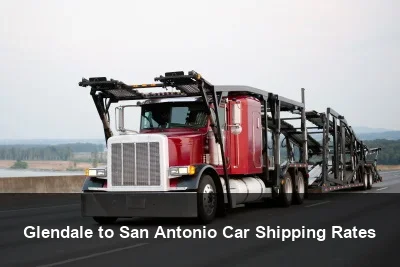
At 1,387 miles, this route sits at the upper edge of medium-haul pricing, where per-mile rates are lower than short hauls but total costs are higher than regional moves. Expect base rates between $900 and $1,400 for standard open transport, depending on vehicle size and season. Summer months push rates up due to peak relocation demand from both military PCS cycles and student moves. Fuel costs across the I-10 desert corridor are a consistent pricing variable — see https://california.auto-transport-shipping.com/articles/how-gas-prices-impact-california-auto-transport-fees.html for how fuel fluctuations affect your quote.
What affects the cost of Glendale to San Antonio car shipping:
- Vehicle type and size — larger vehicles take more carrier space; aftermarket additions like lift kits, oversized mirrors, or roof accessories can add fees
- Open vs. enclosed transport — open is lower cost with stronger carrier availability; enclosed protects against weather, debris, and road conditions
- Standard vs. expedited pickup — expedited prioritizes your vehicle for the next available dispatch, typically at a $100–$300 premium
- Time of year — peak demand seasons drive rates higher; off-peak windows offer the most competitive pricing
- Fuel costs — diesel prices affect carrier rates; longer routes are more sensitive to fuel price swings
- Vehicle condition — non-running vehicles require special loading equipment and cost more to ship
| Vehicle Type | Open Car Shipping (Est.) | Enclosed Car Shipping (Est.) |
|---|---|---|
| Sedan | $950 – $1,350 | $1,700 – $2,300 |
| SUV / Crossover | $1,100 – $1,600 | $1,950 – $2,700 |
| Pickup Truck | $1,100 – $1,650 | $1,950 – $2,750 |
| Minivan | $1,100 – $1,600 | $1,950 – $2,700 |
| Luxury / Classic Car | $1,300 – $1,900 | $2,200 – $3,000 |
| Non-Running Vehicle | Add $200–350 | Add $200–350 |
* Estimated ranges based on recent Glendale to San Antonio shipments. Actual rate depends on vehicle, locations, booking date, and current fuel costs. Use the form on this page to compare real quotes from licensed carriers.
Open vs. Enclosed: What This Desert Route Actually Demands
Open transport is the practical choice for most standard vehicles on this corridor. The I-10 route through the Sonoran and Chihuahuan deserts is dry and predictable — not the wet, road-salt environment that typically justifies enclosed. Choose enclosed if you're shipping a classic, exotic, or high-value vehicle where sand particulate or minor debris risk is unacceptable. Enclosed rates on this lane typically run 40–60% above open. For daily drivers, late-model sedans, and standard SUVs, open is appropriate and will not expose your vehicle to unusual risk on this route.
How Long Does Glendale to San Antonio Car Shipping Take?
Glendale to San Antonio typically takes 4 to 6 days once your carrier is dispatched. The 1,387-mile driving distance translates to roughly 21–23 hours of actual drive time, but carriers operate under federal HOS regulations limiting daily drive hours, and multi-carrier loads require coordination at staging points. Glendale's position inside the LA metro means carriers can load frequently — this is not a thin lane where you wait a week for a truck. If your timeline is firm, expedited options exist: https://california.auto-transport-shipping.com/articles/california-expedited-car-shipping-fast-cost.html explains what accelerated dispatch costs and how it works on corridors like this one.
| Service Type | Typical Transit | Pickup Window | Best For |
|---|---|---|---|
| Open — Standard | 4–6 days | 2–5 business days | Best value; most common choice on this route |
| Open — Expedited | 2–4 days | 1–2 business days | Firm arrival date; faster dispatch window |
| Enclosed — Standard | 4–6 days | 3–7 business days | Luxury, classic, or modified vehicles |
| Enclosed — Expedited | 2–4 days | 1–3 business days | High-value vehicles on a firm delivery deadline |
** Summer heat along the I-10 corridor through Arizona and West Texas can push carriers to drive night hours, compressing scheduling windows. Monsoon weather in southern Arizona during July and August occasionally slows transit by 12–24 hours. Booking with a 2–3 day pickup window rather than a fixed date reduces the risk of delay on this corridor.
Glendale to San Antonio — Route & Logistics
Carriers accessing this route from Glendale typically exit via I-5 South or surface streets to I-10 East through downtown Los Angeles, then run I-10 continuously through Pomona, Indio, and the Arizona border. Some carriers use I-210 to SR-60 to connect to I-10 East without entering central LA. From there, I-10 carries the load 1,387 miles to San Antonio with no major interstate changes required — a logistically clean run.
Key Corridor Waypoints
- Glendale, CA (Origin) Carrier pickup originates from the Glendale metro, with access via I-5, I-210, and SR-2. Hillside neighborhoods near the Verdugo Mountains may require a meet point at a flat commercial area. Burbank and Pasadena are also serviceable as nearby pickup alternatives. Carriers typically load and begin the run to I-10 East within the same day of confirmed pickup.
- Indio, CA / Palm Springs Area After clearing the LA Basin, carriers pass through the Coachella Valley near Indio, elevation approximately 23 feet, where I-10 straightens and speeds increase. This stretch is a common early progress checkpoint. Summer temperatures here regularly exceed 115°F, which is why carriers running this lane schedule this segment during cooler morning or overnight hours when possible.
- Phoenix, AZ Phoenix is the primary mid-route overnight and fuel staging point for carriers on the I-10 corridor. Many multi-load carriers based in Arizona use Phoenix as a sort and transfer hub. If your vehicle is on a relay load, Phoenix is the most common handoff point. Carriers familiar with this lane know which Phoenix-area yards accept overnight staging without added fees.
- El Paso, TX / Sierra Blanca Checkpoint El Paso marks the Texas state line entry and the U.S. Border Patrol interior checkpoint at Sierra Blanca, approximately 90 miles east, at elevation 4,512 feet. All vehicles on transport trucks pass through this checkpoint. Experienced carriers on this lane carry proper manifests to move through without delay. This is also a standard fuel stop given the sparse services across Far West Texas.
- San Antonio, TX (Delivery) Carriers enter San Antonio via I-10 East connecting to Loop 410 or I-35, depending on the delivery address. The metro is generally truck-accessible, though older residential neighborhoods on the near north and south sides have narrower streets. Military installation deliveries to JBSA facilities require advance coordination with base access protocols. Most residential and commercial addresses in the metro accept standard transport truck delivery without staging.
Pickup & Delivery Access
- Pickup Access in Glendale Glendale's primary grid streets — Brand Boulevard, Central Avenue, and San Fernando Road — are carrier-accessible for standard transport trucks. Neighborhoods north of the 134 Freeway and into the Verdugo Hills, including areas near Montecito Hills or La Crescenta, have grade and clearance constraints. If you're in a hillside area, coordinate a meet point at a flat commercial street or parking lot before booking. Nearby Burbank and Pasadena are also within standard pickup range.
- Delivery Access in San Antonio San Antonio carriers typically deliver to most metro addresses without issue. Alamo Heights, Stone Oak, and the Medical Center area are all truck-accessible. The historic King William District and older near-Southside neighborhoods have narrower streets that may require a nearby staging point — a grocery store lot or wide commercial block nearby works. JBSA base deliveries require the carrier to coordinate base access in advance; confirm this detail with your broker when booking.
- Nearby Pickup Locations Carriers picking up in Glendale regularly extend service to Burbank, Pasadena, and La Crescenta. Call 1‑800‑590‑6492 to confirm door-to-door availability at your address.
Open vs. Enclosed Car Shipping: Glendale to San Antonio
Both options use licensed, insured carriers and deliver door to door. For a full breakdown, read the pros and cons of open vs. enclosed car shipping.
Open Car Shipping
Most Popular- Lower cost — the practical choice for most vehicles
- More carriers available on this corridor
- Faster dispatch from booking to pickup
- Works well for sedans, SUVs, trucks, and minivans
- Vehicle rides on an open multi-car carrier
- Cargo insurance required on all licensed carriers
Estimated cost: $950 – $1,650
Enclosed Car Shipping
Premium Protection- Full protection from weather, debris, and road grime
- Best for luxury, exotic, and classic vehicles
- Recommended for low-clearance and custom-built cars
- Wheel-net or soft-tie systems prevent contact damage
- Higher cargo coverage — commonly $500,000 per load
- White-glove handling by experienced operators
Estimated cost: $1,700 – $2,750
Not sure which is right for your vehicle? Call 1-800-590-6492 and we'll point you in the right direction. Also worth reading: the top 10 questions to ask any car shipping company before you commit.
How to Prepare Your Car for Shipping to San Antonio
A little prep before pickup protects you if there's ever a dispute about your vehicle's condition. This checklist is from our full guide on preparing your car for transport:
- Remove all personal belongings from the interior and trunk
- Leave only a quarter tank of fuel — enough to load and unload
- Take date-stamped photos of the full exterior and interior
- Remove or disable toll transponders (FasTrak, E-ZPass, etc.)
- Retract or remove roof racks, spoilers, antennas, and bike mounts
- Make sure the battery is charged and tires are properly inflated
- Tell the carrier about any existing leaks or mechanical issues
- Deactivate the car alarm before the carrier arrives
- Write down the mileage on the Bill of Lading at pickup
- Fold in side mirrors if the vehicle is wider than standard
Personal items: Most carriers won't cover belongings left in the car. Read the full rules on shipping personal items in your vehicle. Also review our Bill of Lading guide so you know exactly what to check at pickup and delivery.
When to Ship Your Car from Glendale to San Antonio
This corridor runs year-round but shows clear seasonal pricing patterns. Summer months — June through August — see the highest demand driven by military PCS cycles and student relocations to UTSA and other San Antonio institutions. Winter brings a modest slowdown in volume but not the severe weather disruptions that affect northern routes. The I-10 desert segment does carry monsoon risk in July and August. For winter-specific transport considerations, see https://california.auto-transport-shipping.com/articles/auto-transport-challenges-during-the-winter.html.
Summer Peak (June–August)
This is the busiest period on the Glendale–San Antonio lane. Military PCS orders activate in large numbers for JBSA-Lackland, JBSA-Randolph, and Fort Sam Houston, and UTSA's fall semester move-in creates parallel demand. Carriers fill quickly. Book 2–3 weeks ahead of your target pickup date during this window. Rates typically run 10–20% above the annual average. Desert heat across I-10 in Arizona may push transit to 5–6 days.
Fall Moderate Season (September–November)
Volume eases after the summer PCS peak, and rates tend to stabilize or dip slightly. Weather across the I-10 corridor is more favorable in fall — temperatures drop in the desert and monsoon season ends by mid-September. This is a good window to ship if your move is flexible. Carrier availability improves, pickup windows shorten, and you're less likely to be competing with military relocation volume for truck space.
Winter Transport (December–February)
The I-10 southern corridor avoids the mountain snow risk that affects I-40 or I-80, making this a viable winter shipping lane. Occasional freezing rain near El Paso or light snow at elevation in West Texas can delay transit by a day. Volume is lower than summer, which can mean slightly better rates but also fewer active carriers. Booking with a flexible 3-day pickup window helps match available dispatch. See winter transport guidance at https://california.auto-transport-shipping.com/articles/auto-transport-challenges-during-the-winter.html.
Student Move Season (January & August)
UTSA's enrollment of over 34,000 students, combined with Trinity University and UT Health San Antonio, generates two concentrated vehicle shipment spikes per year. January move-in for spring semester and late July through August for fall semester both tighten carrier availability to San Antonio. If you're relocating a student vehicle, book at least 10–14 days before their move-in date. These spikes are predictable — they happen every year on the same academic calendar.
Military PCS Cycles (May–July)
Joint Base San Antonio is one of the highest-volume PCS destinations in the country. The bulk of military permanent change of station orders take effect between May and July, with a secondary cycle in January. If you have PCS orders to JBSA-Lackland, JBSA-Randolph, or Fort Sam Houston, book your vehicle transport as soon as orders are confirmed. Government Bill of Lading eligibility may affect your payment method — confirm with your transportation office before booking commercial transport.
Spring Booking Window (March–May)
Spring is the optimal window to ship on this route if your timing is flexible. Demand has not yet hit the summer PCS surge, weather across the I-10 desert corridor is favorable, and carrier availability is strong. Rates are typically at or below annual median. This is the best time to ship a non-time-sensitive vehicle, a second car, or a seasonal vehicle being relocated ahead of summer use in San Antonio.
How to Choose a Glendale to San Antonio Car Shipping Company
Getting multiple quotes is step one — knowing what to look for in those quotes matters just as much. Our guide on how to select a car shipping company covers the full process. Here are the six things that matter most:
FMCSA Registration
Every carrier or broker must hold a valid MC number. Verify any company at FMCSA SAFER before you book.
Proof of Insurance
Ask for a current certificate of insurance. Open carriers typically carry $100,000–$250,000 per load; enclosed commonly $500,000 or more. Learn what auto transport insurance covers.
All-In Pricing
Your quote should be a final number with no fees added after booking. Know the difference between brokers and carriers and confirm what the quote covers before you agree.
Bill of Lading
A complete Bill of Lading is filled out at pickup and delivery. Our Bill of Lading guide explains what to check. Never sign an incomplete one.
Real Reviews
Check Google and the BBB. Look at how they handled complaints and damage claims — that tells you more than a five-star average from happy customers.
Route Experience
A carrier who runs the Glendale–San Antonio lane regularly knows details that a first-time operator on this corridor doesn't. They know that the Border Patrol interior checkpoint at Sierra Blanca, TX requires a clean, current vehicle manifest — delays there are almost always paperwork-related. They know Phoenix is the reliable overnight staging point and which yards there are fenced and secure. They know that LA Basin traffic on I-10 West is worst between 7–9 AM and 4–7 PM, so eastbound loads depart Glendale early morning or after 7 PM. They know that San Antonio's Loop 410 service roads accommodate 75-foot transport rigs without the clearance problems you hit in older city neighborhoods. That operational familiarity — specific to this exact 1,387-mile run — is what separates reliable transit times from unpredictable ones.
Glendale to San Antonio Car Shipping — FAQ
How much does it cost to ship a car from Glendale to San Antonio?
Standard open transport on this route typically runs between $900 and $1,400 for a passenger car or standard SUV, depending on vehicle size, pickup timing, and seasonal demand. Enclosed transport adds roughly 40–60% to that baseline. The corridor is 1,387 miles, placing it in a medium-haul rate tier where per-mile costs are competitive but total charges reflect the distance. Summer months — particularly June through August — push rates higher due to military PCS demand at Joint Base San Antonio. Fuel price fluctuations along the I-10 desert corridor also affect your final quote. See how fuel costs factor in at https://california.auto-transport-shipping.com/articles/how-gas-prices-impact-california-auto-transport-fees.html.
How long does Glendale to San Antonio car shipping take?
Transit on this route typically runs 4 to 6 days from the time your carrier is dispatched with your vehicle. The 1,387-mile distance translates to approximately 21–23 hours of driving, but carriers operate under federal hours-of-service regulations and may be running multiple vehicles on the same load. Glendale's location inside the active LA metro means carrier dispatch is generally faster than rural origins — expect a 1–3 day pickup window after booking. If your delivery date is firm, expedited dispatch is available; details on cost and how it works are at https://california.auto-transport-shipping.com/articles/california-expedited-car-shipping-fast-cost.html.
Is my car insured during transport from Glendale to San Antonio?
Yes. Licensed auto transport carriers are required by federal law to carry cargo insurance covering vehicles in their custody. Your vehicle is covered from the moment it's loaded onto the carrier's truck until it's delivered to you in San Antonio. Before pickup, conduct a thorough walk-around inspection and document any existing damage on the Bill of Lading — this is your protection if a dispute arises at delivery. For a full breakdown of how carrier insurance works and what it actually covers, read https://california.auto-transport-shipping.com/articles/understanding-auto-transport-insurance.html. If you need to file a claim after delivery, the process is explained at https://california.auto-transport-shipping.com/articles/how-to-file-a-claim-for-vehicle-damage-during-transport.html.
Should I choose open or enclosed transport for this route?
Open transport is appropriate for the large majority of vehicles on the Glendale–San Antonio corridor. The I-10 route through the Sonoran and Chihuahuan deserts is dry, and there's no road salt or sustained precipitation that typically justifies the enclosed premium. Choose enclosed if you're shipping a classic car, exotic, or high-value vehicle where minor debris or dust accumulation is unacceptable. Enclosed also makes sense during the brief monsoon window in July and August when southern Arizona sees occasional heavy rain. For a full comparison of both transport types, see https://california.auto-transport-shipping.com/articles/open-vs-enclosed-auto-transport-pros-and-cons.html.
Do I have to be present at pickup and delivery?
You don't have to be present yourself, but a designated adult must be available at both ends to sign the Bill of Lading. At pickup in Glendale, someone needs to release the vehicle, confirm its condition with the driver, and sign the inspection report. At delivery in San Antonio, the same process happens in reverse — your representative inspects the vehicle and signs off before the driver leaves. Do not skip that delivery inspection, even if the driver seems rushed. Any damage not noted at delivery is harder to claim afterward. Full Bill of Lading guidance is at https://california.auto-transport-shipping.com/articles/california-auto-transport-bill-of-lading-information.html.
Does military PCS status affect how I should book transport to San Antonio?
Yes, in two important ways. First, timing: PCS orders to Joint Base San Antonio concentrate heavily between May and July, and again in January. Booking during those windows requires more lead time — 2 to 3 weeks ahead of your required delivery date is realistic. Second, payment: if your orders include a Government Bill of Lading for vehicle shipment, confirm with your unit's transportation officer before booking commercial transport, as GBL eligibility may affect reimbursement. If you're booking commercial transport on your own, keep all receipts and your booking confirmation for your PCS reimbursement claim.
What weather should I expect along the I-10 route during my shipment?
The I-10 southern corridor is the most weather-stable transcontinental route in the United States for auto transport. There is no mountain snow risk comparable to I-40 or I-70. The primary weather consideration is the summer monsoon in southern Arizona, running roughly July through mid-September, which can bring brief but intense rain that slows carriers by 12 to 24 hours. West Texas sees occasional winter ice near El Paso and at elevation around the Sierra Blanca checkpoint in December and January. Neither event typically extends transit beyond 1 additional day, but build a buffer into your schedule if you're shipping during those windows.
Can I ship from a nearby city like Burbank or Pasadena instead of Glendale?
Yes. Burbank, Pasadena, and La Crescenta are all within the standard pickup radius for carriers dispatching from the Glendale area, and your quote should not change materially for pickups within that cluster. Carriers accessing this route via I-210 or I-5 pass through or near all three cities. If you're located in a hillside neighborhood with access constraints — steep grades, narrow streets, low-clearance areas — a nearby meet point at a flat commercial location is standard practice and does not affect your rate. Confirm your exact pickup address when booking so the carrier can plan the appropriate access route.
Ready to Ship Your Car from Glendale to San Antonio?
One form gets you up to 10 free quotes from licensed, insured carriers. Compare costs and transit times and book the best deal for your schedule.