

Glendale to Las Vegas Car Shipping Route
From Glendale, carriers access the interstate system via I-5 south toward downtown Los Angeles, then connect to I-10 east before merging onto I-15 north at the Cajon Junction near San Bernardino — the primary artery into Nevada. SR-2 and I-210 give carriers in Glendale direct eastbound access toward Pasadena and Azusa, cutting across the San Gabriel Valley to reach I-15 without fighting core LA traffic. The full haul runs approximately 272 miles. Driving it yourself means desert heat, fuel costs, and a one-way rental or return trip problem. Shipping your vehicle through a carrier eliminates those variables. See a full breakdown of those trade-offs at https://california.auto-transport-shipping.com/articles/benefits-of-auto-transport-service-vs-driving-yourself.html.
Las Vegas supports a large and diverse inbound vehicle market. Nellis Air Force Base, located northeast of the city, generates consistent military PCS shipments on tightly defined timelines. UNLV enrolls roughly 30,000 students, many relocating from the LA metro. The Las Vegas Strip's hospitality industry — MGM Resorts, Caesars Entertainment, Wynn Resorts — employs tens of thousands and drives frequent worker relocations from Southern California. Summer heat on this corridor is a genuine operational factor: the Mojave Desert stretch between Barstow and Primm regularly reaches 115°F, which carriers factor into load scheduling and vehicle handling. Book early, and review https://california.auto-transport-shipping.com/articles/auto-transport-mistakes-to-avoid.html before finalizing your order.
Glendale to Las Vegas Car Shipping Rates
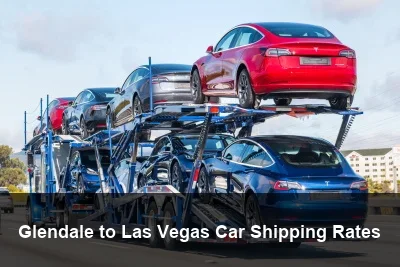
Rates on the Glendale-to-Las Vegas corridor are shaped by distance, carrier frequency, and seasonal demand. At 272 miles, this route sits in a mid-tier pricing band — short enough that carriers often bundle it with other Southwest loads, which keeps base rates accessible. Summer demand spikes significantly as snowbirds return to Nevada, UNLV students arrive, and Las Vegas hospitality hiring peaks. Fuel costs on the desert stretch are a real line item; see how pump prices affect your quote at https://california.auto-transport-shipping.com/articles/how-gas-prices-impact-california-auto-transport-fees.html.
What affects the cost of Glendale to Las Vegas car shipping:
- Vehicle type and size — larger vehicles take more carrier space; aftermarket additions like lift kits, oversized mirrors, or roof accessories can add fees
- Open vs. enclosed transport — open is lower cost with stronger carrier availability; enclosed protects against weather, debris, and road conditions
- Standard vs. expedited pickup — expedited prioritizes your vehicle for the next available dispatch, typically at a $100–$300 premium
- Time of year — peak demand seasons drive rates higher; off-peak windows offer the most competitive pricing
- Fuel costs — diesel prices affect carrier rates; longer routes are more sensitive to fuel price swings
- Vehicle condition — non-running vehicles require special loading equipment and cost more to ship
| Vehicle Type | Open Car Shipping (Est.) | Enclosed Car Shipping (Est.) |
|---|---|---|
| Sedan | $350 – $500 | $700 – $950 |
| SUV / Crossover | $400 – $600 | $800 – $1,100 |
| Pickup Truck | $400 – $600 | $800 – $1,100 |
| Minivan | $400 – $600 | $800 – $1,100 |
| Luxury / Classic Car | $500 – $700 | $950 – $1,300 |
| Non-Running Vehicle | Add $100–200 | Add $100–200 |
* Estimated ranges based on recent Glendale to Las Vegas shipments. Actual rate depends on vehicle, locations, booking date, and current fuel costs. Use the form on this page to compare real quotes from licensed carriers.
Open vs. Enclosed: What This Desert Route Actually Requires
Open transport is the right call for most standard vehicles on this route. I-15 through the Mojave is well-maintained, and open carriers run it constantly. The main exposure risk is road debris and sand particulate in summer months between Barstow and Primm. If you're shipping a luxury vehicle, a classic, or anything with a fresh paint job, enclosed makes sense — Mojave dust and heat are real concerns. Enclosed rates on this corridor typically run 40-60% higher than open. For a daily driver, open is sufficient and the savings are meaningful.
How Long Does Glendale to Las Vegas Car Shipping Take?
Most Glendale-to-Las Vegas shipments complete in one to two days once a carrier is assigned. The driving distance is roughly four to five hours under normal conditions, so carriers can run this as a single-day leg without overnight stops. Carrier assignment from the Glendale area typically takes one to three business days given the high volume of trucks moving between the LA metro and Las Vegas weekly. If your timeline is tight — a PCS report date, a lease start — expedited options exist. Review your options at https://california.auto-transport-shipping.com/articles/california-expedited-car-shipping-fast-cost.html.
| Service Type | Typical Transit | Pickup Window | Best For |
|---|---|---|---|
| Open — Standard | 1–2 days | 1–3 business days | Best value; most common choice on this route |
| Open — Expedited | Same–1 day | Next day–1 business day | Firm arrival date; faster dispatch window |
| Enclosed — Standard | 2–3 days | 2–5 business days | Luxury, classic, or modified vehicles |
| Enclosed — Expedited | 1–2 days | 1–2 business days | High-value vehicles on a firm delivery deadline |
** Summer heat between Barstow and the Nevada state line can slow carriers who need to manage load temperature and tire pressure on multi-vehicle haulers. Extreme heat advisories — common July through August — occasionally push departure windows to early morning or evening. Plan for a possible one-day buffer during peak summer months.
Glendale to Las Vegas — Route & Logistics
Carriers serving Glendale use I-210 or SR-2 to exit the hillside and foothill areas, then connect eastbound through Pasadena toward San Bernardino. From there, I-15 north is the direct route through Cajon Pass, across the Mojave, and into Las Vegas via the I-15/US-93 corridor. Total carrier drive time runs four to five hours under standard conditions.
Key Corridor Waypoints
- Glendale, CA Carrier pickup originates here. Flat commercial areas near Brand Boulevard and the 134/I-5 interchange are the most accessible staging points. Carriers use I-210 east or SR-2 to clear the hillside zones and connect to the I-10/I-15 interchange. Hillside streets in areas like Montecito Hills may require a nearby meet point on flat ground.
- Cajon Pass, CA — elevation 4,190 ft The critical grade change on this route. I-15 climbs through Cajon Pass northeast of San Bernardino before descending into the high desert. Multi-car haulers slow significantly on the ascent. In rare winter events, chain controls are enforced here, which can delay southbound traffic and affect pickup windows for Glendale-area loads.
- Barstow, CA Primary rest and fuel stop for carriers at the midpoint of the desert crossing. Barstow sits at the junction of I-15 and I-40, making it a natural staging and driver-switch location. Carriers running overnight loads or split-team operations often log their rest break here. Summer temperatures regularly exceed 105°F, influencing load scheduling timing.
- Baker, CA — elevation 923 ft Last California fuel stop before the Nevada state line. Baker marks the deepest point of the Mojave heat corridor. Carriers check tire pressure and engine temps here on summer runs. The I-15 narrows to two lanes in stretches past Baker, reducing overtaking opportunities and contributing to convoy-style traffic on high-volume weekend days.
- Primm, NV — Nevada State Line Border crossing and inspection reference point. Commercial vehicle weight stations operate here intermittently. This is where carriers formally enter Nevada and align their ETA for Las Vegas delivery. From Primm, the Las Vegas metro is approximately 45 miles northeast on I-15. Carriers confirm final delivery logistics with customers from this staging point.
- Las Vegas, NV Delivery zone covers the metro grid broadly — Summerlin, Henderson, North Las Vegas, and Strip-adjacent addresses are all standard carrier access points. The UNLV campus area near Tropicana Avenue and Nellis AFB in the northeast quadrant are common final destinations. Gated communities in Summerlin may require staging just outside the entrance gate.
Pickup & Delivery Access
- Pickup Access in Glendale Glendale's flat commercial corridors — particularly near the Glendale Galleria, San Fernando Road, and the I-5/SR-134 interchange — offer unrestricted carrier access. Hillside residential streets in Montecito Hills, Glenoaks Canyon, and upper La Crescenta may be too narrow for a full 75-foot multi-car hauler. Carriers serving those areas typically coordinate a meet point at a nearby flat surface lot or retail parking area.
- Delivery Access in Las Vegas Las Vegas carrier delivery is straightforward across most of the metro grid. Henderson, Summerlin, and North Las Vegas neighborhoods handle standard haulers without issue. High-density resort corridor addresses near the Strip can involve permit zones and restricted truck access windows. Gated communities — common in Summerlin and Green Valley — often require staging just outside the gate entrance, with the vehicle driven in by the carrier or owner.
- Nearby Pickup Locations Carriers picking up in Glendale regularly extend service to Burbank, Pasadena, and La Crescenta. Call 1‑800‑590‑6492 to confirm door-to-door availability at your address.
Open vs. Enclosed Car Shipping: Glendale to Las Vegas
Both options use licensed, insured carriers and deliver door to door. For a full breakdown, read the pros and cons of open vs. enclosed car shipping.
Open Car Shipping
Most Popular- Lower cost — the practical choice for most vehicles
- More carriers available on this corridor
- Faster dispatch from booking to pickup
- Works well for sedans, SUVs, trucks, and minivans
- Vehicle rides on an open multi-car carrier
- Cargo insurance required on all licensed carriers
Estimated cost: $350 – $600
Enclosed Car Shipping
Premium Protection- Full protection from weather, debris, and road grime
- Best for luxury, exotic, and classic vehicles
- Recommended for low-clearance and custom-built cars
- Wheel-net or soft-tie systems prevent contact damage
- Higher cargo coverage — commonly $500,000 per load
- White-glove handling by experienced operators
Estimated cost: $700 – $1,100
Not sure which is right for your vehicle? Call 1-800-590-6492 and we'll point you in the right direction. Also worth reading: the top 10 questions to ask any car shipping company before you commit.
How to Prepare Your Car for Shipping to Las Vegas
A little prep before pickup protects you if there's ever a dispute about your vehicle's condition. This checklist is from our full guide on preparing your car for transport:
- Remove all personal belongings from the interior and trunk
- Leave only a quarter tank of fuel — enough to load and unload
- Take date-stamped photos of the full exterior and interior
- Remove or disable toll transponders (FasTrak, E-ZPass, etc.)
- Retract or remove roof racks, spoilers, antennas, and bike mounts
- Make sure the battery is charged and tires are properly inflated
- Tell the carrier about any existing leaks or mechanical issues
- Deactivate the car alarm before the carrier arrives
- Write down the mileage on the Bill of Lading at pickup
- Fold in side mirrors if the vehicle is wider than standard
Personal items: Most carriers won't cover belongings left in the car. Read the full rules on shipping personal items in your vehicle. Also review our Bill of Lading guide so you know exactly what to check at pickup and delivery.
When to Ship Your Car from Glendale to Las Vegas
This route runs year-round, but pricing and availability shift noticeably by season. Summer is peak demand — Las Vegas hospitality hiring, UNLV move-ins, and snowbird returns all converge June through August. Winter brings reduced but steady volume, though rare Cajon Pass snow events can add delay. Spring is the most favorable window for competitive rates and open carrier availability. For winter-specific planning, see https://california.auto-transport-shipping.com/articles/auto-transport-challenges-during-the-winter.html.
Summer Peak (June–August)
The highest-demand window on this corridor. Las Vegas hospitality properties run aggressive hiring campaigns pulling workers from the LA metro, UNLV welcomes incoming students, and snowbirds who left in spring return to Nevada. Open carrier capacity fills quickly. Book two to three weeks ahead if your move falls in July or August. Rates are 15-25% higher than off-peak, and the Mojave heat adds operational scheduling constraints for carriers.
UNLV Move-In (Late July–Late August)
UNLV's fall semester start drives a concentrated surge of vehicle shipments from the LA metro to the Las Vegas area, specifically to neighborhoods near the university on South Maryland Parkway and Tropicana Avenue. This window is narrow — roughly three weeks — and carrier slots fill fast. If you're shipping for a student, book the moment move-in dates are confirmed. Waiting until two weeks out risks significantly higher rates or no availability.
Winter Cajon Pass Risk (December–February)
Snowfall at Cajon Pass — elevation 4,190 ft — is infrequent but real. When chain controls are enforced on I-15, southbound traffic backs up and carrier pickup windows for Glendale loads can shift by a day. If you're booking a winter shipment, build a one-day buffer into your schedule. Carriers experienced on this route know to monitor Caltrans chain control alerts and adjust departure timing accordingly.
Las Vegas Events Surge (March, November)
Major Las Vegas events — NASCAR at the Las Vegas Motor Speedway in March and November, boxing events at the MGM Grand, and Formula 1 Grand Prix in November — drive short-term vehicle shipment surges from the LA area. Carriers get booked out during these windows as collectors and enthusiasts transport vehicles for events. If your shipment coincides with a major event weekend, book early or expect a premium.
Spring Off-Peak (March–May)
The most favorable pricing window on this route. Snowbird departures have wrapped up, summer demand hasn't kicked in yet, and UNLV semester timing isn't a factor. Carrier availability is at its highest, and rates are typically at their lowest point for the year. If you have flexibility in your move date, targeting April or early May gives you the best combination of competitive pricing and reliable carrier assignment timelines.
Military PCS Season (May–August)
Nellis Air Force Base in northeast Las Vegas drives a significant volume of PCS shipments, predominantly from Southern California installations including Fort Irwin and Edwards AFB. Most military PCS orders activate between May and August, aligning with the school calendar. Carriers on this corridor are familiar with the documentation requirements and tight report-date windows that military moves involve. Book as soon as your orders are cut — PCS windows leave little scheduling flexibility.
How to Choose a Glendale to Las Vegas Car Shipping Company
Getting multiple quotes is step one — knowing what to look for in those quotes matters just as much. Our guide on how to select a car shipping company covers the full process. Here are the six things that matter most:
FMCSA Registration
Every carrier or broker must hold a valid MC number. Verify any company at FMCSA SAFER before you book.
Proof of Insurance
Ask for a current certificate of insurance. Open carriers typically carry $100,000–$250,000 per load; enclosed commonly $500,000 or more. Learn what auto transport insurance covers.
All-In Pricing
Your quote should be a final number with no fees added after booking. Know the difference between brokers and carriers and confirm what the quote covers before you agree.
Bill of Lading
A complete Bill of Lading is filled out at pickup and delivery. Our Bill of Lading guide explains what to check. Never sign an incomplete one.
Real Reviews
Check Google and the BBB. Look at how they handled complaints and damage claims — that tells you more than a five-star average from happy customers.
Route Experience
A carrier who runs Glendale-to-Las Vegas regularly knows to clear the LA basin before 6 a.m. to beat the I-10 and I-15 interchange congestion near Ontario. They know Cajon Pass requires a gear-check on the descent and that chain controls can activate with less than two hours' notice in January or February. They stage fuel at Barstow rather than Baker to avoid the premium pricing at the state line. They know that Strip-adjacent delivery addresses in Las Vegas require arrival before 9 a.m. or after 8 p.m. to avoid restricted hauler windows. And they know that Nellis AFB deliveries require the driver to carry a valid photo ID and vehicle inspection documentation to clear the gate access protocol.
Glendale to Las Vegas Car Shipping — FAQ
How much does it cost to ship a car from Glendale to Las Vegas?
On this 272-mile corridor, open transport for a standard sedan typically runs between $350 and $550. SUVs and trucks add $50 to $100 due to additional hauler space. Enclosed transport ranges from $550 to $850 for the same vehicle types. Rates shift upward in summer — roughly June through August — when Las Vegas hospitality hiring and UNLV move-in demand compress carrier availability. Booking two to three weeks out during peak season is the most reliable way to hold a rate close to the baseline. Fuel price fluctuations on the desert stretch also affect quotes; see https://california.auto-transport-shipping.com/articles/how-gas-prices-impact-california-auto-transport-fees.html for how that calculates into your total.
How long does Glendale to Las Vegas car shipping take?
Once a carrier is assigned, transit is typically one to two days. The driving distance is 272 miles and takes a carrier four to five hours under normal conditions — a single-day run with no overnight stop required. Carrier assignment from Glendale generally takes one to three business days given the volume of trucks moving between the LA metro and Las Vegas. Cajon Pass weather in winter and peak-season congestion on I-15 near the Nevada state line are the main factors that can push transit to the longer end. If your schedule is fixed around a PCS report date or lease start, review expedited options at https://california.auto-transport-shipping.com/articles/california-expedited-car-shipping-fast-cost.html.
Is my car insured during transport from Glendale to Las Vegas?
Every licensed carrier is required by federal law to carry cargo liability insurance. That coverage applies to your vehicle while it's loaded on the hauler from Glendale pickup to Las Vegas delivery. Before your vehicle is loaded, the carrier completes a bill of lading documenting the vehicle's pre-transport condition — existing scratches, dents, and any prior damage. At delivery, you inspect the vehicle against that same report. If damage occurred in transit, that document is the basis for your claim. Review the full breakdown of what carrier insurance covers and what it doesn't at https://california.auto-transport-shipping.com/articles/understanding-auto-transport-insurance.html, and see the claim filing process at https://california.auto-transport-shipping.com/articles/how-to-file-a-claim-for-vehicle-damage-during-transport.html.
Should I choose open or enclosed transport for this route?
Open transport is adequate for most vehicles on this corridor. I-15 through the Mojave is a high-frequency commercial route with well-maintained pavement. The primary exposure on open transport is desert particulate — fine sand and road debris between Barstow and Primm — and occasional stone chips. For a daily driver, that's an acceptable trade-off against the cost difference. If you're shipping a classic car, a luxury vehicle, or a freshly wrapped or painted vehicle, enclosed is worth the premium. Mojave dust and 115°F summer temperatures are real stressors on unprotected paint. Full comparison of both options is at https://california.auto-transport-shipping.com/articles/open-vs-enclosed-auto-transport-pros-and-cons.html.
Do I have to be present at pickup in Glendale and delivery in Las Vegas?
You don't have to be personally present, but an authorized adult must be available at both ends to release and receive the vehicle and sign the bill of lading. The bill of lading documents your vehicle's pre-transport condition at pickup and its post-transport condition at delivery — it's your legal record if a damage claim ever becomes necessary. If you can't be there yourself, designate someone you trust with clear instructions to inspect the vehicle thoroughly before signing. Don't sign a clean bill of lading if there's visible damage. Full documentation guidance is at https://california.auto-transport-shipping.com/articles/california-auto-transport-bill-of-lading-information.html.
Does summer heat in the Mojave affect my vehicle during shipping?
It can, depending on your vehicle and transport type. Open carriers moving through the Mojave in July and August expose vehicles to ambient temperatures that regularly exceed 110°F between Barstow and Primm. For most production vehicles in good mechanical condition, this is not a problem — the car is not running and not under mechanical stress. The concerns are more specific: fluids that are already at the edge of their service life may degrade faster, tire pressure on your vehicle can increase, and any existing paint chips or clear coat issues may be more susceptible to heat cycling. If your vehicle has known mechanical issues or a fresh paint job, enclosed transport in summer is the more conservative choice.
I'm shipping a vehicle to Nellis Air Force Base. Are there any specific requirements?
Yes. Nellis AFB deliveries require the carrier driver to present a valid government-issued photo ID at the gate and typically requires a vehicle pass or escort arrangement coordinated through the base's visitor control process. The vehicle itself should have current registration and insurance documents in the glovebox or accessible to the carrier at delivery. If you're on PCS orders, confirm with your gaining unit's transportation office what their specific gate procedures are before your shipment is scheduled. Carriers who regularly run the Glendale-to-Las Vegas corridor are familiar with Nellis access protocols, but confirming the gate appointment window in advance prevents delivery delays.
When is the best time of year to book this route to get the lowest rate?
March through May is consistently the most favorable window for pricing and carrier availability on the Glendale-to-Las Vegas corridor. Snowbird return traffic has cleared, summer hospitality hiring hasn't started, and UNLV's enrollment cycle isn't a factor. Carrier capacity runs high relative to demand, which keeps rates close to the annual floor. If you have any flexibility in your move date and it falls near the summer peak — particularly July or August — shifting even two to three weeks earlier can save meaningfully on the base rate and reduce assignment wait time. Avoid booking within one week of major Las Vegas events if your schedule allows.
Ready to Ship Your Car from Glendale to Las Vegas?
One form gets you up to 10 free quotes from licensed, insured carriers. Compare costs and transit times and book the best deal for your schedule.