

Glendale to Houston Car Shipping Route
Glendale sits at roughly 650 feet elevation in the foothills northeast of downtown Los Angeles, with direct access to I-5 south toward the I-10 interchange, SR-2 west into the city grid, and I-210 east toward Pasadena and the San Bernardino County line. Carriers picking up in Glendale typically stage near the Burbank-Glendale border and enter the I-10 east corridor through the LA basin. The full haul to Houston runs approximately 1,547 miles. Driving that yourself takes 22-24 hours minimum and adds mileage, fuel, and wear to your vehicle. Shipping instead saves measurably — see the full breakdown at https://california.auto-transport-shipping.com/articles/benefits-of-auto-transport-service-vs-driving-yourself.html
Houston's demand for inbound vehicles is driven by a dense concentration of major employers and institutions. The Texas Medical Center — the largest medical complex in the world — draws physicians and researchers relocating nationally. The Energy Corridor houses global headquarters for Shell, ConocoPhillips, and BP. Fort Hood (now Fort Cavazos) in Killeen, roughly 170 miles northwest, funnels PCS moves through Houston regularly, and Joint Base San Antonio is under 200 miles west. University of Houston, Rice University, and Texas Southern all generate student and faculty relocations. Weather-wise, late-summer monsoon activity across New Mexico and Arizona can affect transit timing. Before you book, review common pitfalls at https://california.auto-transport-shipping.com/articles/auto-transport-mistakes-to-avoid.html
Glendale to Houston Car Shipping Rates
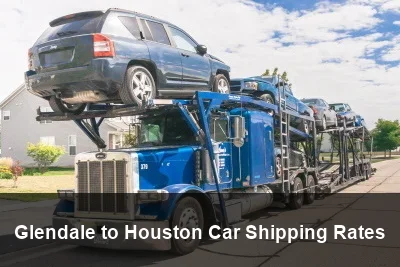
At 1,547 miles, this route falls into the long-haul pricing tier where per-mile rates drop compared to shorter corridors but base costs are higher. Expect pricing to shift upward in late spring and summer when Houston-bound demand from California peaks alongside school-year relocations and PCS cycles. Fuel surcharges on this corridor track diesel prices closely — the run through Arizona and New Mexico adds real fuel cost for carriers. Current fuel pricing dynamics are explained at https://california.auto-transport-shipping.com/articles/how-gas-prices-impact-california-auto-transport-fees.html
What affects the cost of Glendale to Houston car shipping:
- Vehicle type and size — larger vehicles take more carrier space; aftermarket additions like lift kits, oversized mirrors, or roof accessories can add fees
- Open vs. enclosed transport — open is lower cost with stronger carrier availability; enclosed protects against weather, debris, and road conditions
- Standard vs. expedited pickup — expedited prioritizes your vehicle for the next available dispatch, typically at a $100–$300 premium
- Time of year — peak demand seasons drive rates higher; off-peak windows offer the most competitive pricing
- Fuel costs — diesel prices affect carrier rates; longer routes are more sensitive to fuel price swings
- Vehicle condition — non-running vehicles require special loading equipment and cost more to ship
| Vehicle Type | Open Car Shipping (Est.) | Enclosed Car Shipping (Est.) |
|---|---|---|
| Sedan | $950 – $1,350 | $1,700 – $2,300 |
| SUV / Crossover | $1,100 – $1,600 | $1,950 – $2,700 |
| Pickup Truck | $1,100 – $1,650 | $1,950 – $2,750 |
| Minivan | $1,100 – $1,600 | $1,950 – $2,700 |
| Luxury / Classic Car | $1,300 – $1,900 | $2,200 – $3,000 |
| Non-Running Vehicle | Add $200–350 | Add $200–350 |
* Estimated ranges based on recent Glendale to Houston shipments. Actual rate depends on vehicle, locations, booking date, and current fuel costs. Use the form on this page to compare real quotes from licensed carriers.
Open vs. Enclosed: What Makes Sense on This Corridor
The majority of vehicles on this route ship open without issue. I-10 through the desert southwest is dry and well-maintained, and most standard sedans, trucks, and SUVs arrive without road debris damage. Enclosed transport makes sense if you're shipping a luxury vehicle, classic car, or anything low-clearance that can't tolerate minor debris exposure. Houston humidity at delivery is a real factor for freshly restored vehicles — enclosed trailers reduce moisture exposure during the final leg. If your vehicle is valued above $60,000 or is a collector piece, enclosed is the right call on this run.
How Long Does Glendale to Houston Car Shipping Take?
Glendale to Houston typically runs 5-8 days door-to-door under normal conditions. Carriers cover roughly 500 miles per operating day factoring in hours-of-service regulations and load coordination. This is a well-traveled lane with strong carrier frequency, so dispatch-to-pickup windows are usually 1-3 business days. If your timeline is tight, expedited options exist — reviewed in detail at https://california.auto-transport-shipping.com/articles/california-expedited-car-shipping-fast-cost.html. The LA basin departure can add a half-day depending on traffic windows, but experienced carriers running this corridor know to stage in Glendale or Burbank and move early morning.
| Service Type | Typical Transit | Pickup Window | Best For |
|---|---|---|---|
| Open — Standard | 4–6 days | 2–5 business days | Best value; most common choice on this route |
| Open — Expedited | 2–4 days | 1–2 business days | Firm arrival date; faster dispatch window |
| Enclosed — Standard | 4–6 days | 3–7 business days | Luxury, classic, or modified vehicles |
| Enclosed — Expedited | 2–4 days | 1–3 business days | High-value vehicles on a firm delivery deadline |
** Summer monsoon season (July-September) across southern New Mexico and West Texas can produce flash flooding and temporary highway closures on I-10, adding 12-24 hours in rare cases. Houston itself sees hurricane activity August through October — confirm delivery address accessibility if a named storm is active before your scheduled delivery window.
Glendale to Houston — Route & Logistics
Carriers access I-5 south from Glendale, merging onto I-10 east through the San Bernardino Pass, then run I-10 continuously through Blythe, Phoenix, Tucson, El Paso, and San Antonio before the final push northeast to Houston on I-10. The route is almost entirely interstate — 1,547 miles with minimal detour.
Key Corridor Waypoints
- Glendale / Burbank Border, CA Carrier pickup typically stages near the flat commercial corridors along San Fernando Road or Empire Avenue where 18-wheelers can load without the grade changes of Glendale's hillside neighborhoods. Vehicles in Brand Park or Montrose areas may require a short meet-point relocation to a flat parking lot before the carrier can safely load and depart toward I-5 south.
- Cajon Pass, CA (Elevation 4,260 ft) Just east of the I-15 and I-215 split near San Bernardino, carriers climbing Cajon Pass gain significant elevation before descending into the high desert. This is a known choke point — summer heat and steep grades slow heavy carriers, and winter ice events occasionally require chain control. Most Glendale-to-Houston runs pass through here within the first 90 minutes of departure.
- Blythe, CA / Arizona State Line Blythe sits at the Colorado River crossing on I-10 and marks the transition out of California. Agricultural inspection checkpoints operate here for outbound loads, though auto transport trailers pass without significant delay. Carriers often use Blythe for a fuel and driver log stop. Temperatures in this stretch routinely exceed 110°F in summer, which is a consideration for vehicle fluids during loading.
- El Paso, TX / Las Cruces, NM Interchange The I-10 corridor through El Paso and across the New Mexico line near Las Cruces represents the midpoint of the haul. Many carriers running long California-to-Texas loads will swap drivers or take a federally required rest break in the El Paso metro. This stretch is also where monsoon weather enters the equation July through September, with storm cells moving north from Mexico.
- San Antonio, TX — I-10 / I-35 Junction San Antonio is a major routing decision point. Carriers either continue east on I-10 to Houston or adjust for multi-stop loads. Joint Base San Antonio — which encompasses Fort Sam Houston, Lackland AFB, and Randolph AFB — generates its own vehicle traffic, and carriers serving PCS moves sometimes stage here briefly. It's approximately 197 miles from San Antonio to Houston on I-10.
- Houston Metro Entry, TX — I-10 / Beltway 8 Carriers typically enter Houston via I-10 east and use Beltway 8 (Sam Houston Tollway) to navigate to the delivery zone. The inner loop (I-610) handles most residential deliveries, but downtown and Midtown addresses may require street-level coordination. Energy Corridor deliveries use I-10 west of downtown. The Port of Houston area involves separate permitting if vehicles are staged commercially.
Pickup & Delivery Access
- Pickup Access in Glendale Glendale's flat commercial zones along San Fernando Road, Central Avenue, and near the Burbank border offer straightforward carrier access for 75-foot transport trailers. Hillside neighborhoods — Chevy Chase Canyon, Glenoaks Hills, and upper Montrose — often require a meet point at a nearby flat retail lot. Carriers serving Burbank Airport and Pasadena can often incorporate Glendale pickups on the same run without schedule adjustments.
- Delivery Access in Houston Most Houston residential neighborhoods within the Loop are carrier-accessible. Narrow streets in Midtown, Montrose, and the Heights may require the driver to drop your vehicle at a nearby staging point such as a shopping center lot. Energy Corridor and Sugar Land deliveries are straightforward. Downtown high-rise addresses or Port-area deliveries require advance coordination — confirm street access with your carrier dispatcher before the truck departs California.
- Nearby Pickup Locations Carriers picking up in Glendale regularly extend service to Burbank, Pasadena, and La Crescenta. Call 1‑800‑590‑6492 to confirm door-to-door availability at your address.
Open vs. Enclosed Car Shipping: Glendale to Houston
Both options use licensed, insured carriers and deliver door to door. For a full breakdown, read the pros and cons of open vs. enclosed car shipping.
Open Car Shipping
Most Popular- Lower cost — the practical choice for most vehicles
- More carriers available on this corridor
- Faster dispatch from booking to pickup
- Works well for sedans, SUVs, trucks, and minivans
- Vehicle rides on an open multi-car carrier
- Cargo insurance required on all licensed carriers
Estimated cost: $950 – $1,650
Enclosed Car Shipping
Premium Protection- Full protection from weather, debris, and road grime
- Best for luxury, exotic, and classic vehicles
- Recommended for low-clearance and custom-built cars
- Wheel-net or soft-tie systems prevent contact damage
- Higher cargo coverage — commonly $500,000 per load
- White-glove handling by experienced operators
Estimated cost: $1,700 – $2,750
Not sure which is right for your vehicle? Call 1-800-590-6492 and we'll point you in the right direction. Also worth reading: the top 10 questions to ask any car shipping company before you commit.
How to Prepare Your Car for Shipping to Houston
A little prep before pickup protects you if there's ever a dispute about your vehicle's condition. This checklist is from our full guide on preparing your car for transport:
- Remove all personal belongings from the interior and trunk
- Leave only a quarter tank of fuel — enough to load and unload
- Take date-stamped photos of the full exterior and interior
- Remove or disable toll transponders (FasTrak, E-ZPass, etc.)
- Retract or remove roof racks, spoilers, antennas, and bike mounts
- Make sure the battery is charged and tires are properly inflated
- Tell the carrier about any existing leaks or mechanical issues
- Deactivate the car alarm before the carrier arrives
- Write down the mileage on the Bill of Lading at pickup
- Fold in side mirrors if the vehicle is wider than standard
Personal items: Most carriers won't cover belongings left in the car. Read the full rules on shipping personal items in your vehicle. Also review our Bill of Lading guide so you know exactly what to check at pickup and delivery.
When to Ship Your Car from Glendale to Houston
This route runs strong year-round, but volume and pricing shift with season. Spring and early summer bring the highest demand as PCS orders activate, graduates relocate, and snowbirds return north. Late summer sees a secondary spike tied to university move-ins at Rice, U of H, and Texas Southern. Winter is the lightest demand period on this corridor but not dramatically cheaper. For winter-specific transit considerations, see https://california.auto-transport-shipping.com/articles/auto-transport-challenges-during-the-winter.html
Spring Peak (March – May)
Military PCS orders release heavily in spring, and this corridor sees significant Fort Cavazos and JBSA-related volume moving toward the Houston metro. Carrier availability tightens and rates climb 10-20% above baseline. If you're relocating due to a PCS order or a spring job start, book 2-3 weeks ahead of your target pickup date to avoid last-minute pricing and limited carrier selection.
Summer Demand (June – August)
University relocations to Rice University, University of Houston, and Texas Southern drive late-July and August volume. Glendale's proximity to Caltech and UCLA means student vehicle shipments concentrate in this window. Simultaneously, desert heat across Arizona and New Mexico peaks — carriers time departures carefully to protect vehicles and equipment. Book early and expect transit quotes to reflect possible weather delays through the Southwest.
Fall Window (September – November)
Demand moderates after Labor Day, making fall one of the better pricing windows on this route. Temperatures across the I-10 desert corridor drop to manageable levels, reducing heat-related transit concerns. Hurricane season runs through October for Houston, so monitor NOAA forecasts if your delivery is scheduled between August and October. This is a reliable season to move a classic or collector vehicle on this corridor.
Winter Shipping (December – February)
This is the softest demand period, and rates are typically at their annual low. However, winter storm events in West Texas and the El Paso area can produce ice on I-10 and cause carrier delays of 24-48 hours. Snowbird patterns are lighter on this specific corridor compared to Florida-bound routes. If your ship date is flexible, January and early February often yield the best rates of the year on Glendale-to-Houston loads.
PCS Season (April – June)
Military Permanent Change of Station orders concentrate heavily between April and June, with Fort Cavazos (formerly Fort Hood) and Joint Base San Antonio generating substantial Houston-area vehicle demand. Carriers serving this corridor prioritize military loads during this window, which means civilian bookings compete for the same trailer space. Active-duty members often receive limited-time order windows — confirm your pickup date as soon as orders are in hand.
How to Choose a Glendale to Houston Car Shipping Company
Getting multiple quotes is step one — knowing what to look for in those quotes matters just as much. Our guide on how to select a car shipping company covers the full process. Here are the six things that matter most:
FMCSA Registration
Every carrier or broker must hold a valid MC number. Verify any company at FMCSA SAFER before you book.
Proof of Insurance
Ask for a current certificate of insurance. Open carriers typically carry $100,000–$250,000 per load; enclosed commonly $500,000 or more. Learn what auto transport insurance covers.
All-In Pricing
Your quote should be a final number with no fees added after booking. Know the difference between brokers and carriers and confirm what the quote covers before you agree.
Bill of Lading
A complete Bill of Lading is filled out at pickup and delivery. Our Bill of Lading guide explains what to check. Never sign an incomplete one.
Real Reviews
Check Google and the BBB. Look at how they handled complaints and damage claims — that tells you more than a five-star average from happy customers.
Route Experience
A carrier who regularly runs Glendale to Houston knows to stage pickups near the Burbank-Glendale commercial corridor and hit I-10 east before 6 AM to clear the LA basin before peak congestion locks down the interchange at I-605. They know Cajon Pass requires gear-down discipline on a loaded 75-foot trailer and that Blythe is the last reasonable fuel stop before Arizona pricing kicks in. They know El Paso's I-10/I-25 interchange backs up on Friday afternoons and that the final run into Houston on I-10 east is cleanest before 7 AM to beat the Energy Corridor commuter traffic. That timing knowledge is the difference between a 5-day and 7-day transit on this haul.
Glendale to Houston Car Shipping — FAQ
How much does it cost to ship a car from Glendale to Houston?
On this 1,547-mile corridor, open transport for a standard sedan or SUV typically runs between $950 and $1,350 depending on season, fuel prices, and lead time. Enclosed transport adds $400-$700 to that range. Trucks and oversized vehicles add cost due to weight and trailer space. Rates are highest in spring PCS season (April-June) and late summer. Booking 2-3 weeks out gives carriers time to consolidate loads and usually produces better pricing than last-minute requests. Use the quote form on this page for a current rate tied to your vehicle type and dates.
How long does Glendale to Houston car shipping take?
Standard transit on this route is 5-8 business days after pickup. Pickup itself typically occurs 1-3 business days after booking confirmation, depending on carrier availability in the Glendale-Burbank area. The 1,547-mile haul covering I-10 through Arizona, New Mexico, and Texas runs roughly 3-5 driving days factoring in federal hours-of-service limits. Desert heat in summer and winter weather near El Paso are the two most common causes of minor delays. If your timeline is critical, expedited options can compress this — details at https://california.auto-transport-shipping.com/articles/california-expedited-car-shipping-fast-cost.html
Is my car insured during transport from Glendale to Houston?
Yes. Every carrier licensed through FMCSA is required to carry cargo insurance, and that coverage applies to your vehicle while it's on the trailer from Glendale to Houston. Before your carrier picks up, complete a thorough Bill of Lading inspection — document every existing scratch, dent, or chip with photos. If damage occurs in transit, that pre-existing condition record is what protects your claim. For a full explanation of how transport insurance works, see https://california.auto-transport-shipping.com/articles/understanding-auto-transport-insurance.html. If you ever need to file a claim, the process is outlined at https://california.auto-transport-shipping.com/articles/how-to-file-a-claim-for-vehicle-damage-during-transport.html
Should I choose open or enclosed transport for the Glendale to Houston route?
Open transport is appropriate for the majority of vehicles on this run. The I-10 corridor through the desert southwest is dry, well-paved, and low-risk for road debris damage under normal conditions. Enclosed transport is worth the added cost if you're shipping a vehicle valued over $60,000, a classic or restored car, or any vehicle with low ground clearance that may be affected by trailer ramp angles. Houston's high humidity is worth considering for freshly painted or restored vehicles — enclosed trailers limit moisture exposure during the final delivery leg. Full comparison at https://california.auto-transport-shipping.com/articles/open-vs-enclosed-auto-transport-pros-and-cons.html
Do I have to be present at pickup in Glendale and delivery in Houston?
You or a designated representative must be present at both pickup and delivery to sign the Bill of Lading, which is the legal inspection record for your vehicle's condition. In Glendale, this is especially important if your vehicle is in a hillside neighborhood and requires a nearby meet point — the person releasing the vehicle needs to confirm the meet location with the driver directly. At delivery in Houston, if you're not yet in town, a trusted contact can sign on your behalf. Details on the Bill of Lading process are at https://california.auto-transport-shipping.com/articles/california-auto-transport-bill-of-lading-information.html
How does monsoon season affect transit on this route?
The North American monsoon season runs July through mid-September and produces significant storm activity across southern New Mexico and West Texas — the exact stretch of I-10 your carrier travels. Flash flooding can temporarily close I-10 near the New Mexico-Texas state line, adding 12-24 hours to transit in severe cases. Carriers with experience on this corridor monitor TXDOT and NMDOT road condition alerts and often reroute via I-20 through Midland-Odessa if I-10 is compromised. This is not a reason to avoid shipping in summer, but it's worth factoring into your delivery expectations if your booking falls in this window.
I have a PCS order to the Houston area. How should I time my vehicle shipment?
Military PCS moves to the Houston area — whether tied to Fort Cavazos, Joint Base San Antonio, or a Houston-area installation — create high carrier demand April through June. Book your vehicle transport as soon as orders are in hand. Waiting until the week before your report date during peak PCS season risks both higher pricing and limited carrier availability from the Glendale-Los Angeles area. Provide your report date, not just a preference window, so dispatchers can prioritize your load. If your orders include a Government Bill of Lading (GBL), confirm whether personal vehicle transport is covered before booking privately.
Can I ship a vehicle from nearby Burbank or Pasadena under this same route?
Yes. Carriers picking up in Glendale routinely service Burbank and Pasadena on the same dispatch. Burbank is directly adjacent to Glendale and shares the same flat commercial pickup zones near Burbank Airport. Pasadena adds roughly 8-10 miles east on I-210, and pickup is straightforward in the lower-elevation areas near the 210-710 interchange. Carriers serving this lane from the San Gabriel Valley often load in Pasadena, add Glendale, and enter I-10 east via the I-605 connector. If you're in La Crescenta or Montrose, confirm a flat meet-point option with your dispatcher at booking.
Ready to Ship Your Car from Glendale to Houston?
One form gets you up to 10 free quotes from licensed, insured carriers. Compare costs and transit times and book the best deal for your schedule.