
Elk Grove to San Francisco Car Shipping Route
The drive from Elk Grove to San Francisco covers approximately 95 miles, primarily via I-5 north to I-80 west, or alternately SR-99 north through Sacramento connecting to I-80 at the Capital City Freeway interchange. Both access points are well-known to carriers who stage out of the greater Sacramento area. The route crosses the Sacramento–San Joaquin Delta lowlands, climbs slightly through the Fairfield corridor, and descends into the Bay via the Carquinez Strait and Vallejo before reaching the Bay Bridge. Putting your vehicle on a carrier instead of driving it yourself saves measurable wear, fuel, and time. See a full comparison at https://california.auto-transport-shipping.com/articles/benefits-of-auto-transport-service-vs-driving-yourself.html
San Francisco's demand drivers are broad and consistent. UC San Francisco runs one of the country's top medical schools, generating student and faculty relocations annually. Major employers including Salesforce, Twitter's former headquarters, Wells Fargo's corporate offices, and the UCSF Medical Center anchor a large professional transplant population. Travis Air Force Base, located in Fairfield directly along the I-80 corridor mid-route, generates military PCS moves between Sacramento-area installations and Bay Area assignments regularly. Weather on this route is mild year-round but Bay Area marine layer and occasional winter valley fog near Elk Grove can affect carrier scheduling margins. Review https://california.auto-transport-shipping.com/articles/auto-transport-mistakes-to-avoid.html before finalizing your booking.
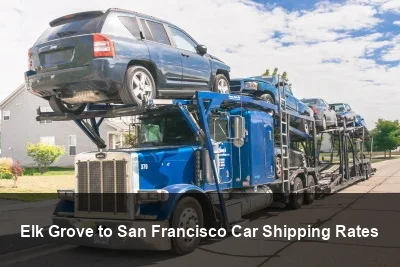
Elk Grove to San Francisco Car Shipping Rates
At roughly 95 miles, this is a short-haul corridor, and rate-per-mile on short hauls typically runs higher than on 500-plus mile lanes. Expect base open transport rates to reflect that distance tier. Seasonal demand spikes occur in late spring and summer when Bay Area tech hiring and university cycles peak. Fuel costs on I-80 between Sacramento and the Bay Factor into carrier pricing as well — see how that works at https://california.auto-transport-shipping.com/articles/how-gas-prices-impact-california-auto-transport-fees.html. Booking midweek and outside peak summer months will generally get you a sharper number.
What affects the cost of Elk Grove to San Francisco car shipping:
- Vehicle type and size — larger vehicles take more carrier space; aftermarket additions like lift kits, oversized mirrors, or roof accessories can add fees
- Open vs. enclosed transport — open is lower cost with stronger carrier availability; enclosed protects against weather, debris, and road conditions
- Standard vs. expedited pickup — expedited prioritizes your vehicle for the next available dispatch, typically at a $100–$300 premium
- Time of year — peak demand seasons drive rates higher; off-peak windows offer the most competitive pricing
- Fuel costs — diesel prices affect carrier rates; longer routes are more sensitive to fuel price swings
- Vehicle condition — non-running vehicles require special loading equipment and cost more to ship
| Vehicle Type | Open Car Shipping (Est.) | Enclosed Car Shipping (Est.) |
|---|---|---|
| Sedan | $350 – $500 | $700 – $950 |
| SUV / Crossover | $400 – $600 | $800 – $1,100 |
| Pickup Truck | $400 – $600 | $800 – $1,100 |
| Minivan | $400 – $600 | $800 – $1,100 |
| Luxury / Classic Car | $500 – $700 | $950 – $1,300 |
| Non-Running Vehicle | Add $100–200 | Add $100–200 |
* Estimated ranges based on recent Elk Grove to San Francisco shipments. Actual rate depends on vehicle, locations, booking date, and current fuel costs. Use the form on this page to compare real quotes from licensed carriers.
Open or Enclosed: What This 95-Mile Route Actually Needs
For most standard vehicles moving from Elk Grove to San Francisco, open transport is the practical choice. The route is short, largely freeway, and doesn't involve mountain passes or sustained adverse weather. Open carriers run this lane frequently, which keeps pricing competitive and availability high. Enclosed transport makes sense if you're moving a high-value classic, a low-clearance exotic, or a vehicle with a fresh custom paint job where even minor road debris exposure matters. San Francisco delivery in dense urban areas carries slightly more handling complexity regardless of carrier type.
How Long Does Elk Grove to San Francisco Car Shipping Take?
A 95-mile route between Elk Grove and San Francisco typically completes in one to two days once a carrier is dispatched. Driving time alone is under two hours on I-80, so transit is not the limiting factor — carrier scheduling and dispatch timing are. Because this corridor sees regular carrier traffic, dispatch lead times are often 24 to 72 hours from booking. If you're working against a hard move-out date, expedited options can accelerate that window significantly. See https://california.auto-transport-shipping.com/articles/california-expedited-car-shipping-fast-cost.html for how expedited dispatch pricing works on short California lanes.
| Service Type | Typical Transit | Pickup Window | Best For |
|---|---|---|---|
| Open — Standard | 1–2 days | 1–3 business days | Best value; most common choice on this route |
| Open — Expedited | Same–1 day | Next day–1 business day | Firm arrival date; faster dispatch window |
| Enclosed — Standard | 2–3 days | 2–5 business days | Luxury, classic, or modified vehicles |
| Enclosed — Expedited | 1–2 days | 1–2 business days | High-value vehicles on a firm delivery deadline |
** Tule fog in the Sacramento Valley around Elk Grove — most common December through February — can ground or delay carrier departures on short notice. Bay Area traffic congestion on I-80 near the Bay Bridge approaches adds unpredictable time to delivery windows, particularly on weekday afternoons. Budget one buffer day during winter months.
Elk Grove to San Francisco — Route & Logistics
Carriers serving this route access SR-99 or I-5 directly from Elk Grove's suburban grid, merge onto I-80 west through Sacramento, and run the full I-80 corridor through Vacaville, Fairfield, and Vallejo before crossing the Bay Bridge into San Francisco. Total freeway distance is approximately 95 miles with no mountain passes or significant grade changes along the primary route.
Key Corridor Waypoints
- Elk Grove, CA Carriers pick up from Elk Grove's residential grid via Elk Grove Boulevard, Bruceville Road, or the SR-99 business corridor. The suburb's wide, flat streets accommodate large multi-car haulers with minimal maneuvering difficulty. SR-99 north and I-5 north are both within minutes of most neighborhoods, giving carriers immediate freeway access after loading.
- Sacramento, CA — I-80 Interchange SR-99 and I-5 converge near downtown Sacramento, where carriers transition to I-80 westbound via the Capital City Freeway or Business 80. This interchange is a critical merge point and can see congestion during morning and late afternoon commute windows. Carriers familiar with the corridor typically time this segment to avoid peak Sacramento traffic.
- Vacaville, CA Vacaville sits at the midpoint of the I-80 corridor and serves as a common carrier rest and fuel stop. The city has truck-accessible fuel stations and staging areas along the freeway frontage. Some carriers use Vacaville as a secondary meet-point for vehicle handoffs when direct Elk Grove pickup isn't scheduled. Elevation here is approximately 200 feet.
- Fairfield, CA — Travis AFB Proximity Travis Air Force Base lies just north of I-80 near Fairfield, and this segment regularly sees military vehicle transport activity tied to PCS orders. Carriers passing through Fairfield often have additional Bay Area drops booked, keeping multi-car haulers well-loaded in both directions. This is also the last significant fuel and rest corridor before the Bay Area congestion zone begins.
- Vallejo, CA — Carquinez Strait Crossing I-80 crosses the Carquinez Strait at Crockett and the Benicia-Martinez Bridge approach here marks the transition into Bay Area traffic patterns. Carriers begin encountering denser freeway volume at this point. The crossing is straightforward for large haulers but afternoon and weekend congestion can add 20 to 40 minutes to the final delivery leg.
- San Francisco, CA — Bay Bridge Entry Carriers enter San Francisco via the Bay Bridge from the I-80 approach in Oakland. Delivery access within the city depends on the specific neighborhood — SoMa, the Tenderloin, and North Beach require more carrier maneuvering than outer districts like the Richmond or Sunset. Some city-center deliveries stage in accessible parking areas or BART-adjacent lots near the East Bay.
Pickup & Delivery Access
- Pickup Access in Elk Grove Elk Grove's suburban layout is carrier-friendly. Wide residential streets in Laguna, Stonelake, and the SR-99 corridor handle standard multi-car haulers without permits or staging complications. Most carriers can door-to-door in Elk Grove without issue. If your specific street is narrow or has overhead obstruction, arranging pickup at a nearby commercial lot on Elk Grove Boulevard or Grant Line Road is a straightforward alternative.
- Delivery Access in San Francisco San Francisco delivery varies significantly by neighborhood. The Richmond, Sunset, and Bayview districts offer reasonable carrier access. SoMa, the Financial District, North Beach, and the Castro involve narrow streets and dense parking that often require staging. Carriers commonly use the Embarcadero, Caltrain station lots, or BART park-and-ride facilities near the Bay Bridge as accessible delivery staging points for inner-city drops.
- Nearby Pickup Locations Carriers picking up in Elk Grove regularly extend service to Sacramento, Laguna, and Galt. Call 1‑800‑590‑6492 to confirm door-to-door availability at your address.
Open vs. Enclosed Car Shipping: Elk Grove to San Francisco
Both options use licensed, insured carriers and deliver door to door. For a full breakdown, read the pros and cons of open vs. enclosed car shipping.
Open Car Shipping
Most Popular- Lower cost — the practical choice for most vehicles
- More carriers available on this corridor
- Faster dispatch from booking to pickup
- Works well for sedans, SUVs, trucks, and minivans
- Vehicle rides on an open multi-car carrier
- Cargo insurance required on all licensed carriers
Estimated cost: $350 – $600
Enclosed Car Shipping
Premium Protection- Full protection from weather, debris, and road grime
- Best for luxury, exotic, and classic vehicles
- Recommended for low-clearance and custom-built cars
- Wheel-net or soft-tie systems prevent contact damage
- Higher cargo coverage — commonly $500,000 per load
- White-glove handling by experienced operators
Estimated cost: $700 – $1,100
Not sure which is right for your vehicle? Call 1-800-590-6492 and we'll point you in the right direction. Also worth reading: the top 10 questions to ask any car shipping company before you commit.
How to Prepare Your Car for Shipping to San Francisco
A little prep before pickup protects you if there's ever a dispute about your vehicle's condition. This checklist is from our full guide on preparing your car for transport:
- Remove all personal belongings from the interior and trunk
- Leave only a quarter tank of fuel — enough to load and unload
- Take date-stamped photos of the full exterior and interior
- Remove or disable toll transponders (FasTrak, E-ZPass, etc.)
- Retract or remove roof racks, spoilers, antennas, and bike mounts
- Make sure the battery is charged and tires are properly inflated
- Tell the carrier about any existing leaks or mechanical issues
- Deactivate the car alarm before the carrier arrives
- Write down the mileage on the Bill of Lading at pickup
- Fold in side mirrors if the vehicle is wider than standard
Personal items: Most carriers won't cover belongings left in the car. Read the full rules on shipping personal items in your vehicle. Also review our Bill of Lading guide so you know exactly what to check at pickup and delivery.
When to Ship Your Car from Elk Grove to San Francisco
This corridor runs well year-round given its mild climate and short distance, but pricing and availability shift with Bay Area hiring cycles. Summer peaks in June through August — driven by tech sector onboarding and university move-ins at UCSF and Bay Area schools — push carrier demand and rates upward. Winter valley fog near Elk Grove can create brief dispatch delays. For a detailed look at how winter conditions affect California transport timelines, see https://california.auto-transport-shipping.com/articles/auto-transport-challenges-during-the-winter.html
Spring Surge (March–May)
Bay Area tech hiring ramps up in Q1 and Q2, driving a consistent wave of vehicle relocations from Sacramento-area suburbs into San Francisco. Elk Grove sees above-average outbound volume during this window as remote workers return to in-office assignments. Book at least a week ahead during March through May to secure your preferred pickup window without paying a premium for expedited dispatch.
Summer Peak (June–August)
The highest demand period on this lane. UCSF and other Bay Area institutions bring incoming students and residents, corporate relocations spike, and household moves concentrate in July and August. Carrier availability tightens and base rates reflect that pressure. If you're moving during summer, locking in your booking two to three weeks out significantly reduces rate exposure and avoids last-minute scheduling gaps.
Academic Cycle (August–September)
UCSF's medical and graduate programs, along with San Francisco State University, generate a concentrated wave of vehicle moves in late August and early September. Students and faculty relocating from the Sacramento Valley — including Elk Grove and neighboring communities — represent a real, measurable demand driver on this specific corridor. This is a predictable crunch window; book early if your timeline falls here.
Winter Tule Fog (December–February)
Tule fog is the primary weather factor on this route in winter, forming overnight and morning in the Sacramento Valley near Elk Grove. Carrier visibility restrictions can delay morning departures by several hours. Transit times on this otherwise quick lane can stretch by a day during heavy fog events. Build a one-day buffer into your schedule if you're shipping between December and February.
Military PCS Season (May–August)
Travis Air Force Base in Fairfield sits directly on the I-80 corridor between Elk Grove and San Francisco. PCS move season peaks May through August, increasing military vehicle transport volume along this exact route. If you have a PCS order routing through the Bay Area or Sacramento, carrier capacity on this lane can tighten quickly — coordinate your transport booking as soon as your orders are confirmed.
Fall Shoulder (October–November)
October and November represent the most cost-efficient booking window on this lane. Tech hiring slows, student moves have concluded, and PCS season winds down. Carrier availability is solid, rates soften from summer highs, and weather remains cooperative with minimal fog risk. If your move has any scheduling flexibility and falls in this window, you'll typically see better pricing and faster dispatch than peak months.
How to Choose a Elk Grove to San Francisco Car Shipping Company
Getting multiple quotes is step one — knowing what to look for in those quotes matters just as much. Our guide on how to select a car shipping company covers the full process. Here are the six things that matter most:
FMCSA Registration
Every carrier or broker must hold a valid MC number. Verify any company at FMCSA SAFER before you book.
Proof of Insurance
Ask for a current certificate of insurance. Open carriers typically carry $100,000–$250,000 per load; enclosed commonly $500,000 or more. Learn what auto transport insurance covers.
All-In Pricing
Your quote should be a final number with no fees added after booking. Know the difference between brokers and carriers and confirm what the quote covers before you agree.
Bill of Lading
A complete Bill of Lading is filled out at pickup and delivery. Our Bill of Lading guide explains what to check. Never sign an incomplete one.
Real Reviews
Check Google and the BBB. Look at how they handled complaints and damage claims — that tells you more than a five-star average from happy customers.
Route Experience
A carrier who runs the Elk Grove–San Francisco lane regularly knows to avoid the I-80 Bay Bridge approach between 4 PM and 7 PM on weekdays — what looks like a 90-minute run from Vallejo becomes a two-to-three hour grind during that window. They know to fuel in Vacaville rather than paying Bay Area pump prices. They know that San Francisco residential deliveries east of Van Ness are workable but west of Divisadero starts getting tight for a full hauler, and that Caltrain's 4th and King lot is a reliable neutral delivery point for SoMa or Mission customers. They also know to watch for tule fog advisories originating at the Sacramento valley floor before committing to an early Elk Grove pickup on winter mornings.
Elk Grove to San Francisco Car Shipping — FAQ
How much does it cost to ship a car from Elk Grove to San Francisco?
On a 95-mile short-haul corridor like this one, open transport typically runs between $250 and $450 depending on vehicle size, season, and how quickly you need the carrier dispatched. Enclosed transport on the same route generally runs $450 to $750. Rates on short-haul lanes carry a higher cost-per-mile than longer routes because fixed carrier costs — fuel stop, driver time, tolls including the Bay Bridge — are spread over fewer miles. Summer months and the academic calendar in August and September push rates toward the higher end of these ranges. Booking midweek and outside peak demand months will generally keep your cost closer to the lower figures. Fill out the quote form for a current number specific to your vehicle type and timeline.
How long does Elk Grove to San Francisco car shipping take?
The physical drive between Elk Grove and San Francisco is under two hours on I-80, so transit time itself is not the constraint on this route. Total time from booking to delivery is typically one to three days: one to two days for carrier dispatch once your order is active, and same-day or next-day transit once the carrier is loaded. Carriers service this corridor frequently given the Sacramento-to-Bay-Area volume, which keeps dispatch lead times shorter than on less-traveled lanes. If you're working against a firm deadline, expedited dispatch options can compress that window further — see https://california.auto-transport-shipping.com/articles/california-expedited-car-shipping-fast-cost.html for how that pricing works.
Is my car insured during transport from Elk Grove to San Francisco?
Every licensed carrier operating on this route is required by federal law to carry cargo insurance covering your vehicle while it's loaded on the truck. That coverage is active from the moment your vehicle is loaded in Elk Grove through delivery in San Francisco. Before your vehicle is loaded, the carrier completes a Bill of Lading documenting its condition — any pre-existing damage is noted, and that document becomes the baseline for any claim comparison at delivery. Review your own auto policy as well, since some policies include transport coverage as a gap-filler. For a full explanation of how transport insurance works, see https://california.auto-transport-shipping.com/articles/understanding-auto-transport-insurance.html. If you ever need to file a damage claim, the process is outlined at https://california.auto-transport-shipping.com/articles/how-to-file-a-claim-for-vehicle-damage-during-transport.html
Should I choose open or enclosed transport for this route?
Open transport is the right call for most vehicles on this corridor. The route is short, runs on major interstates with no mountain passes, and the climate between Elk Grove and San Francisco is mild. Open carriers run this lane regularly, which means better availability and lower rates. Enclosed transport is worth the premium if you're shipping a high-value classic, a low-clearance exotic, or a vehicle where any cosmetic exposure matters — a fresh wrap, custom paint, or a car that's already on the show circuit. For a detailed side-by-side comparison of open versus enclosed on California routes, see https://california.auto-transport-shipping.com/articles/open-vs-enclosed-auto-transport-pros-and-cons.html
Do I have to be present at pickup and delivery?
You or an authorized representative must be present at both pickup and delivery. At pickup, someone needs to walk the vehicle with the carrier, confirm existing condition, and sign the Bill of Lading — that document protects you if there's any dispute about damage at delivery. At delivery, the same process happens in reverse: you inspect the vehicle, compare it to the Bill of Lading, note anything that needs to be addressed, and sign off. If you can't be there personally, a trusted contact — family member, friend, property manager — can handle both sides. For details on what the Bill of Lading covers and why it matters, see https://california.auto-transport-shipping.com/articles/california-auto-transport-bill-of-lading-information.html
Does tule fog near Elk Grove affect my transport timeline?
It can. Tule fog forms in the Sacramento Valley floor — including the Elk Grove area — primarily from December through February. It typically develops overnight and can reach zero-visibility conditions in early morning hours, which may delay carrier departures until the fog lifts, usually by mid-morning. On a short route like this one, even a half-day departure delay generally doesn't add a full calendar day to your transit, but it can shift your delivery window from morning to afternoon or to the following day. If you're shipping in winter, build one buffer day into your planning and ask your dispatcher to flag fog-related delay risk when they contact your carrier.
Are there specific delivery challenges in San Francisco I should know about?
Yes, and they're worth knowing before you book. San Francisco's street grid in dense neighborhoods — North Beach, the Mission, the Castro, Chinatown, the Financial District — can be too narrow or too steep for a fully loaded multi-car hauler to complete a door-to-door delivery safely. Carriers experienced on this route know to stage in accessible areas: the Embarcadero, Caltrain's 4th and King lot, or larger surface lots near the Bay Bridge approach are common neutral delivery points for inner-city addresses. Outer neighborhoods like the Sunset and Richmond generally allow closer delivery. When you book, confirm with your dispatcher what the carrier's plan is for your specific delivery address so there are no surprises at drop-off.
Does Travis Air Force Base traffic affect shipping on this route?
Travis AFB in Fairfield sits directly along I-80 between Elk Grove and San Francisco, and it generates real volume on this corridor — particularly during PCS season, which peaks May through August. Military families receiving orders that route through Bay Area installations or Sacramento-area assignments frequently use this exact lane for vehicle transport. During peak PCS months, that additional demand competes for the same carrier capacity serving civilian moves. If you have PCS orders and your timeline falls between May and August, book your transport as soon as your orders are confirmed. Waiting until the last two weeks of a PCS window on a high-traffic lane like this one routinely results in tighter availability and higher last-minute rates.
Ready to Ship Your Car from Elk Grove to San Francisco?
One form gets you up to 10 free quotes from licensed, insured carriers. Compare costs and transit times and book the best deal for your schedule.