

Bakersfield to Seattle Car Shipping Route
Bakersfield to Seattle is approximately 1,147 miles by road. Carriers leave Kern County via SR-99 north or SR-58 west to I-5, then stay on I-5 for the bulk of the run through the Sacramento Valley, past Redding, over the Siskiyou Summit near Ashland, through the Willamette Valley, and into Washington State. The Siskiyou crossing sits above 4,300 feet and is the single significant elevation challenge on an otherwise straightforward freeway corridor. Shipping rather than driving this distance saves you roughly two days of drive time, fuel, lodging, and wear on your vehicle. For a full breakdown of those savings, see https://california.auto-transport-shipping.com/articles/benefits-of-auto-transport-service-vs-driving-yourself.html.
Seattle's demand drivers make this route commercially viable on a near-daily basis. Joint Base Lewis-McChord, located south of Tacoma, generates consistent PCS vehicle shipments. The University of Washington enrolls over 47,000 students, many arriving from California each fall. Boeing's manufacturing facilities in Everett and Renton, Amazon's headquarters in South Lake Union, and Microsoft's Redmond campus all drive corporate relocation volume. On the weather side, the Siskiyou Pass and the stretch through southern Oregon can see snow and ice from November through March, occasionally adding a day to transit. Before you book, review common errors at https://california.auto-transport-shipping.com/articles/auto-transport-mistakes-to-avoid.html to make sure your booking is set up correctly.
Bakersfield to Seattle Car Shipping Rates
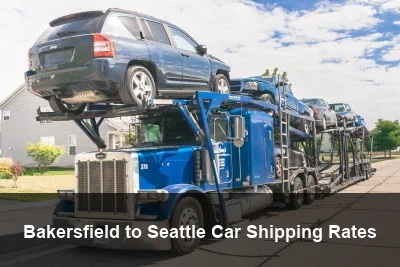
At roughly 1,147 miles, this route falls in the long-haul tier where per-mile rates drop compared to shorter regional moves, but total cost is still meaningful — expect $900 to $1,400 for a standard open-carrier shipment depending on vehicle size, season, and lead time. Fuel costs on I-5 directly affect carrier pricing; when diesel spikes, surcharges follow. See how that works at https://california.auto-transport-shipping.com/articles/how-gas-prices-impact-california-auto-transport-fees.html. Winter demand for enclosed transport on this corridor can push enclosed rates 30 to 50 percent above open rates.
What affects the cost of Bakersfield to Seattle car shipping:
- Vehicle type and size — larger vehicles take more carrier space; aftermarket additions like lift kits, oversized mirrors, or roof accessories can add fees
- Open vs. enclosed transport — open is lower cost with stronger carrier availability; enclosed protects against weather, debris, and road conditions
- Standard vs. expedited pickup — expedited prioritizes your vehicle for the next available dispatch, typically at a $100–$300 premium
- Time of year — peak demand seasons drive rates higher; off-peak windows offer the most competitive pricing
- Fuel costs — diesel prices affect carrier rates; longer routes are more sensitive to fuel price swings
- Vehicle condition — non-running vehicles require special loading equipment and cost more to ship
| Vehicle Type | Open Car Shipping (Est.) | Enclosed Car Shipping (Est.) |
|---|---|---|
| Sedan | $750 – $1,000 | $1,350 – $1,750 |
| SUV / Crossover | $900 – $1,150 | $1,550 – $2,000 |
| Pickup Truck | $900 – $1,200 | $1,550 – $2,100 |
| Minivan | $900 – $1,150 | $1,550 – $2,000 |
| Luxury / Classic Car | $1,050 – $1,400 | $1,850 – $2,350 |
| Non-Running Vehicle | Add $150–300 | Add $150–300 |
* Estimated ranges based on recent Bakersfield to Seattle shipments. Actual rate depends on vehicle, locations, booking date, and current fuel costs. Use the form on this page to compare real quotes from licensed carriers.
Open Carrier Works Here — Unless You're Crossing in Winter
For most of the year, open transport is the practical choice on the Bakersfield-to-Seattle run. I-5 is a well-maintained corridor and the majority of vehicles shipped on it — sedans, SUVs, trucks — arrive without issue. If you're shipping between November and March and your vehicle is a luxury car, a classic, or a leased vehicle with appearance conditions, enclosed makes more sense. The Siskiyou Pass segment exposes vehicles to road spray, grit, and occasional precipitation even when the road itself is open. Enclosed removes that variable entirely.
How Long Does Bakersfield to Seattle Car Shipping Take?
Standard transit on this corridor is 3 to 5 days. A carrier driving straight through covers the 1,147 miles in roughly 18 to 20 hours of wheel time, but federal hours-of-service rules, multi-vehicle loads with intermediate stops, and mandatory rest breaks extend that to multiple days in practice. Bakersfield sits on the SR-99 corridor where northbound trucks pick up regularly, so dispatch-to-pickup time is typically 1 to 3 business days. If your schedule is firm, expedited single-vehicle transport can compress the timeline significantly — see https://california.auto-transport-shipping.com/articles/california-expedited-car-shipping-fast-cost.html for what that costs.
| Service Type | Typical Transit | Pickup Window | Best For |
|---|---|---|---|
| Open — Standard | 3–5 days | 2–5 business days | Best value; most common choice on this route |
| Open — Expedited | 2–3 days | 1–2 business days | Firm arrival date; faster dispatch window |
| Enclosed — Standard | 3–5 days | 3–7 business days | Luxury, classic, or modified vehicles |
| Enclosed — Expedited | 2–3 days | 1–3 business days | High-value vehicles on a firm delivery deadline |
** Winter weather on the Siskiyou Pass and Shasta-Trinity corridor can trigger chain controls or temporary closures between November and March, adding 12 to 36 hours to transit without notice. If you're booking a winter move, build buffer time into your schedule and confirm your carrier's Oregon and Washington routing plan.
Bakersfield to Seattle — Route & Logistics
Carriers access this corridor from Bakersfield via SR-99 north to I-5, or via SR-58 west to I-5 near Buttonwillow. Once on I-5, the route is a single continuous northbound run through California, Oregon, and Washington — approximately 1,147 miles with no significant interstate transitions required until surface streets in Seattle.
Key Corridor Waypoints
- Bakersfield, CA (Origin) Carriers stage in Bakersfield's central grid or along the SR-99 corridor near the Rosedale Highway interchange. The Central Valley's flat street layout gives large transporters easy access to residential and commercial areas. Most northbound trucks enter I-5 via SR-99 north through the valley or cut west on SR-58 to reach I-5 near Buttonwillow, about 30 miles west of downtown.
- Redding, CA Redding functions as a common overnight and fuel stop for carriers on this corridor at roughly 280 miles north of Bakersfield. The I-5 and SR-44 interchange is a standard staging area. From here, the route begins climbing toward the Shasta-Trinity range. Carriers often log their mandatory rest break here before tackling the mountain grade sections ahead.
- Siskiyou Summit, OR — 4,310 ft The highest point on the entire I-5 corridor in the western United States, located just north of Ashland, Oregon. This is the primary weather choke point on the route. Chain controls are enforced here when conditions deteriorate, typically between November and March. Carriers familiar with this route time their crossing to avoid overnight temperatures when ice formation is most likely.
- Grants Pass / Medford, OR After descending the Siskiyou grade, the route levels through the Rogue Valley near Medford and Grants Pass. This stretch is a common secondary inspection area for commercial vehicles and a fuel stop for multi-axle carriers. I-5 remains the sole northbound artery through here with no practical bypass, making it a confirmed transit point on every carrier's run.
- Portland, OR — I-5 / I-205 Junction Portland marks the Oregon-Washington border crossing via the Columbia River bridges. Carriers on this route either stay on I-5 through downtown Portland or divert to I-205 to avoid urban traffic, particularly during weekday rush hours. The I-205 bypass adds minimal mileage but saves time during peak congestion. Most experienced carriers on this lane know which crossing runs cleaner at which hour.
- Seattle, WA (Destination) Delivery in Seattle requires attention to neighborhood access. South Seattle, SODO, and SoDo industrial areas near I-5 exits accommodate large transporters. Capitol Hill, Queen Anne, and Ballard have narrow residential streets that may require staging at a nearby commercial lot for final delivery. Carriers familiar with the route plan the drop-off approach in advance to avoid urban street restrictions.
Pickup & Delivery Access
- Pickup Access in Bakersfield Bakersfield's street grid is flat and carrier-friendly. Transporters can access most residential neighborhoods directly. The SR-99 corridor and arterials like Stockdale Highway, Rosedale Highway, and White Lane are routinely used for vehicle pickup. Nearby cities Delano, Shafter, and Wasco are also accessible from the same carrier runs with minimal detour.
- Delivery Access in Seattle Seattle has pockets of difficult access. Capitol Hill, Queen Anne, Fremont, and Ballard have steep grades and narrow streets that can stop an 8-car hauler entirely. SODO, SoDo, and South Seattle near the stadiums give carriers room to maneuver. If your delivery address is in a dense neighborhood, your broker should arrange a nearby meet point at a commercial lot or wide arterial.
- Nearby Pickup Locations Carriers picking up in Bakersfield regularly extend service to Delano, Shafter, and Wasco. Call 1‑800‑590‑6492 to confirm door-to-door availability at your address.
Open vs. Enclosed Car Shipping: Bakersfield to Seattle
Both options use licensed, insured carriers and deliver door to door. For a full breakdown, read the pros and cons of open vs. enclosed car shipping.
Open Car Shipping
Most Popular- Lower cost — the practical choice for most vehicles
- More carriers available on this corridor
- Faster dispatch from booking to pickup
- Works well for sedans, SUVs, trucks, and minivans
- Vehicle rides on an open multi-car carrier
- Cargo insurance required on all licensed carriers
Estimated cost: $750 – $1,200
Enclosed Car Shipping
Premium Protection- Full protection from weather, debris, and road grime
- Best for luxury, exotic, and classic vehicles
- Recommended for low-clearance and custom-built cars
- Wheel-net or soft-tie systems prevent contact damage
- Higher cargo coverage — commonly $500,000 per load
- White-glove handling by experienced operators
Estimated cost: $1,350 – $2,100
Not sure which is right for your vehicle? Call 1-800-590-6492 and we'll point you in the right direction. Also worth reading: the top 10 questions to ask any car shipping company before you commit.
How to Prepare Your Car for Shipping to Seattle
A little prep before pickup protects you if there's ever a dispute about your vehicle's condition. This checklist is from our full guide on preparing your car for transport:
- Remove all personal belongings from the interior and trunk
- Leave only a quarter tank of fuel — enough to load and unload
- Take date-stamped photos of the full exterior and interior
- Remove or disable toll transponders (FasTrak, E-ZPass, etc.)
- Retract or remove roof racks, spoilers, antennas, and bike mounts
- Make sure the battery is charged and tires are properly inflated
- Tell the carrier about any existing leaks or mechanical issues
- Deactivate the car alarm before the carrier arrives
- Write down the mileage on the Bill of Lading at pickup
- Fold in side mirrors if the vehicle is wider than standard
Personal items: Most carriers won't cover belongings left in the car. Read the full rules on shipping personal items in your vehicle. Also review our Bill of Lading guide so you know exactly what to check at pickup and delivery.
When to Ship Your Car from Bakersfield to Seattle
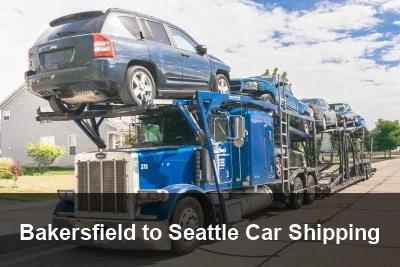
This corridor doesn't follow a simple seasonal pricing curve. Summer brings relocation volume from California to the Pacific Northwest, pushing prices up June through August. Fall generates University of Washington student moves. Winter is operationally harder due to the Siskiyou Pass, which can affect transit times and push enclosed rates higher. For a full breakdown of winter transport considerations on mountain-corridor routes, see https://california.auto-transport-shipping.com/articles/auto-transport-challenges-during-the-winter.html.
Spring Relocation Window (March–May)
Spring sees increasing California-to-Pacific Northwest relocation volume as job start dates align with fiscal-year hiring. Rates begin climbing in March after the winter slowdown. The Siskiyou Pass clears reliably by April, and carriers run cleaner schedules. Book 7 to 10 days out to secure positioning before summer demand peaks. This is one of the better windows for balancing price and transit reliability on this corridor.
Summer Peak (June–August)
Summer is the highest-demand period on this route. Corporate relocations tied to Amazon, Microsoft, and Boeing's Everett and Renton operations create consistent northbound volume. University of Washington student moves add to August demand specifically. Open carrier rates run at the top of their range. Book at least 10 to 14 days ahead. If you're flexible on pickup date, carriers with partial loads may offer better pricing mid-week.
UW Fall Move-In (August–September)
The University of Washington's fall quarter start generates a concentrated surge of inbound vehicles from California in late August through mid-September. Students and families shipping vehicles from the Central Valley and Southern California fill northbound loads quickly during this window. If your move coincides with fall semester timing, expect tighter carrier availability and book as early as possible to avoid delays into September.
Winter Mountain Risk (November–February)
The Siskiyou Summit and the Shasta corridor introduce genuine transit risk in winter. Chain controls and temporary closures on I-5 can delay shipments by one to two days without warning. Enclosed transport rates spike as demand for weather protection rises. Open transport remains available and runs fine in most conditions, but schedule flexibility is essential. Review winter shipping risks before booking at https://california.auto-transport-shipping.com/articles/auto-transport-challenges-during-the-winter.html.
Military PCS Season (May–August)
Joint Base Lewis-McChord south of Tacoma is one of the largest military installations in the Pacific Northwest and generates substantial PCS vehicle movement each summer. Personnel relocating from California's Central Valley — including those near Naval Air Station Lemoore or Army installations — frequently use this corridor. PCS moves require specific documentation and often come with government travel vouchers; confirm your broker handles military shipments before booking.
How to Choose a Bakersfield to Seattle Car Shipping Company
Getting multiple quotes is step one — knowing what to look for in those quotes matters just as much. Our guide on how to select a car shipping company covers the full process. Here are the six things that matter most:
FMCSA Registration
Every carrier or broker must hold a valid MC number. Verify any company at FMCSA SAFER before you book.
Proof of Insurance
Ask for a current certificate of insurance. Open carriers typically carry $100,000–$250,000 per load; enclosed commonly $500,000 or more. Learn what auto transport insurance covers.
All-In Pricing
Your quote should be a final number with no fees added after booking. Know the difference between brokers and carriers and confirm what the quote covers before you agree.
Bill of Lading
A complete Bill of Lading is filled out at pickup and delivery. Our Bill of Lading guide explains what to check. Never sign an incomplete one.
Real Reviews
Check Google and the BBB. Look at how they handled complaints and damage claims — that tells you more than a five-star average from happy customers.
Route Experience
A carrier who runs Bakersfield to Seattle regularly knows that the SR-99 pickup corridor in Kern County runs efficiently on Tuesday through Thursday — weekend dispatch often means Monday staging. They know to cross the Siskiyou Summit before 10 a.m. to beat weather and chain-control windows in winter. They use the I-205 bypass around Portland instead of I-5 through downtown during morning rush. They stage delivery vehicles in SODO or South Seattle before attempting Capitol Hill or Queen Anne approaches. And they know which Redding truck stops have room for a full transporter versus which are overcrowded on Friday afternoons. That institutional knowledge cuts a day off your transit and eliminates the avoidable delays that catch generic carriers off guard.
Bakersfield to Seattle Car Shipping — FAQ
How much does it cost to ship a car from Bakersfield to Seattle?
For standard open transport, expect to pay between $900 and $1,400 depending on your vehicle's size, current fuel prices, season, and how much lead time you give the carrier. Enclosed transport runs $1,400 to $2,000 or more on this corridor, with winter pricing at the higher end when weather risk increases demand. Larger vehicles — full-size trucks, SUVs, vans — cost more than sedans because they take up more space on the hauler. Rates fluctuate with diesel prices; you can see how fuel costs directly affect your quote at https://california.auto-transport-shipping.com/articles/how-gas-prices-impact-california-auto-transport-fees.html. The best way to get an accurate current number is to fill out the quote form with your vehicle details and dates.
How long does Bakersfield to Seattle car shipping take?
Transit from Bakersfield to Seattle typically takes 3 to 5 days once a carrier picks up your vehicle. The driving distance is approximately 1,147 miles, which a carrier covers across multiple days in compliance with federal hours-of-service rules. Pickup from Bakersfield usually happens within 1 to 3 business days of booking on this active corridor. Winter months can extend transit by a day if the Siskiyou Pass encounters chain controls or closures. If your move has a hard deadline, expedited single-vehicle transport can significantly compress that timeline — see https://california.auto-transport-shipping.com/articles/california-expedited-car-shipping-fast-cost.html for what expedited service costs and when it makes sense.
Is my car insured during transport from Bakersfield to Seattle?
Every licensed carrier operating on this corridor is required to carry cargo insurance as a condition of their FMCSA operating authority. That coverage applies to your vehicle while it's loaded on the transporter. However, the carrier's policy is primary — your personal auto insurance typically does not extend to transport-related damage. Before your vehicle is loaded, the driver completes a Bill of Lading documenting any pre-existing condition. That document is your baseline for any claim. Review it carefully at pickup and again at delivery before signing. For a full explanation of how transport insurance works, see https://california.auto-transport-shipping.com/articles/understanding-auto-transport-insurance.html. If something does go wrong, the process for filing a claim is explained at https://california.auto-transport-shipping.com/articles/how-to-file-a-claim-for-vehicle-damage-during-transport.html.
Should I choose open or enclosed transport for the Bakersfield to Seattle route?
Open transport is the right call for most vehicles on this route during spring, summer, and fall. The I-5 corridor is well-maintained and the majority of sedans, SUVs, and trucks ship without incident. Enclosed transport is worth the premium if you're moving between November and March and your vehicle is a luxury car, classic, collector vehicle, or leased car with appearance conditions. The Siskiyou Summit section exposes vehicles to road spray and grit even when roads are clear, and enclosed eliminates that risk entirely. For a full comparison of what each service level covers and costs, see https://california.auto-transport-shipping.com/articles/open-vs-enclosed-auto-transport-pros-and-cons.html.
Do I have to be present at pickup and delivery?
You don't have to be personally present, but someone you authorize must be there to hand off and receive the vehicle. That person signs the Bill of Lading at pickup — confirming the vehicle's condition before it's loaded — and again at delivery, confirming it arrived as expected. Signing without carefully inspecting the vehicle first is one of the most common mistakes in auto transport. If the authorized person at delivery misses damage on the inspection and signs off, disputing it later becomes significantly harder. The Bill of Lading process is explained in detail at https://california.auto-transport-shipping.com/articles/california-auto-transport-bill-of-lading-information.html.
Does winter weather on the Siskiyou Pass cause real delays on this route?
Yes, and it's the single most common cause of transit extensions on the Bakersfield-to-Seattle corridor. The Siskiyou Summit on I-5 near Ashland, Oregon sits at 4,310 feet and is subject to chain controls and temporary closures from November through March. When Caltrans or ODOT enforces chain controls, commercial carriers with large auto transporters must either chain up — which slows travel — or wait for conditions to clear. That wait can add 12 to 36 hours to your transit. If you're booking a winter shipment, build schedule flexibility into your delivery expectation and communicate with your carrier about their planned crossing window. Reviewing general winter transport challenges at https://california.auto-transport-shipping.com/articles/auto-transport-challenges-during-the-winter.html will help you set realistic expectations.
Can carriers pick up vehicles in Delano, Shafter, or Wasco near Bakersfield?
Yes. Carriers running northbound out of Kern County on the SR-99 corridor pass through or near Delano, Shafter, and Wasco without significant detour. These communities sit along the same SR-99 route that feeds into I-5, so a carrier staging in or near Bakersfield can add a pickup in these areas as part of their load-building process. You should note your specific city when requesting a quote, because pickup location does affect the logistics. Confirm with your broker that the carrier assigned to your load services your exact pickup city — most that work the Kern County corridor do, but it's worth verifying before you confirm your booking.
Is this a good route for shipping a vehicle for a military PCS move to Joint Base Lewis-McChord?
This corridor is regularly used for PCS moves terminating at or near Joint Base Lewis-McChord, which sits south of Tacoma and is one of the largest military installations in the Pacific Northwest. Carriers running Bakersfield to Seattle pass within a few miles of JBLM on I-5, making it a practical drop point. If you're using a government travel voucher or have specific documentation requirements for a PCS shipment, confirm with your broker upfront that they handle military moves and understand the paperwork requirements. PCS shipments during peak PCS season — May through August — compete for carrier space with general relocation volume, so booking as early as your orders allow gives you the best carrier options and pricing.
Ready to Ship Your Car from Bakersfield to Seattle?
One form gets you up to 10 free quotes from licensed, insured carriers. Compare costs and transit times and book the best deal for your schedule.