
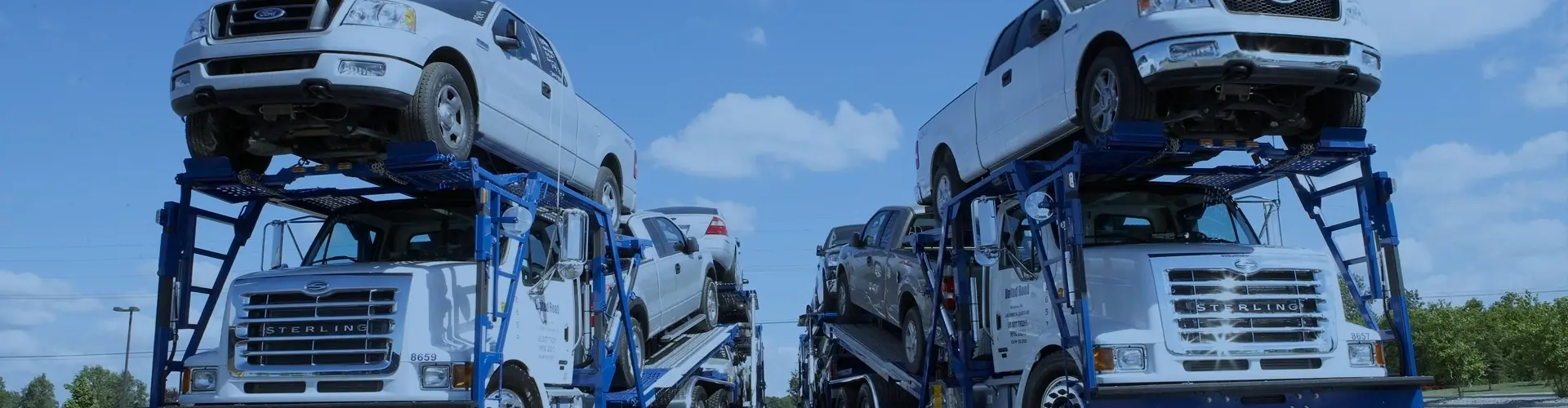
Anaheim to Washington DC Car Shipping Route
The Anaheim to Washington DC route covers approximately 2,678 miles. Carriers depart Anaheim via SR-91 east or I-5 south to I-405, then merge onto I-10 eastbound — the primary transcontinental spine for this corridor. From there, the route moves through the Sonoran Desert into Arizona, climbs through New Mexico and Texas, and connects to I-40 or I-20 depending on carrier preference and load optimization. The final leg typically runs I-81 north through Virginia into the DC metro. Shipping your vehicle saves you roughly four to five days of hard driving and several hundred dollars in fuel, lodging, and wear. See the full breakdown at https://california.auto-transport-shipping.com/articles/benefits-of-auto-transport-service-vs-driving-yourself.html.
Washington DC demand is structural, not seasonal. Joint Base Anacostia-Bolling handles active-duty relocations continuously, and the Pentagon's Arlington footprint generates PCS moves on a rolling twelve-month cycle. Georgetown University, George Washington University, American University, and Howard University all pull student vehicles in August and January. Major federal contractors — Booz Allen Hamilton, Leidos, SAIC — relocate employees into the DC metro regularly. Winter weather is a real variable on this route: I-40 through the Texas Panhandle and I-81 through the Shenandoah Valley both see ice and snow events that can add one to two days to transit between November and March. Before you book, review https://california.auto-transport-shipping.com/articles/auto-transport-mistakes-to-avoid.html to avoid common errors that delay pickup or delivery.
Anaheim to Washington DC Car Shipping Rates
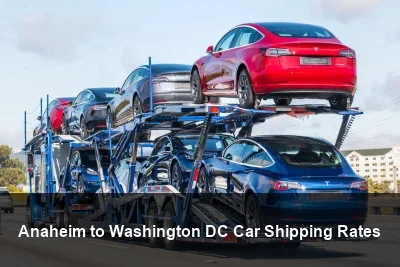
At 2,678 miles, this route falls into the long-haul pricing tier where per-mile rates are lower than short hauls but fuel surcharges carry more weight — and that matters on a corridor crossing the desert Southwest. Gas price swings between California and Texas directly affect carrier bids on this lane. Spring and early summer see rate increases of 10–20% driven by PCS and university demand. For current fuel surcharge dynamics, see https://california.auto-transport-shipping.com/articles/how-gas-prices-impact-california-auto-transport-fees.html.
What affects the cost of Anaheim to Washington DC car shipping:
- Vehicle type and size — larger vehicles take more carrier space; aftermarket additions like lift kits, oversized mirrors, or roof accessories can add fees
- Open vs. enclosed transport — open is lower cost with stronger carrier availability; enclosed protects against weather, debris, and road conditions
- Standard vs. expedited pickup — expedited prioritizes your vehicle for the next available dispatch, typically at a $100–$300 premium
- Time of year — peak demand seasons drive rates higher; off-peak windows offer the most competitive pricing
- Fuel costs — diesel prices affect carrier rates; longer routes are more sensitive to fuel price swings
- Vehicle condition — non-running vehicles require special loading equipment and cost more to ship
| Vehicle Type | Open Car Shipping (Est.) | Enclosed Car Shipping (Est.) |
|---|---|---|
| Sedan | $1,100 – $1,600 | $1,900 – $2,700 |
| SUV / Crossover | $1,300 – $1,900 | $2,200 – $3,100 |
| Pickup Truck | $1,300 – $1,950 | $2,200 – $3,150 |
| Minivan | $1,300 – $1,900 | $2,200 – $3,100 |
| Luxury / Classic Car | $1,550 – $2,200 | $2,600 – $3,600 |
| Non-Running Vehicle | Add $200–400 | Add $200–400 |
* Estimated ranges based on recent Anaheim to Washington DC shipments. Actual rate depends on vehicle, locations, booking date, and current fuel costs. Use the form on this page to compare real quotes from licensed carriers.
Open vs. Enclosed: What This Specific Route Demands
Open transport is the right call for most standard vehicles on this corridor. Carriers run high-capacity open trailers on the I-10 and I-40 lanes continuously, which keeps costs down and availability high. Enclosed becomes worth the premium — typically $400–$700 more — if you're shipping a classic car, exotic, or luxury vehicle that can't tolerate road debris through the Texas Panhandle or highway grime through I-81's mountain sections. Winter shipments of low-clearance vehicles may also warrant enclosed to avoid ice melt chemical exposure on mid-Atlantic roads.
How Long Does Anaheim to Washington DC Car Shipping Take?
Anaheim to Washington DC typically takes seven to ten transit days once a carrier picks up your vehicle. The driving distance is approximately 2,678 miles — a carrier team pushing hard covers it in three to four days, but federal hours-of-service regulations and multi-stop loads extend that to a realistic seven to ten day window. Carrier frequency from Southern California eastbound is high, so dispatch is rarely the bottleneck; it's load sequencing and the multi-stop nature of transcontinental runs. If your window is tight, expedited options exist — see https://california.auto-transport-shipping.com/articles/california-expedited-car-shipping-fast-cost.html.
| Service Type | Typical Transit | Pickup Window | Best For |
|---|---|---|---|
| Open — Standard | 7–10 days | 2–5 business days | Best value; most common choice on this route |
| Open — Expedited | 5–7 days | 1–2 business days | Firm arrival date; faster dispatch window |
| Enclosed — Standard | 7–10 days | 4–8 business days | Luxury, classic, or modified vehicles |
| Enclosed — Expedited | 5–7 days | 2–4 business days | High-value vehicles on a firm delivery deadline |
** Winter weather on I-40 through the Texas Panhandle and I-81 through the Shenandoah Valley can ground carriers for 24–48 hours during ice events. If you're shipping November through February, build a two-day buffer into any commitment you make at the destination end.
Anaheim to Washington DC — Route & Logistics
Carriers access this route from Anaheim via SR-91 east or I-5 south connecting to I-405, then merge onto I-10 eastbound — the primary transcontinental artery for Southern California to East Coast loads. From I-10, carriers run east through Arizona and New Mexico before choosing between I-40 through Oklahoma and Tennessee or I-20 through Texas and the Deep South, depending on final destination sequencing.
Key Corridor Waypoints
- Anaheim, CA — Departure Zone Carriers load in Anaheim using the I-5/SR-91 interchange area as the practical staging zone. Large surface lots near the Anaheim Stadium area and Katella Avenue corridor are standard neutral meet points. From here, carriers access I-5 south to I-405 or SR-91 east directly, both feeding into I-10 eastbound within 20 miles.
- Blythe, CA / Arizona State Line At approximately 200 miles from Anaheim, Blythe marks the California-Arizona border crossing on I-10. Carriers pass through agricultural inspection checkpoints here. This is a natural driver rest and fuel stop before the long Sonoran Desert crossing into Phoenix. Arizona's I-10 corridor through Phoenix is a common overnight staging point for carriers running loaded eastbound transcontinental hauls.
- Tucson to El Paso Corridor — I-10 East This 320-mile stretch through southern Arizona and across the New Mexico-Texas border is the longest uninterrupted desert run on the route. Elevation climbs to over 4,000 feet through the Chihuahuan Desert. Carriers make fuel decisions here carefully given the sparse service infrastructure. El Paso at roughly 800 miles from Anaheim is a primary driver change and overnight stop.
- Amarillo, TX — I-40 Junction Carriers choosing the northern routing split from I-10 to I-20 and then north to I-40 near Abilene, arriving at Amarillo around 1,100 miles from origin. The Texas Panhandle sits at approximately 3,600 feet elevation and is the most weather-exposed section of the route November through March, with ice events capable of closing I-40 for 12–24 hours.
- Nashville, TN — Eastern Staging Hub At roughly 2,100 miles from Anaheim, Nashville is a major carrier consolidation and staging hub for loads heading into the mid-Atlantic. Carriers frequently swap drivers or resequence multi-stop loads here. If your vehicle is on a consolidated long-haul trailer, Nashville is where it may transfer to a regional carrier for final delivery into the DC metro.
- Northern Virginia — I-81 to I-66 Approach The final approach to Washington DC runs I-81 north through the Shenandoah Valley into the I-66 or I-395 corridors entering DC from Virginia. Urban density increases sharply past Arlington and Alexandria. Carriers typically stage in Northern Virginia — Springfield or Tysons Corner area — for final delivery coordination into DC neighborhoods where street width and permit zones require pre-planning.
Pickup & Delivery Access
- Pickup Access in Anaheim Anaheim's grid-based street layout gives carriers good access across most residential neighborhoods. The SR-91/I-5 interchange area — particularly surface lots near Angel Stadium on Katella Avenue — is the most practical neutral meet point for carriers that can't pull a full trailer into tighter residential streets. Fullerton and Orange city limits also work as staging options for pickups near the SR-57 corridor.
- Delivery Access in Washington DC Washington DC proper has narrow streets in Capitol Hill, Georgetown, and Adams Morgan that cannot accommodate a full 75-foot auto transport trailer. Carriers will typically stage in Northern Virginia — Springfield, Alexandria, or the Tysons Corner area — and arrange final delivery coordination from there. Maryland suburbs including Silver Spring and Bethesda offer easier carrier access. Confirm your delivery address accessibility when booking.
- Nearby Pickup Locations Carriers picking up in Anaheim regularly extend service to Fullerton, Orange, Garden Grove, and Yorba Linda. Call 1‑800‑590‑6492 to confirm door-to-door availability at your address.
Open vs. Enclosed Car Shipping: Anaheim to Washington DC
Both options use licensed, insured carriers and deliver door to door. For a full breakdown, read the pros and cons of open vs. enclosed car shipping.
Open Car Shipping
Most Popular- Lower cost — the practical choice for most vehicles
- More carriers available on this corridor
- Faster dispatch from booking to pickup
- Works well for sedans, SUVs, trucks, and minivans
- Vehicle rides on an open multi-car carrier
- Cargo insurance required on all licensed carriers
Estimated cost: $1,100 – $1,950
Enclosed Car Shipping
Premium Protection- Full protection from weather, debris, and road grime
- Best for luxury, exotic, and classic vehicles
- Recommended for low-clearance and custom-built cars
- Wheel-net or soft-tie systems prevent contact damage
- Higher cargo coverage — commonly $500,000 per load
- White-glove handling by experienced operators
Estimated cost: $1,900 – $3,150
Not sure which is right for your vehicle? Call 1-800-590-6492 and we'll point you in the right direction. Also worth reading: the top 10 questions to ask any car shipping company before you commit.
How to Prepare Your Car for Shipping to Washington DC
A little prep before pickup protects you if there's ever a dispute about your vehicle's condition. This checklist is from our full guide on preparing your car for transport:
- Remove all personal belongings from the interior and trunk
- Leave only a quarter tank of fuel — enough to load and unload
- Take date-stamped photos of the full exterior and interior
- Remove or disable toll transponders (FasTrak, E-ZPass, etc.)
- Retract or remove roof racks, spoilers, antennas, and bike mounts
- Make sure the battery is charged and tires are properly inflated
- Tell the carrier about any existing leaks or mechanical issues
- Deactivate the car alarm before the carrier arrives
- Write down the mileage on the Bill of Lading at pickup
- Fold in side mirrors if the vehicle is wider than standard
Personal items: Most carriers won't cover belongings left in the car. Read the full rules on shipping personal items in your vehicle. Also review our Bill of Lading guide so you know exactly what to check at pickup and delivery.
When to Ship Your Car from Anaheim to Washington DC
This route sees its sharpest demand and highest rates from April through July, driven by military PCS order cycles and university-year-end moves into the DC area. Winter pricing softens but weather risk increases significantly — I-40 through the Panhandle and I-81 through Virginia both carry real ice exposure. For a detailed look at winter transport risks on this corridor, see https://california.auto-transport-shipping.com/articles/auto-transport-challenges-during-the-winter.html. Plan your booking window with these patterns in mind.
Spring PCS Season (March–May)
Military PCS orders for the DC metro area — Joint Base Anacostia-Bolling, Fort Myer, the Pentagon support commands — release heavily in spring. This drives a carrier demand surge on the Southern California to East Coast lane that pushes rates up 10–15% and tightens dispatch windows. Book three to four weeks out if you have a hard report date. Waiting until two weeks before your move date risks limited carrier availability at any price.
Peak Summer Demand (June–August)
University moves into Georgetown, GWU, American University, and Howard overlap with late-cycle PCS orders to create the highest-volume window of the year on this corridor. Rates are at their annual peak. Carrier availability remains adequate because volume attracts drivers, but pricing reflects that demand. If your timeline is flexible, mid-August through September sees rates begin to soften as university move-in clears.
Fall Shoulder Season (September–November)
Fall is the best value window on this route. Federal contractor relocation activity continues at a steady pace, but university and PCS peaks have passed. Rates soften 8–12% compared to summer highs. Weather through Texas and the mid-Atlantic is generally cooperative through October. November starts introducing weather risk on I-40 through the Panhandle — if you can ship by late October, you get the rate benefit without the weather exposure.
Winter Weather Risk (December–February)
Winter is the lowest-demand, lowest-rate period on this corridor, but it carries the highest transit-time risk. I-40 through the Texas Panhandle and I-81 through the Shenandoah Valley both see ice and snow closures. Carriers can be grounded 24–48 hours during active weather events. If you ship in winter, quote a 10–12 day transit window rather than seven to eight, and don't commit to a hard delivery date at the destination end.
University Move-In Windows (August & January)
August sees the heaviest student vehicle movement into the DC area's major universities. January creates a smaller secondary spike tied to spring semester starts. If your vehicle is heading to a student or faculty address near Georgetown, GWU, or American University, note that campus-adjacent streets are often too narrow for full transport trailers — plan to use a Northern Virginia staging location and coordinate a final short-distance arrangement.
How to Choose a Anaheim to Washington DC Car Shipping Company
Getting multiple quotes is step one — knowing what to look for in those quotes matters just as much. Our guide on how to select a car shipping company covers the full process. Here are the six things that matter most:
FMCSA Registration
Every carrier or broker must hold a valid MC number. Verify any company at FMCSA SAFER before you book.
Proof of Insurance
Ask for a current certificate of insurance. Open carriers typically carry $100,000–$250,000 per load; enclosed commonly $500,000 or more. Learn what auto transport insurance covers.
All-In Pricing
Your quote should be a final number with no fees added after booking. Know the difference between brokers and carriers and confirm what the quote covers before you agree.
Bill of Lading
A complete Bill of Lading is filled out at pickup and delivery. Our Bill of Lading guide explains what to check. Never sign an incomplete one.
Real Reviews
Check Google and the BBB. Look at how they handled complaints and damage claims — that tells you more than a five-star average from happy customers.
Route Experience
A carrier who regularly runs Southern California to the DC metro knows things a one-off driver doesn't. They know that the I-10/I-20 split near Abilene is a fuel-price decision point, not just a routing choice. They know the agricultural inspection checkpoint at Blythe can back up 20–30 minutes on Monday mornings. They know that Arlington and Alexandria delivery addresses work far better than anything with a DC ZIP code east of Rock Creek Park, because the trailer can actually maneuver there. They know Nashville is the load-resequencing hub, and that a vehicle transferred there to a regional carrier will add a day but not two. They know I-81 through the Shenandoah Valley needs a weather check from November through March before committing to a delivery window. That operational familiarity is what you're paying for when you use a broker with established carrier relationships on this specific lane.
Anaheim to Washington DC Car Shipping — FAQ
How much does it cost to ship a car from Anaheim to Washington DC?
Standard open transport on this 2,678-mile corridor typically runs $1,050 to $1,450 for a standard sedan or SUV. Enclosed transport adds $400–$700 on top of that, depending on vehicle size and timing. Rates are highest from April through August due to military PCS and university demand cycles in the DC metro. Booking two to three weeks out in peak season typically secures better pricing than last-minute requests. Fuel surcharges on this long-haul route are a real line item — for current gas price impact on rates, see https://california.auto-transport-shipping.com/articles/how-gas-prices-impact-california-auto-transport-fees.html.
How long does Anaheim to Washington DC car shipping take?
Standard transit on this route runs seven to ten days from pickup to delivery. The 2,678-mile drive takes a carrier team three to four days in theory, but federal hours-of-service limits, multi-stop load sequencing, and real-world logistics extend that to seven to ten days for most shipments. Dispatch from Anaheim — the time between booking and a carrier physically picking up your vehicle — typically runs two to five business days. If your timeline is compressed, expedited options can reduce that window. See https://california.auto-transport-shipping.com/articles/california-expedited-car-shipping-fast-cost.html for specifics on cost and availability.
Is my car insured during transport from Anaheim to Washington DC?
Every licensed carrier operating on this route is required by federal law to carry cargo insurance covering your vehicle during transport. That policy covers damage caused by the carrier's negligence — a road incident, a loading error, a strap failure. It does not cover pre-existing damage, personal items left in the vehicle, or mechanical issues unrelated to transport. Before pickup, do a thorough walk-around inspection and document any existing scratches, dents, or chips on the bill of lading. For a full breakdown of what coverage applies, see https://california.auto-transport-shipping.com/articles/understanding-auto-transport-insurance.html. If you ever need to file a claim, the process is documented at https://california.auto-transport-shipping.com/articles/how-to-file-a-claim-for-vehicle-damage-during-transport.html.
Should I choose open or enclosed transport for this Anaheim to Washington DC route?
Open transport is the right choice for most vehicles on this corridor. The I-10 and I-40 lanes are heavily trafficked by open carriers, which means better availability and lower cost. Enclosed becomes worth considering if you're shipping a classic, exotic, or high-value luxury vehicle that can't absorb road debris exposure across the Texas Panhandle or the chemical spray from ice-melt compounds on I-81 in winter. If your vehicle is a daily driver in standard condition, open is the practical and economical call. For a detailed comparison of both options, see https://california.auto-transport-shipping.com/articles/open-vs-enclosed-auto-transport-pros-and-cons.html.
Do I have to be present at pickup in Anaheim and delivery in Washington DC?
You don't have to be present in person, but someone you authorize needs to be available at both ends to sign the bill of lading and inspect the vehicle. At pickup, that person does a walk-around with the carrier to document the vehicle's condition before loading. At delivery, the authorized person inspects the vehicle again and signs off confirming its condition on arrival. If you note any damage at delivery, mark it on the bill of lading before signing — that documentation is essential for any subsequent claim. For details on what the bill of lading covers and why it matters, see https://california.auto-transport-shipping.com/articles/california-auto-transport-bill-of-lading-information.html.
How does winter weather affect my Anaheim to Washington DC shipment?
Winter is the highest-risk season for transit delays on this specific corridor. Two sections are particularly exposed: I-40 through the Texas Panhandle, which sits at roughly 3,600 feet elevation and sees ice and snow closures from November through February, and I-81 through the Shenandoah Valley in Virginia, which regularly gets black ice events that halt traffic. During active weather events, carriers can be grounded for 24–48 hours at a time. If you're shipping between December and February, quote a 10–12 day transit window rather than the standard seven to ten, and do not make hard delivery commitments on the DC end. Review https://california.auto-transport-shipping.com/articles/auto-transport-challenges-during-the-winter.html for more detail on managing winter shipments.
Does military PCS timing affect carrier availability and pricing on this route?
Yes, significantly. Washington DC is one of the highest-volume military PCS destinations in the country, with Joint Base Anacostia-Bolling, Fort Myer, and Pentagon support commands generating a continuous stream of relocation orders. The heaviest release of PCS orders happens March through June, and that demand directly competes with civilian shipments for carrier space on the Southern California to East Coast lane. During that window, booking lead times extend and rates move up 10–20% compared to fall or winter pricing. If you have a PCS to the DC area and a hard report date, book as early as your orders allow — ideally three to four weeks out.
Can carriers deliver directly to a Washington DC address, or do I need a staging location?
Many Washington DC addresses are not accessible to a full 75-foot auto transport trailer. Georgetown, Capitol Hill, Adams Morgan, and similar neighborhoods have streets too narrow for a carrier to maneuver safely. Most carriers serving DC will stage in Northern Virginia — Springfield, Alexandria, or the Tysons Corner area are common — and coordinate final delivery from there. If your destination is in a DC suburb in Maryland or Virginia, access is generally much easier. When you book, give your exact delivery address so the dispatcher can flag any access issues upfront rather than discovering them on delivery day.
Ready to Ship Your Car from Anaheim to Washington DC?
One form gets you up to 10 free quotes from licensed, insured carriers. Compare costs and transit times and book the best deal for your schedule.